top of page

2026 Best Fitness Spin Bike for Commercial Gyms

Choosing the best Fitness Spin Bike for a commercial gym requires more than comparing resistance levels and screen sizes. In 2026, facility owners must consider daily usage, rider comfort, service access, and long-term operating costs. A bike may look impressive on a showroom floor, yet feel unstable during a crowded class. Small details matter. Crank smoothness, pedal durability, handlebar adjustment, and sweat protection can influence every workout.

This guide examines commercial spin bikes through practical gym experience and professional equipment standards. It considers frame stability, flywheel control, magnetic resistance, console accuracy, and connectivity options. It also looks at maintenance routines, warranty coverage, replacement parts, and manufacturer support. These factors affect whether a bike remains dependable after thousands of sessions. A quiet belt drive sounds appealing, but technicians still need simple access to tension components. That point is easy to overlook.

Real-world testing should include tall riders, short riders, powerful standing climbs, and repeated class transitions. Comfort is not universal. A saddle that suits one member may frustrate another within ten minutes. Noise can also become a problem when several bikes operate in the same studio. No model is perfect. Even premium equipment may require careful setup and regular inspection. This review aims to provide balanced, evidence-informed guidance for gym owners, purchasing managers, and fitness professionals. The final choice should match the facility’s users, training style, budget, and maintenance capacity. Performance matters. Reliability matters more.

2026 Best Fitness Spin Bike for Commercial Gyms

Commercial Spin Bikes: Definition and Role in Modern Gyms

2026 Best Fitness Spin Bike for Commercial Gyms

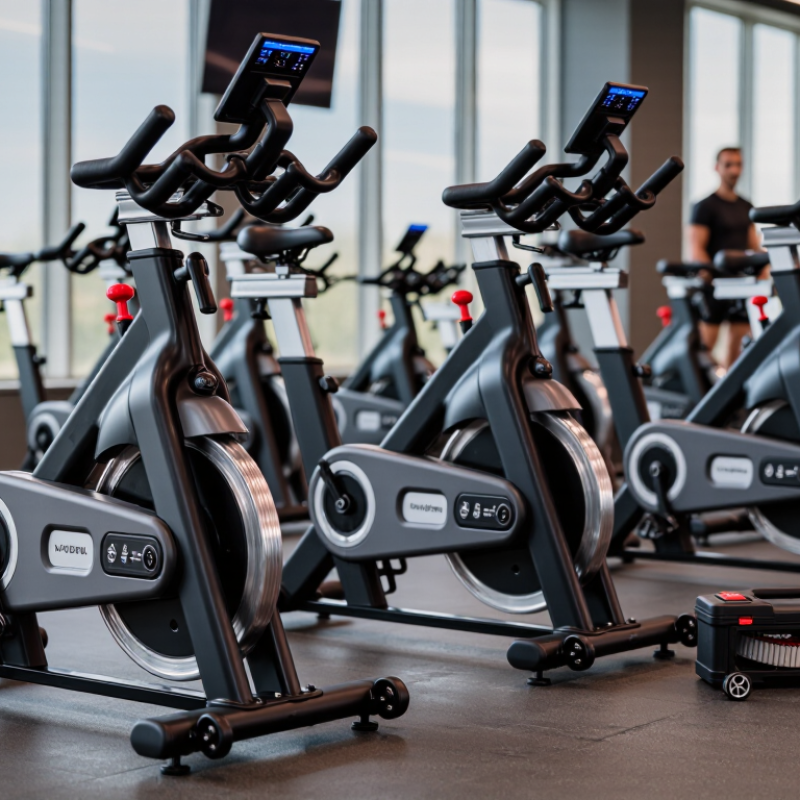
Commercial spin bikes are purpose-built indoor cycling machines for busy fitness facilities. They support repeated daily use, coached classes, and individual training sessions. Unlike basic home bikes, they usually feature reinforced frames, adjustable handlebars, durable pedals, and resistance systems designed for frequent operation.

In a crowded studio, small details matter. A stable bike should remain quiet while riders increase resistance. Its seat needs horizontal and vertical adjustment for different body sizes. I have found that clear adjustment markings reduce setup time between classes.

Wide transport wheels also help staff move equipment without lifting heavy frames. Emergency resistance reduction is important when a rider loses control or feels unwell.

Modern gyms increasingly connect spin bikes with performance screens and training platforms. Members can track cadence, power, heart rate, and interval progress. Coaches can use this information to adjust workloads rather than rely only on appearance. However, digital features should not replace sound instruction. Some riders become distracted by numbers. The display can be wrong, too.

Regular calibration and equipment inspections protect training quality. Staff should check pedal threads, seat posts, resistance controls, and frame bolts on a documented schedule.

Commercial spin bikes also influence gym layout and member experience. Consistent spacing improves movement safety, while accessible controls support beginners and experienced cyclists. A polished studio looks appealing, but comfort and maintenance matter more. A bike that survives heavy use still needs thoughtful service.

Key Features of the Best Commercial Spin Bikes in 2026

2026 Best Fitness Spin Bike for Commercial Gyms

Key Features of the Best Commercial Spin Bikes in 2026

A commercial spin bike must survive crowded classes, repeated adjustments, and long daily operating hours. Its frame should feel stable during standing climbs, with minimal movement across rubber flooring. A corrosion-resistant finish also matters when sweat reaches the handlebar and adjustment posts.

The drive system deserves close inspection. A quiet belt reduces classroom noise and usually requires less routine attention than a chain. Smooth magnetic resistance supports precise intensity changes without harsh friction. However, a heavier flywheel is not automatically better. It can feel powerful, yet may increase starting effort for beginners. A reliable bike should offer clear resistance steps, emergency stopping, and pedals that support secure athletic footwear.

Adjustability affects both comfort and injury prevention. Look for a handlebar and saddle with fine vertical and horizontal settings. Wide adjustment ranges help different users find a balanced riding position. A readable console should display cadence, resistance, time, and heart rate data without distracting graphics. Integrated device storage and simple connectivity can improve class management, but unnecessary software may create maintenance problems.

Tips: Test several bikes before purchase. Check frame movement, adjustment speed, pedal alignment, and screen visibility from the riding position. Ask staff to inspect belt tension and resistance response monthly. Do not ignore small noises. They often become expensive problems. No bike is perfect. Fitness directors should match features with actual class habits, not impressive specifications alone.

2026 Best Fitness Spin Bike for Commercial Gyms

Key Features of the Best Commercial Spin Bikes in 2026

The index uses a brand-neutral 0–100 scale to show the relative importance of core commercial-gym requirements. High scores emphasize durability, rider adjustability, stable operation, easy maintenance, and precise resistance control for frequent daily use.

How to Evaluate Durability, Performance, and User Comfort

2026 Best Fitness Spin Bike for Commercial Gyms

A commercial spin bike must survive thousands of weekly training sessions. Durability starts with the frame, welds, and adjustment points. Inspect the bike after repeated use, not only during a showroom demonstration. Look for stable feet, sealed bearings, corrosion-resistant finishes, and a flywheel guard that remains secure. The seat post should move smoothly without side-to-side movement. Small looseness becomes a safety concern over time.

Performance depends on more than resistance range. Test whether resistance changes feel immediate and controlled. A heavy flywheel can provide steady motion, but it may feel demanding for beginners. Check power accuracy with an independent meter when possible. Cadence readings should remain consistent during slow climbs and fast intervals. Displays must be bright, simple, and readable across different heights. Connectivity is useful, though complicated software can create unnecessary maintenance work.

User comfort deserves equal attention. Adjust the saddle and handlebars for several body sizes, including shorter users. The pedals should support secure foot placement without causing pressure points. Handlebars need multiple grip positions and soft, durable contact areas. Listen for noise during hard efforts. Quiet equipment improves communication and reduces the harsh atmosphere of a crowded training room. I would not rely on one short test ride. Some discomfort appears only after thirty minutes, and that detail is easy to miss. Test again.

Technology, Safety, and Maintenance Considerations

2026 Best Fitness Spin Bike for Commercial Gyms: Technology, Safety, and Maintenance Considerations

In commercial gyms, technology should support coaching, not distract from movement. The HFA 2024 Global Report counted 184 million health-club members worldwide in 2023. That scale makes reliable equipment more valuable than impressive screens. Choose bikes with accurate power measurement, visible cadence, user profiles, and open data exports. ACSM’s 2024 Worldwide Survey identifies wearable technology as the leading fitness trend. Integration can improve motivation, but compatibility failures still frustrate members. Test pairing with several phones before purchase.

Safety begins with the frame, crank, pedals, and adjustment points. ISO 20957-1 specifies general safety requirements for stationary training equipment. Inspect emergency resistance controls, toe cages, saddle locks, and handlebar welds during acceptance testing. A loose pedal is not a minor issue. It can become a fall hazard during a sprint. Keep a written inspection log, including torque checks and replaced parts. Staff should demonstrate setup, especially for first-time users.

Maintenance is where many purchasing plans become unrealistic. Daily wiping cannot replace weekly mechanical checks. Measure belt or chain condition, listen for bearing noise, and tighten fasteners according to the service manual. Keep spare pedals, adjustment knobs, and console cables onsite. That costs less than prolonged downtime. I would avoid assuming predictive software solves everything. Sensors can miss a developing crack. A technician’s careful hand still matters. Review failure data monthly, then revise cleaning, training, or replacement intervals.

2026 Best Fitness Spin Bike for Commercial Gyms - Technology, Safety, and Maintenance Considerations
Evaluation Dimension Recommended Commercial Specification Operational Benefit Safety or Maintenance Consideration Verification Method
Bike Type Supports repeated use in instructor-led classes, open gym areas, and high-traffic facilities. Confirm that the frame is designed for commercial duty rather than occasional home use. Review the product duty rating, warranty terms, and service documentation.
Frame and Finish Welded steel frame with corrosion-resistant powder coating Improves structural stability and helps protect the bike from sweat and frequent cleaning. Inspect welds, coating quality, frame joints, and exposed fasteners for corrosion risks. Check frame construction, coating specification, and visual finish under bright light.
Overall Footprint Fits typical studio layouts while leaving enough space for user movement and cleaning access. Allow additional clearance around the bike according to local facility rules and evacuation requirements. Measure the assembled bike, including handlebars, adjustment range, and transport wheels.
Bike Weight A heavier base generally improves stability during standing climbs and high-intensity sessions. Confirm that floors, delivery routes, storage areas, and staff handling procedures can support the weight. Compare the published net weight with the installation site’s load and access limitations.
User Weight Capacity Provides a wider and safer user range for a mixed-membership environment. Do not exceed the manufacturer’s stated maximum user weight. Verify the rating on the technical data sheet and equipment label.
Flywheel and Drive System Sealed belt-drive system with a balanced flywheel, commonly about 13–23 kg Produces smooth rotational movement and generally requires less routine adjustment than a chain drive. Check belt alignment, pulley condition, flywheel security, and unusual noise during operation. Perform a loaded ride test and inspect the service access points.
Resistance System Offers quiet operation, consistent resistance changes, and reduced friction-related wear. A mechanical emergency stop or rapid resistance-reduction control should be available where applicable. Test resistance changes at low, medium, and high settings while pedaling.
Pedals and Crankset Durable alloy crank arms with dual-sided pedals compatible with standard cycling footwear and secure toe cages Accommodates different rider preferences and supports stable foot positioning. Inspect pedal threads, crank bolts, straps, and cleat retention regularly. Check for smooth rotation, secure fastening, and compatibility with the gym’s footwear policy.
Adjustability Allows faster setup for users with different body sizes and reduces poor riding positions. Adjustment levers and locking pins must engage fully without slipping under load. Test every adjustment through its full range and apply a moderate force after locking.
Console and Display High-contrast display showing time, speed or cadence, resistance level, distance, and estimated calories Gives users immediate workout feedback without requiring a separate device. Calories are estimates and should not be treated as medical or laboratory measurements. Compare displayed values with a controlled test and verify readability from normal riding positions.
Connectivity Enables data sharing, performance tracking, and integration with digital training platforms. Confirm user privacy controls, software support period, and compatibility before deployment. Pair several supported devices and test connection stability during a complete session.
Power Arrangement Self-powered console or low-voltage external power supply with protected cable routing Reduces floor clutter and simplifies placement in group cycling rooms. Keep cables away from pedals and walking paths; use the correct adapter and electrical protection. Inspect cable routing, connector protection, and the electrical installation requirements.
Emergency Protection Allows the rider or instructor to stop resistance quickly during an incident. Users should be instructed not to dismount while the pedals are moving rapidly. Test the emergency mechanism before opening the bike to members and during scheduled inspections.
Stability and Leveling Wide stabilizer bars with adjustable leveling feet and secure transport wheels Reduces rocking on uneven floors and makes repositioning easier for staff. Leveling feet should be checked after relocation and tightened if required. Perform a standing ride test and verify that all contact points remain stable.
Noise Target Improves speech clarity, music quality, and comfort in shared fitness spaces. New rubbing, clicking, or grinding sounds may indicate looseness, contamination, or wear. Listen at low and high resistance levels and record abnormal sounds for service review.
Cleaning Routine Wipe contact surfaces after each use; perform a deeper clean at least daily in high-use areas Reduces sweat residue, odor, and cross-contact on handlebars, saddle, console, and adjustment points. Use a manufacturer-approved, non-abrasive cleaner; do not spray liquid directly into electronics or bearings. Maintain a signed cleaning log and inspect high-touch areas during each shift.
Routine Inspection Identifies loose hardware, damaged straps, unstable feet, and display faults before failure. Remove a bike from service immediately if a structural, pedal, crank, or emergency-control fault is found. Use a checklist covering fasteners, pedals, crankset, adjustment locks, resistance, and stability.
Preventive Maintenance Detailed service every 3–6 months, adjusted for usage intensity and manufacturer instructions Helps control wear, extend service life, and reduce unexpected downtime. Heavy-use facilities may require shorter intervals; lubrication must follow the service manual. Track operating hours, service dates, replaced parts, and technician findings.
Calibration and Software Accessible firmware updates and a documented procedure for resistance, cadence, and console calibration Improves consistency among bikes used in the same class or training program. Back up configuration data and test the bike after every update or calibration procedure. Run a standard performance check and record firmware version and calibration results.
Compliance Documentation Supports procurement, risk management, staff training, and insurance documentation. Requirements vary by country and installation type; verify the current rules before purchase. Request declarations, test reports, manuals, warning labels, and service records from the supplier.
Warranty and Parts Commercial warranty with defined coverage for frame, labor, electronics, drive components, and wear parts Reduces lifecycle cost and shortens downtime when replacement parts are needed. Clarify exclusions for normal wear, misuse, unauthorized repairs, and consumable components. Review warranty duration, response time, parts availability, and authorized service coverage.
Specifications are practical commercial targets and should be confirmed against the final equipment documentation, local regulations, and facility operating conditions.

Choosing the Right Spin Bike for Different Gym Environments

2026 Best Fitness Spin Bike for Commercial Gyms

Choosing the Right Spin Bike for Different Gym Environments

A commercial spin bike must match the room, not just the equipment schedule. The Health & Fitness Association’s 2024 U.S. Health & Fitness Consumer Report recorded 72.9 million facility users in 2023. That volume can quickly expose weak adjustment systems, unstable frames, and uncomfortable saddles. High-traffic gyms need sealed bearings, easy-clean surfaces, numbered seat positions, and strong warranties. Test several bikes during peak hours. Quiet equipment matters when instructors give verbal cues.

Different spaces demand different priorities. A boutique studio may value smooth resistance changes, tablet connectivity, and precise performance tracking. A hotel gym needs compact dimensions, simple controls, and low maintenance. For older adults, lower step-through access and broad adjustment ranges deserve more attention than racing geometry. ACSM’s 2025 Worldwide Survey of Fitness Trends ranked wearable technology first, showing continued demand for measurable workouts. However, data features can become distracting. A screen is not automatically useful.

I would also inspect service access before approving a purchase. Ask how quickly common parts arrive and whether staff can replace them safely. The assumption that heavier frames always perform better is incomplete. Excess weight can complicate floor changes and storage. Noise testing should happen on the actual flooring. One quiet showroom test can mislead. Fitness managers should record six-week fault rates, class attendance, and user complaints before expanding the fleet. That evidence is imperfect, but it is more valuable than a confident brochure.

bottom of page