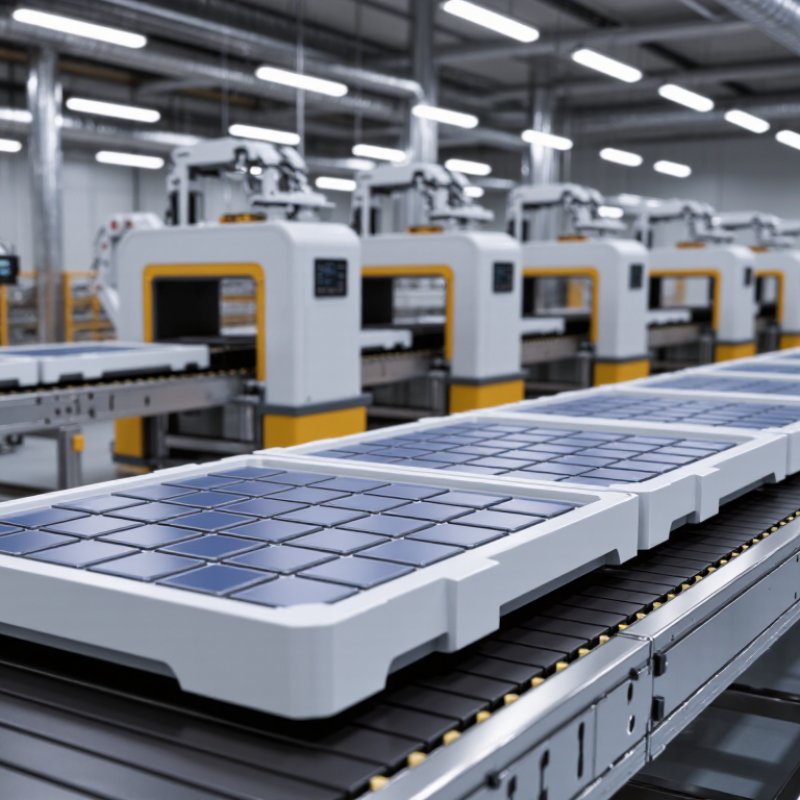
2026 Top Solar Cell Cassette Manufacturers and Suppliers
The 2026 solar manufacturing landscape demands cleaner handling, tighter tolerances, and more dependable material flow. Solar Cell Cassette systems support these requirements by protecting wafers during loading, transfer, storage, and processing. A well-designed cassette can reduce edge chipping, particle exposure, and alignment errors on automated production lines.
This guide examines leading Solar Cell Cassette manufacturers and suppliers serving modern photovoltaic factories. The evaluation considers cassette material, wafer compatibility, dimensional stability, thermal resistance, cleanliness, and automation performance. It also reviews production capacity, quality controls, customization options, delivery reliability, and technical support. Details such as slot spacing, cassette weight, surface finish, and barcode traceability can strongly affect daily operations. Small design differences matter.
Real factory experience remains valuable. Operators notice whether a cassette releases smoothly after high-temperature processing. Engineers examine warpage after repeated cleaning cycles. Purchasing teams measure consistency across batches, not only the lowest quoted price. Supplier audits, sample testing, and clear documentation provide stronger evidence than promotional claims. No supplier is perfect. Some published specifications may require independent verification, especially when production conditions differ between factories.
The companies discussed here represent different strengths, including large-scale manufacturing, specialized engineering, responsive customization, and regional service coverage. Readers should compare them against their own wafer dimensions, equipment interfaces, chemical exposure, and throughput targets. A supplier that performs well in one line may not fit another. Careful selection protects product quality and supports stable photovoltaic production in 2026.
Solar Cell Cassettes: Definition, Structure, and Core Functions
Solar cell cassettes are handling frames designed to store, protect, and transfer wafers during cell manufacturing. They keep delicate wafers aligned between cleaning, coating, diffusion, and inspection stages. A cassette must reduce contact points and limit movement. Small errors can create edge chips, scratches, or uneven processing.
Its structure usually includes a rigid outer frame, wafer slots, support rails, and locating features. Each slot holds one wafer at a controlled distance. This spacing allows process liquids, gases, or light to reach exposed surfaces more evenly. The frame may use chemically resistant plastic, coated metal, or other cleanroom-compatible materials. Surface finish matters. Rough edges can leave particles behind.
Core functions include safe loading, stable transport, batch identification, and consistent wafer positioning. In automated lines, cassette dimensions must match robotic grippers and station interfaces. Operators should inspect slot wear, frame distortion, and particle buildup regularly. Even slight deformation can change wafer alignment. No cassette is perfect. Thermal cycling and repeated washing may weaken it over time. Supplier evaluations should examine dimensional reports, material data, cleaning performance, and actual production feedback. A lower purchase price can become expensive when broken wafers interrupt a process. Specification reviews also need practical testing, because laboratory results may not reflect daily handling conditions.
Key Materials and Manufacturing Standards for Solar Cell Cassettes
Solar cell cassettes must protect thinner wafers, resist chemicals, and maintain stable geometry during automated transfer. The ITRPV 2024 roadmap places mainstream silicon wafer thickness near 130 micrometres, with further reductions expected. That leaves little tolerance for sharp edges, particles, or uneven slot spacing. Fit matters. Polypropylene suits many general handling stages because it is lightweight and chemically resistant. PEEK or reinforced engineering polymers offer better heat stability, but their cost is higher. Quartz remains important in high-temperature processes, although it can be brittle and expensive to replace.
Manufacturers should define cassette performance through measurable controls. ISO 14644 cleanroom principles help manage airborne particles, while SEMI equipment standards support repeatable factory interfaces. IEC 61215 and IEC 61730 mainly address finished modules, not cassette design, so buyers should not treat them as complete cassette specifications. The IEA PVPS Trends 2024 report recorded more than 400 GW of new global photovoltaic capacity in 2023, increasing pressure on handling systems and uptime. Small dimensional errors can multiply across large production lines. Control it. Suppliers should document material composition, thermal limits, slot pitch, warpage, particle shedding, and cleaning compatibility. ITRPV data also shows rapid movement toward larger wafer formats. Existing cassettes may therefore become obsolete sooner than expected. That assumption is risky. Practical trials with real wafers remain essential, especially after repeated thermal cycles and chemical cleaning.
2026 Top Solar Cell Cassette Manufacturers and Suppliers - Key Materials and Manufacturing Standards for Solar Cell Cassettes
| Supplier / Manufacturing Capability | Primary Cassette Application | Recommended Key Materials | Typical Wafer or Cell Format | Typical Capacity and Slot Pitch | Important Material Properties | Relevant Manufacturing Standards | Quality-Control Focus |
|---|---|---|---|---|---|---|---|
| Precision injection-molding supplier | High-volume wafer transfer, diffusion, texturing, cleaning, and cell-processing cassettes | PPS, PEEK, or other high-temperature engineering thermoplastics; ESD-safe grades where required | 156 mm, 166 mm, 182 mm, and 210 mm silicon wafer formats; square or rectangular cell handling | 25–100 slots; approximately 5–10 mm slot pitch, depending on wafer thickness and process | Low particle generation, dimensional stability, chemical resistance, low moisture absorption, and controlled electrical resistivity | ISO 9001; ISO 14644-1 for cleanroom production where specified; IEC 61340-5-1 for ESD-controlled handling | Slot-width consistency, flash removal, warpage, burr inspection, particle counts, and repeatability after thermal cycling |
| High-temperature thermoplastic specialist | Processes involving elevated temperatures, aggressive alkaline cleaners, or repeated wet processing | PEEK for high-temperature duty; PPS for a balance of cost, chemical resistance, and rigidity | Thin silicon wafers and finished cells requiring low-contact-stress support | Typically 25–50 slots for process cassettes; pitch selected to prevent adjacent-cell contact | PEEK melting point is approximately 343 °C; PPS melting point is approximately 280 °C; actual service limits depend on load and chemistry | ISO 9001; ASTM D638 for tensile testing; ASTM D790 for flexural testing; documented chemical-compatibility procedures | Thermal deformation, chemical mass change, mechanical strength retention, and surface condition after repeated cleaning cycles |
| ESD-control cassette supplier | Handling of electrically sensitive cells, metallized surfaces, sensors, and automated inspection stations | Conductive or dissipative PPS, PEEK, PC, or composite polymer systems with controlled additives | All common silicon wafer formats, subject to equipment-interface verification | 25–100 slots; pitch and capacity customized to the robot end-effector and cassette elevator | Controlled surface resistance, low triboelectric charging, stable grounding path, and adequate mechanical stiffness | IEC 61340-5-1; IEC 61340-2-3 for resistance measurement methods; ISO 9001 | Surface-to-ground resistance, resistance uniformity, charge decay, grounding continuity, and additive migration |
| Precision-machined polymer supplier | Prototype lines, low-volume production, special cell geometries, and rapid engineering changes | Machined PEEK, PPS, PTFE, PVDF, or other application-approved engineering plastics | Non-standard cell sizes, test coupons, and customized carrier profiles | Usually 10–50 slots; slot pitch can be optimized for a particular handling sequence | High dimensional accuracy, low burr formation, chemical resistance, and repairable or replaceable contact components | ISO 9001; drawing-based inspection; calibrated measurement systems; material certificates and traceability | Coordinate measurement, slot parallelism, flatness, edge radius, surface roughness, and drawing compliance |
| Anodized-aluminum fabrication supplier | Rigid frames, load-bearing cassette bodies, transport fixtures, and equipment interface structures | Aluminum alloy frame with hard anodized surface; polymer or ceramic inserts at wafer-contact points | Large-format wafer carriers and heavy-duty transport cassettes | 25–100 slots; frame dimensions determined by automated material-handling equipment | High stiffness-to-weight ratio, good heat dissipation, and improved corrosion resistance after anodizing; exposed metal should not contact active surfaces | ISO 9001; ISO 7599 for anodizing guidance; ISO 14644-1 when used in controlled clean areas | Anodized-layer uniformity, coating adhesion, dimensional stability, particle shedding, and contact-area protection |
| Stainless-steel fabrication supplier | Wet benches, chemical-processing fixtures, load frames, and corrosion-resistant support structures | 316L stainless steel with electropolished or passivated surfaces; polymer inserts for wafer contact | Process fixtures and carriers exposed to water, dilute acids, or alkaline cleaning solutions | 10–50 slots for robust process fixtures; capacity depends on weight and chemical-flow requirements | High corrosion resistance, strength, cleanability, and low outgassing; higher mass than polymer alternatives | ISO 9001; ASTM A967 for chemical passivation; ISO 14644-1 where cleanroom compatibility is required | Passivation verification, surface roughness, weld finish, corrosion inspection, metallic contamination, and particle release |
| Cleanroom-assembly supplier | Final cassette assembly, cleaning, packaging, and delivery for contamination-sensitive cell production | Approved polymers, stainless steel, anodized aluminum, and low-shedding elastomers selected by process compatibility | All wafer and cell sizes supported by the customer’s process equipment | Capacity and pitch controlled by the approved engineering drawing and handling recipe | Low particle burden, controlled packaging, traceable cleaning chemistry, and minimized human-contact surfaces | ISO 14644-1; ISO 14644-2 for cleanroom monitoring; ISO 9001; customer-specific cleanliness specifications | Particle counts, ionic contamination, visual inspection under controlled lighting, packaging integrity, and lot traceability |
| Automation-interface cassette supplier | Robotic loading, unloading, indexing, elevators, conveyors, and automated inspection systems | Rigid PPS, PEEK, or coated metal frame with precision locating features and replaceable wear parts | 156–210 mm wafer formats and finished-cell carriers matched to the production line | 25–100 slots; external envelope and datum locations must match the automation standard | Low cumulative tolerance error, high rigidity, repeatable datum location, low vibration, and reliable optical or mechanical identification | ISO 9001; equipment-specific interface drawings; IEC 61340-5-1 for ESD-controlled lines where applicable | Robot pickup repeatability, cassette squareness, datum accuracy, barcode or marking readability, and jam-rate testing |
| Reusable transport-cassette supplier | Inter-process and inter-building transport of wafers or cells | Impact-resistant PC, PPS, PEEK, or hybrid polymer construction with protective covers | Wafers or cells from approximately 156 mm to 210 mm, depending on the carrier design | 25–100 slots; protective clearance is added for vibration and handling impact | Impact resistance, low deformation, cleanability, stackability, and protection against edge chipping | ISO 9001; internal drop, vibration, stacking, and repeated-use validation protocols | Drop testing, vibration testing, slot retention, cover fit, edge-damage rate, and cleaning-cycle durability |
| Custom engineering and validation supplier | New cell architectures, special metallization layouts, pilot lines, and process-transfer projects | Material selected through chemical, thermal, ESD, particle, and mechanical compatibility testing | Custom dimensions, including large-format rectangular silicon cells and special test specimens | Prototype capacity commonly 10–50 slots before production-scale optimization | Design-for-manufacture, controlled stress distribution, low contamination risk, and verified equipment compatibility | ISO 9001; ISO 14644 series where applicable; IEC 61340-5-1 where ESD control is required; customer validation protocol | Design verification, process capability, gauge repeatability, pilot-line yield impact, and documented change control |

How to Evaluate Solar Cell Cassette Manufacturers and Suppliers
2026 Top Solar Cell Cassette Manufacturers and Suppliers
Choosing a solar cell cassette supplier requires more than comparing prices. Evaluate dimensional accuracy, material stability, and production consistency. A reliable cassette should protect wafers during loading, transport, cleaning, and thermal processing. Check slot spacing, flatness, edge protection, and resistance to chemical exposure. Small defects can create scratches, particles, or uneven handling pressure. Ask for inspection records, test reports, and batch traceability. These documents show whether quality control is repeatable, not merely promised.
Supplier experience matters when cassette designs must match different cell formats or factory tools. Request sample units and test them under real operating conditions. Observe robotic pickup, cassette stacking, cleaning cycles, and storage changes. Confirm the supplier can control tolerances across large production batches. Technical support should explain failure causes clearly, not hide behind general statements. A low quotation may seem efficient, but weaker durability can increase replacement and downtime costs. No checklist is perfect. Your evaluation may still miss problems that appear after months of use.
Tips
Visit the production site when possible. Review material certificates and calibration records. Compare sample weight, surface finish, and slot alignment. Ask for references from similar manufacturing environments. Also, define response times for defects and replacement needs. Keep written records of every test. A careful decision today can prevent unstable handling tomorrow.
2026 Market Landscape and Leading Solar Cell Cassette Providers
In 2026, solar cell cassette demand is shaped by larger production lines, thinner wafers, and stricter handling requirements. High-quality cassettes must protect cells during loading, coating, inspection, and transport. Manufacturers now focus on dimensional accuracy, low particle generation, and resistance to heat, chemicals, and repeated washing.
Small alignment errors can cause visible damage. That detail matters.
The leading provider landscape includes integrated equipment manufacturers, specialized plastic molders, and regional industrial suppliers. Integrated producers often offer cassette design, testing, and line compatibility. Specialized manufacturers may respond faster to custom dimensions or material requests. Regional suppliers can reduce delivery time and simplify technical communication. However, availability differs widely by region. Public information is not always complete.
Experienced buyers usually review material certificates, production tolerances, cleaning performance, and replacement-cycle data. A practical evaluation includes sample cassettes, repeated loading tests, and inspection under factory lighting. Suppliers should explain how they control warping, burrs, and surface wear.
Do not rely on appearance alone. A polished cassette may still perform poorly after thermal cycling.
Cost remains important, but the cheapest option can create hidden handling losses. One weakness in current market comparisons is inconsistent testing. Buyers should request comparable evidence before approving volume orders.
Applications, Maintenance, and Future Trends in Solar Cell Cassettes
Solar cell cassettes support the safe movement, storage, and processing of wafers and finished cells. In production lines, they help prevent scratches, edge chips, contamination, and misalignment during cleaning, coating, testing, and thermal treatment. A cassette with smooth contact points is especially important for thinner wafers. Small defects can become serious yield losses.
Maintenance begins with routine visual inspection. Operators should check warped slots, cracked frames, loose fasteners, and particles trapped between supports. Cleaning procedures must match the cassette material and the process chemicals. Excessive brushing can create fine scratches, while insufficient drying may leave mineral deposits. Clean handling gloves and covered storage reduce repeated contamination. From practical production experience, inspection records are useful, but they are not perfect. Human checks can miss microscopic wear.
Future cassette designs will likely combine lighter structures with stronger heat and chemical resistance. Integrated sensors may record temperature exposure, cleaning cycles, and impact events. Automated vision systems could detect slot deformation before wafers are damaged. Recyclable engineering polymers may also reduce material waste, although their long-term durability requires independent testing. Manufacturers and suppliers should provide measurable data, including dimensional tolerance, particle performance, and service life under real process conditions. Thinner wafers will demand greater precision. That challenge remains.