What are Agricultural Drones and How do They Impact Farming?
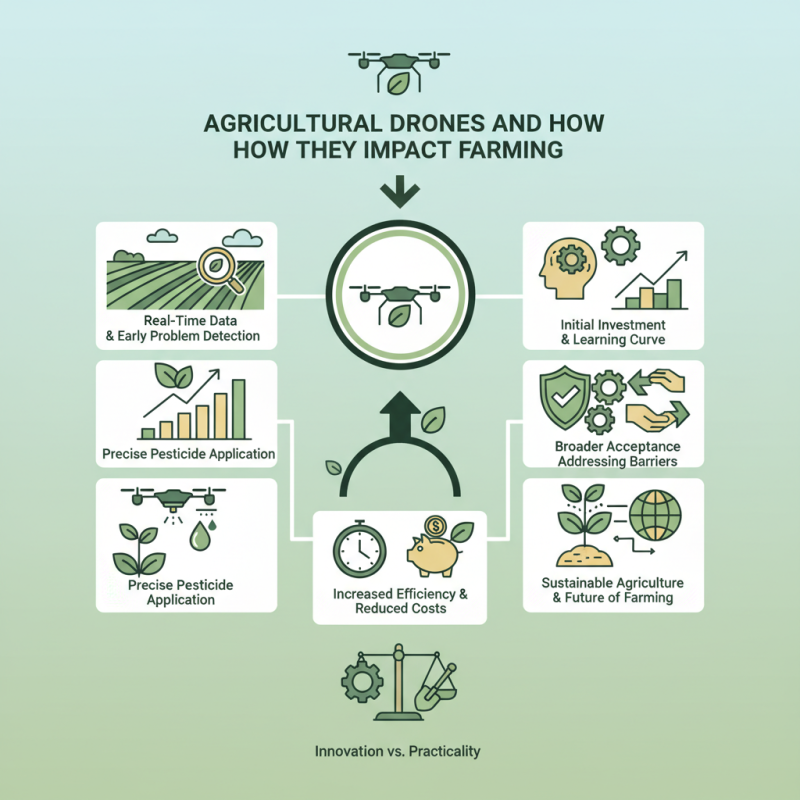
Agricultural Drones have revolutionized the way farmers approach their work. These innovative devices use advanced technology for various tasks in farming, from crop monitoring to precise pesticide application. By providing aerial views of farmland, agricultural drones help farmers make informed decisions. With real-time data, they can identify problems early, such as pest infestations or irrigation issues.
The impact of agricultural drones is significant. They increase efficiency and reduce costs, transforming traditional farming practices. However, not all farmers adopt this technology. Some may find the initial investment and learning curve challenging. It's essential to address these barriers to ensure broader acceptance.
As agricultural drones evolve, they will continue to shape the future of farming. Their role in sustainable agriculture is promising but requires ongoing evaluation. The balance between innovation and practicality will determine how effectively they can support the agricultural sector. Embracing this technology should be a thoughtful process that considers both the potential benefits and challenges it brings.
What are Agricultural Drones: Definition and Technology Overview
Agricultural drones represent a significant technological advancement in modern farming. These unmanned aerial vehicles (UAVs) are equipped with high-resolution cameras and sensors. They gather data on crop health, soil conditions, and weather patterns. Farmers can monitor large areas quickly and efficiently. This capability enhances decision-making and resource management.
The technology behind agricultural drones is continuously evolving. They use GPS and imaging technology for precise data collection. Farmers can create detailed maps and analyze variability within their fields. However, not all farmers adopt this technology. Some face challenges, such as high initial costs and a learning curve. There's also the issue of data privacy and security, which needs consideration.
Despite the obstacles, the potential benefits are immense. Drones can optimize irrigation, reduce pesticide use, and improve yields. They allow farmers to identify issues before they escalate. This proactive approach is vital for sustainable agriculture. As the industry grows, further training and support will be essential. We must reflect on how to make this technology accessible and effective for everyone in the farming community.
The Role of Agricultural Drones in Precision Farming Practices
Agricultural drones have transformed precision farming practices in recent years. These advanced tools allow farmers to gather vital data, enabling better decision-making. Drones capture images and climate data, improving crop management. They can assess plant health, soil conditions, and even assist in monitoring irrigation systems.
To maximize the benefits of agricultural drones, consider integrating them with IoT (Internet of Things) technology. This combination enhances data accuracy. Additionally, investing in drone training for staff is crucial. They need to understand how to operate drones effectively and analyze the data. Operators should practice regularly and ensure compliance with regulations.
Farmers should also reflect on their specific needs. Not all farms require the same level of drone technology. Some may benefit from basic surveying, while others need detailed analytics. Evaluate your operations and choose the right tools strategically. Remember, technology can misinterpret data if not correctly managed. Always verify before making major changes based on drone insights.
Key Benefits of Using Drones in Crop Monitoring and Health Assessment
Agricultural drones have emerged as a game-changer in crop monitoring and health assessment. These unmanned aerial vehicles provide a bird's-eye view of vast farmland, allowing farmers to collect valuable data efficiently. Drones can fly over crops, use high-resolution cameras, and capture images that reveal issues invisible to the naked eye. This technology improves decision-making processes significantly.
One major benefit is early detection of crop diseases. By analyzing the images collected, farmers can identify problem areas swiftly. This proactive approach minimizes potential losses and reduces the need for extensive pesticide use. Drones can also monitor crop health through multispectral imaging. This data helps in understanding plant stress and nutrient deficiencies. However, the interpretation of drone data requires skill and experience. Misreading the information can lead to poor decisions.
Another advantage lies in water management. Drones can assess soil moisture levels across a field, guiding irrigation practices. Nevertheless, reliance on technology poses challenges. Not every farmer has access to the necessary training to use these tools effectively. It’s essential that they understand both the benefits and limitations of drone technology. Continuous education and experience sharing can help bridge this gap.
Market Growth: Agricultural Drone Adoption Statistics and Projections
The agricultural drone market is experiencing significant growth. Reports indicate that the adoption of drones in farming will increase sharply over the next few years. According to recent studies, nearly 60% of farmers are considering drone technology in their operations. This shift is driven by the need for efficiency and improved crop management.
Drones provide farmers with valuable data on crop health and soil conditions. They offer aerial imagery and detailed analytics, helping farmers make informed decisions. However, the initial investment can be a barrier for many. Smaller farms might find costs challenging. As a result, education and training are essential to ensure effective use.
Another concern is regulatory hurdles faced by farmers. Operating drones requires permits and adherence to safety protocols. As technology evolves, regulations must also adapt. This interplay can create a challenging environment for widespread adoption. Balancing innovation with compliance remains a critical task for the agricultural sector.
What are Agricultural Drones and How do They Impact Farming?
| Dimension | 2021 Data | 2022 Data | 2023 Projection | 2024 Projection |
| Global Agricultural Drone Market Size (Million USD) | 1,200 | 1,500 | 1,800 | 2,200 |
| Annual Growth Rate (%) | 15% | 25% | 20% | 18% |
| Number of Drones in Use (Thousands) | 50 | 70 | 90 | 110 |
| Average Adopting Farm Size (Acres) | 250 | 300 | 350 | 400 |
| Most Common Application | Crop Monitoring | Precision Agriculture | Field Mapping | Irrigation Management |
Challenges and Limitations in the Use of Drones for Agriculture
Agricultural drones are transforming farming practices, but they face significant challenges. One major limitation is the cost involved in purchasing and maintaining drones. Farmers, especially smallholders, may struggle with upfront investments. Additionally, the operational costs for battery maintenance and repairs add up over time, creating a financial burden.
Data accuracy is another concern. Drones collect vast amounts of information, yet processing this data can be complex. Farmers need to interpret results effectively to make informed decisions. Misinterpretations can lead to inadequate responses to crop health or pest management. This emphasizes the need for training and expertise in data analysis.
Regulatory issues also hinder drone usage. Many regions have strict regulations governing airspace and drone operations. Farmers may face challenges obtaining necessary permits. Furthermore, privacy concerns arise when drones collect data over private properties. This creates a delicate balance between innovation and compliance, requiring ongoing dialogue within communities to navigate these hurdles effectively.
Impact of Agricultural Drones on Farming Efficiency
The chart below illustrates the various ways agricultural drones impact farming activities, highlighting their effectiveness in different areas such as crop monitoring, planting, and pest management. The data represents percentage improvements in these areas as reported by farmers utilizing drone technology.