

top of page

What Is the Best Automatic Folding Scooter from China?

Choosing the best Automatic Folding Scooter from China is not simply a search for the lightest frame or the lowest price. It means checking how the scooter performs in everyday situations: folding beside a car, rolling over a pavement seam, and fitting into a crowded storage area. Small details matter. Folded dimensions, total weight, battery configuration, rated capacity, and turning space can shape the experience more than polished product photos suggest.

Rehabilitation engineer Dr. Rory Cooper’s user-centered work offers a useful principle, paraphrased here: mobility equipment should fit the person and the places they need to go. That is a guide, not a direct quotation. For a China-made model, buyers should compare published specifications with clear demonstrations, accessible service contacts, replacement-part availability, and written warranty terms. Ask whether the quoted range reflects real-world conditions; distance can change with rider weight, terrain, temperature, and battery age. Looks can mislead.

This guide will outline the main features to compare, questions to ask suppliers, and practical trade-offs between portability, comfort, and support. It will also distinguish verifiable specifications from marketing claims. A compact scooter may fold neatly yet feel less stable on uneven paths. That matters. No single model suits everyone, and product information can be incomplete. A careful comparison may take longer, but it can prevent an expensive mismatch.
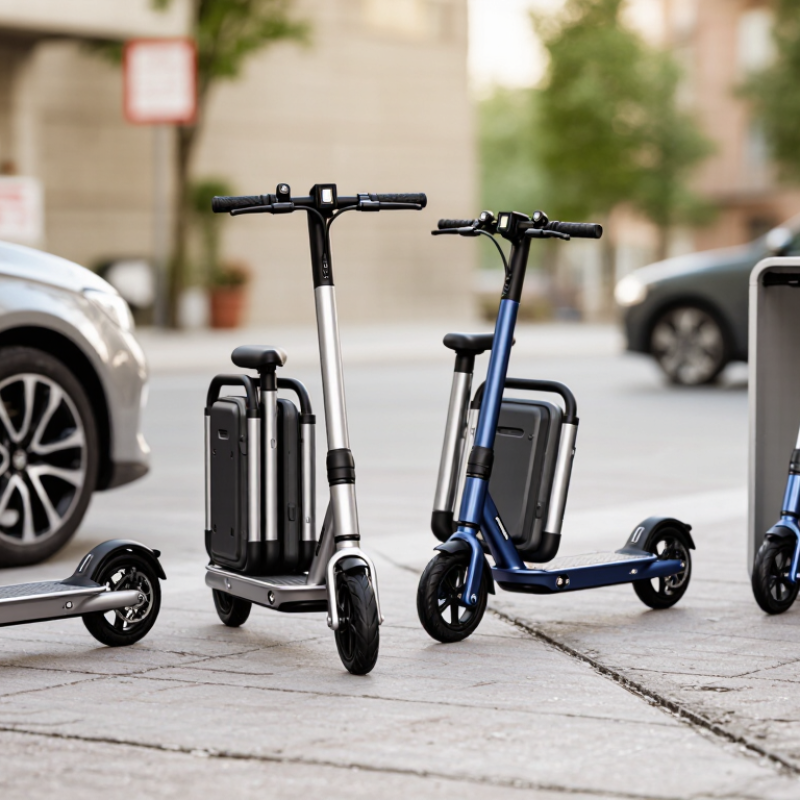
What Is the Best Automatic Folding Scooter from China?

What Is an Automatic Folding Scooter and How Does It Work?

An automatic folding scooter is a personal mobility scooter whose frame folds with little or no manual lifting. The word “automatic” usually describes the folding action, not the ride itself. A control button may activate a small electric actuator that draws the frame sections together. Other designs use a release lever and a spring-assisted hinge, so check how a particular model works.

During folding, the frame pivots at reinforced joints while the steering column and seat move into a compact position. A locking mechanism should hold the scooter securely when it is open for riding. Some models need the rider to remove the key or switch off the power first. Read the instructions; the sequence can differ. Not magic.

Before choosing one, look at the folded dimensions, total weight, battery location, and stated load capacity. These details affect whether it fits in a car trunk and whether one person can lift it. Check that the folding joints lock firmly and that the battery can be removed or charged as intended. A useful test is to fold and unfold it on level ground, then gently check for movement at the joints. One small annoyance: automatic folding can save effort, but the mechanism may add weight and require maintenance. That trade-off deserves a close look.

Which Features Define a High-Quality Folding Scooter?

A high-quality automatic folding scooter should fold smoothly without forcing the hinge or trapping fingers. Test the mechanism on level ground, then check that the frame locks firmly when opened. It should not wobble under a gentle side-to-side push. The button should be easy to reach, and the process should feel controlled, not rushed. Small details matter.

Look closely at the frame, wheels, and brakes. Even welds, secure fasteners, and a stable base are reassuring signs. Solid tires resist punctures, while larger wheels can handle cracks and uneven pavement more comfortably. Brakes should respond predictably at walking speed. A short test on a clear, flat path can reveal noises or pulling that a showroom inspection misses.

Battery range needs context. Rider weight, hills, temperature, and frequent starts can all reduce the distance between charges, so treat advertised figures as estimates. Check the battery’s charging time, whether it can be removed, and how clearly its charge level is displayed. The folded scooter should fit your car trunk or storage corner without awkward lifting. I would measure that space before buying; people often guess wrong. Also inspect cables and joints after several folding cycles, since a neat first impression does not prove long-term durability.

How Should You Compare Chinese Scooter Manufacturers?

What Is the Best Automatic Folding Scooter from China?

How Should You Compare Chinese Scooter Manufacturers?

A useful comparison starts with the folding mechanism, not the showroom photos. Ask how the hinge is inspected and whether production units are checked for consistent alignment. Request a sample from the same process used for regular orders. Fold and unfold it repeatedly, then check for looseness, rubbing, or awkward latches. Small details matter. A glossy finish cannot reveal uneven tolerances.

Review battery documentation, component traceability, and test reports relevant to your intended market. Ask how range figures were measured; rider weight, terrain, temperature, and speed can change results. Ask for proof. Confirm that spare batteries, tires, controllers, and chargers can be supplied, and get warranty terms in writing. A supplier’s quick reply is useful, but clear answers to technical questions are more persuasive.

Compare quality procedures, delivery schedules, and how changes are approved after a sample is accepted. A small trial order can reveal packaging damage, assembly variation, and communication gaps before a larger commitment. Price still matters, of course. Yet the lowest quote may leave out testing or after-sales support. I would be cautious here: even a detailed checklist cannot predict every production issue, so keep written records and inspect goods against agreed specifications.

What Is the Best Automatic Folding Scooter from China? How Should You Compare Chinese Scooter Manufacturers?

Comparison Dimension Information to Collect Practical Evaluation Benchmark How to Verify It Suggested Weight
Automatic folding and unfolding Operating steps, cycle time, remote or button controls, manual release, and behavior if power is lost. Require a live demonstration of repeated folding and unfolding, including operation from the intended user position. Observe a production-representative unit; record the time and any failed or incomplete cycles. 15%
Portability and dimensions Product weight, folded dimensions, heaviest detachable component, and lifting points. Compare measured folded size and the weight the user must lift with the buyer’s vehicle, storage space, and handling needs. Check a dimensioned drawing and weigh a sample unit; confirm whether the stated weight includes the battery. 15%
Battery and charging Battery chemistry, rated voltage and capacity, removable-battery option, charger input, and charging time. Match the battery configuration to the intended travel and charging routine; do not treat advertised range as a guaranteed result. Review battery and charger labels, datasheets, and test results. Ask for the UN 38.3 test summary for lithium-battery transport. 15%
Range and performance Tested range, maximum speed, safe operating load, grade capability, and test conditions. Compare results only when load, terrain, temperature, speed, and battery condition are stated consistently. Request the test method and a written report; conduct a sample test under conditions relevant to the intended market. 10%
Safety and product compliance Applicable destination-market requirements, braking and stability test evidence, electrical protections, and product labeling. Require documentation applicable to the exact model and destination market; a general certificate is not proof that every configuration complies. Check certificate scope, model numbers, issuing body, test reports, and whether the tested configuration matches the quoted product. 20%
Build quality and reliability Frame and hinge materials, folding-lock design, inspection plan, reliability tests, and production quality controls. Look for documented inspection criteria and repeatable test records for high-use components such as hinges, locks, wheels, and brakes. Review the quality plan and inspection records; inspect a sample and request evidence of cycle testing and corrective actions. 10%
Warranty and after-sales support Warranty period and exclusions, spare-parts availability, troubleshooting process, and response times. Compare written coverage by component and confirm who pays for parts, labor, and shipping in each service scenario. Review the warranty document, spare-parts list, service workflow, and support commitments before placing an order. 10%
Total cost and order terms Unit price, sample cost, tooling or customization charges, minimum order quantity, packaging, and shipping terms. Compare like-for-like quotations with the same specification, order quantity, packaging, and delivery basis. Request an itemized quotation and confirm payment milestones, production lead time, inspection rights, and change-control terms. 5%

Comparison note: The weights are a suggested buyer scoring framework, not market statistics. Score each supplier against the same specification, and confirm all performance and compliance claims with model-specific documentation and sample testing.

What Factors Determine the Best Scooter for Your Needs?

“Best” depends on your routine. Measure your car trunk, hallway, and elevator before comparing scooters. Check folded dimensions and total weight, then consider whether you can lift it safely. Automatic folding helps, but the controls should be easy to reach and understand. Try the folding button while seated and standing. A small delay can matter when you are carrying bags.

Range claims need context. Ask how distance changes with rider weight, hills, temperature, and frequent stops. Leave a practical buffer instead of planning around the advertised maximum. Check whether the battery is removable, how long charging takes, and whether replacements are available. For uneven sidewalks, inspect wheel size, ground clearance, suspension, and braking response. Comfort shows up after several blocks. Test it on a ramp and rough pavement if possible. For scooters made in China, confirm load limits, warranty terms, and local repair support in writing. Specifications can be difficult to compare, so treat vague claims as a reason to ask more questions.

How Can You Check Safety, Warranty, and After-Sales Support?

An automatic folding scooter should be judged by evidence, not a polished demonstration. For a China-made model, ask who handles repairs in your country and whether parts are stocked locally. Request independent test reports for the exact model. Check that the model number matches the scooter label, manual, and invoice. ISO 7176-14:2022 covers power and control systems for electrically powered wheelchairs and scooters. Ask which tests were performed and request battery transport-test documentation where applicable. Inspect the folding hinge, locking indicator, exposed wiring, and brake response. In a controlled area, test the brakes and folding mechanism several times. Small details matter.

After-sales support is not a footnote. The 2022 WHO–UNICEF Global Report on Assistive Technology estimates that 2.5 billion people need assistive products. Nearly one billion lack access. Before buying, get warranty terms in writing: coverage period, battery exclusions, labor, shipping, and responsibility for return freight. Ask how long common parts remain available and whether remote troubleshooting is offered in your time zone. “Lifetime service” is not a repair plan.

Request a sample parts list, a service contact, and the written repair process. Ask for the serial number and a dated inspection record. If the seller cannot explain who handles a failed controller or damaged folding latch, pause. Keep a short delivery-day video showing the scooter operating. It is imperfect evidence, but could help document an early fault. Safety claims should match the exact configuration you receive.

bottom of page