What Is the Best LED Poster Screen in 2026?
What Is the Best Led Poster Screen in 2026? The honest answer depends on where the display will work, who will view it, and how often it will move. A bright retail entrance needs different performance from a quiet hotel lobby. There is no universal winner.
Chris Riegel, CEO of STRATACACHE, captures the central issue: “The screen is only one part of the experience.” That principle remains useful when comparing every Led Poster Screen. Buyers should examine brightness, pixel pitch, viewing distance, cabinet weight, cooling, power use, and software control. A 3.9mm pixel pitch may look sharp from two metres, but it can be unnecessary at a longer distance. Measure first.
Look closely.
In practical testing, the best models produce even colour across the cabinet. They also remain readable beside bright windows and under changing indoor light. Reliable locking wheels, protected corners, quiet fans, and simple content updates matter more than impressive specifications alone. Ask about warranty coverage, spare modules, calibration support, and repair response times. These details reveal a manufacturer’s real commitment to reliability.
Some comparisons still focus too heavily on resolution. That is a weakness. A heavier screen may offer stronger construction, yet create transport problems for small teams. A lower-cost model may appear attractive, but unstable software can waste hours every week. This guide evaluates leading Led Poster Screen options through image quality, mobility, installation effort, operating cost, and long-term support. The final choice should fit the venue, not merely win a specification chart.
What Is an LED Poster Screen?
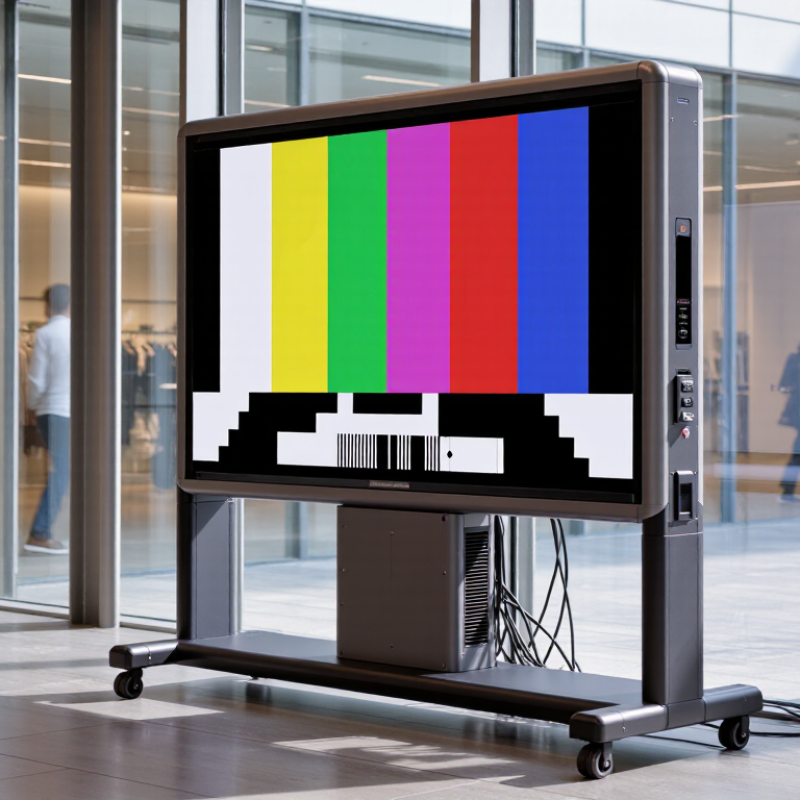
An LED poster screen is a freestanding digital display shaped like a traditional advertising poster. It uses modular light-emitting diodes, a control card, power supply, and media player inside a slim cabinet. Content can change through Wi-Fi, USB, or a wired network. Some models also support synchronized playback across several screens.
The “best” screen depends on the viewing distance and installation environment. For a shop window, a fine pixel pitch creates sharper product images at close range. In a busy lobby, higher brightness and a strong refresh rate matter more. A screen near direct sunlight may need over 3,000 nits, while an indoor display often needs far less. Excess brightness can waste energy and make images uncomfortable.
Market data supports this growth. Fortune Business Insights reports that the global LED display market was valued at approximately 7.7 billion dollars in 2023. It projects continued expansion through 2032. MarketsandMarkets also identifies fine-pitch displays and digital signage as important growth areas. These figures are useful, but not perfect. Reports use different definitions and forecast periods. Buyers should check actual measurements, including power consumption, pixel failure policy, viewing angle, and operating temperature. A beautiful demo can hide weak service access. That mistake is common.
What Is the Best LED Poster Screen in 2026?
An LED poster screen is a modular digital display made from light-emitting diodes. The best pixel pitch depends mainly on the expected viewing distance: a smaller pixel pitch provides higher pixel density and clearer close-up images.
How to read this chart: Pixel density is calculated as 1,000 divided by the pixel pitch in millimetres. Smaller pixel pitch values create more pixels per metre, which is generally better for indoor locations and close viewing. Larger pixel pitches can be suitable for longer viewing distances and wider-area advertising.
How LED Poster Screens Work
What Is the Best LED Poster Screen in 2026?
How LED Poster Screens Work
An LED poster screen uses thousands of tiny light-emitting diodes to create images. Each pixel contains red, green, and blue diodes. A control system adjusts their brightness many times per second. This produces text, video, and moving graphics on a narrow display.
Inside the cabinet, receiving cards deliver image data to LED modules. Power supplies convert electricity into stable low-voltage power. A cooling structure helps protect the components during long operating hours. Brightness sensors can measure surrounding light and adjust the screen automatically. Outdoor models usually need stronger sealing, while indoor models can use lighter cabinets. I have found that viewing distance changes everything. A fine-pitch screen looks sharper nearby, but it often costs more. The “best” choice is not always the most expensive one.
Tips: Check pixel pitch, brightness, refresh rate, viewing angle, and service access. Ask for a real operating demonstration, not only polished sample images. Inspect dark scenes and fast motion carefully. Uneven colors may appear later if calibration is weak. Leave ventilation space around the cabinet. This detail is easy to ignore. Also, confirm the screen’s power demand before installation. A careful measurement can prevent an expensive redesign. My own preference is to compare content performance in the actual location. Spec sheets help, but they cannot show every reflection, shadow, or awkward viewing angle.
How to Choose the Best LED Poster Screen in 2026
Choosing the best LED poster screen in 2026 starts with the location, not the product label. Measure viewing distance, ambient light, and available power. A bright storefront may need 4,000–5,000 nits, while an indoor lobby often needs far less. Pixel pitch also matters. Smaller pitch improves close-up images, but it usually increases cost. Grand View Research reports that the global digital signage market could reach about USD 45 billion by 2030. This growth reflects stronger demand for flexible, measurable visual communication.
Check screen performance beyond brightness. Ask for refresh rate, color consistency, heat control, and front-service access. A 3,840 Hz refresh rate can reduce camera banding during video recording. Efficient power supplies can also lower operating costs over long campaigns. MarketsandMarkets projects the LED display market will grow from roughly USD 7 billion in 2024 to more than USD 11 billion by 2029. Still, published specifications may not match crowded, warm environments. Request a live demonstration before purchasing.
Tips: Compare power consumption per square meter, not brightness alone. Test readable text from the actual sidewalk distance. Confirm warranty coverage, spare-part availability, and content-management compatibility. Keep a replacement module onsite. It prevents avoidable downtime. A screen can look impressive in a showroom yet perform poorly outdoors. My own preference is to prioritize stable maintenance and realistic brightness over maximum specifications. That choice is less exciting, but usually more reliable.