What Is the Best Melt Filtration Disc Manufacturer in China?
China’s Melt Filtration Disc manufacturing sector is gaining attention as plastics producers demand cleaner, more stable processing. PlasticsEurope reported global plastics production of approximately 400 million tonnes in 2022. The OECD also found that only about 9% of plastic waste was recycled globally. These figures show why reliable melt filtration matters. Contamination can create black specks, pressure spikes, die lines, and rejected rolls.
A Melt Filtration Disc is not merely a circular metal component. Its wire diameter, mesh accuracy, layer structure, material grade, and sealing quality affect filtration performance. In a recycling line, the disc may face paper fibers, aluminum fragments, degraded polymer, and sudden pressure changes. Small details become expensive quickly. A polished datasheet is not proof.
Dr. Martin Schlummer, a recognized plastics-recycling specialist at Fraunhofer IVV, has emphasized, “Recycling quality depends on feedstock quality.” That principle also applies to filtration design. A manufacturer must understand the customer’s polymer, contamination profile, melt temperature, pressure range, and replacement cycle.
Reports from the OECD and PlasticsEurope provide the wider market context. However, factory-level evidence matters more when comparing Chinese suppliers. Buyers should examine ISO 9001 procedures, stainless-steel traceability, mesh inspection records, dimensional tolerances, and sample testing. Ask for production photos. Inspect the edges.
The best Chinese manufacturer may not offer the lowest quotation. It should provide repeatable filtration, responsive engineering support, and honest test data. Some suppliers still describe capacity without proving consistency. That deserves careful questioning. This comparison will assess manufacturers through measurable quality, practical experience, customization ability, delivery reliability, and long-term value.
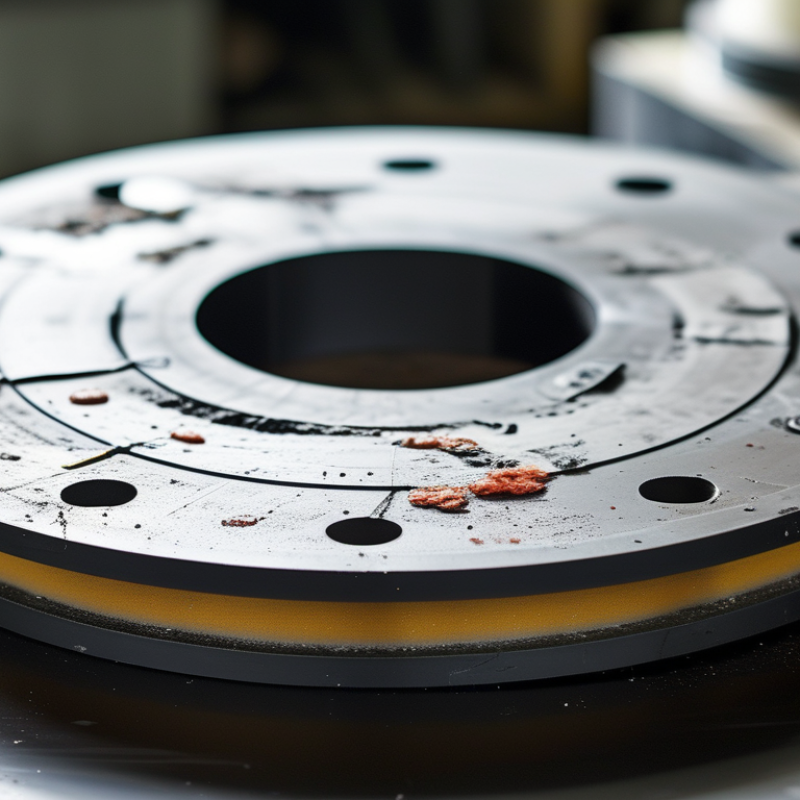
What Is Melt Filtration? Key Terms: Mesh, Microns, and Pressure
Melt filtration removes solid contamination from molten polymer before extrusion, molding, or pelletizing. In practice, the filter disc sits inside a breaker plate or filter assembly. It catches carbon, unmelted resin, metal fragments, and other particles. Cleaner melt usually means fewer die lines and more stable production.
Mesh describes the number of openings across a screen length. A higher mesh number usually indicates smaller openings, but wire diameter changes the result. Microns provide a more direct opening size. For example, a 100-micron screen allows smaller particles through than a 300-micron screen. These terms are related, but they are not interchangeable. Always request the actual aperture data. A simple mesh number can hide important differences.
Pressure is the working signal that many buyers underestimate. As contamination builds, pressure before the disc rises. Excessive pressure can damage the screen, disturb output, or overload the extruder. A reliable Chinese manufacturer should provide tested materials, dimensional tolerances, filtration ratings, and pressure guidance. Ask for samples and inspect flatness, weld quality, and edge finishing. In factory trials, recording pressure before and after filtration gives useful evidence. I once trusted a mesh label without checking wire diameter. The result was acceptable, but not repeatable. That mistake still matters. Product temperature, polymer viscosity, and throughput can change filtration performance. A disc that works well on clear PET may perform poorly with filled material. Supplier advice should match the real process, not only a catalog table.
How Do 10–100 μm Screens Control Polymer Contamination?
What Is the Best Melt Filtration Disc Manufacturer in China?
In polymer processing, 10–100 μm melt filtration discs act like controlled gates for contamination. They capture gels, carbonized particles, unmelted resin, and metal fragments before extrusion. A 10 μm screen provides finer protection, but it can increase pressure quickly. A 100 μm screen offers easier flow and longer service life. The correct choice depends on resin viscosity, throughput, temperature, and contamination levels.
Pressure tells the story. During production trials, operators should record initial pressure and its rise over time. A steady increase may show effective contaminant loading. A sudden spike can indicate poor screen loading, unstable temperature, or excessive contamination. Disc layers must also maintain uniform openings under heat and pressure. Small manufacturing variations can create bypass paths. That detail is easy to overlook.
When evaluating a melt filtration disc manufacturer in China, inspect material certificates, dimensional tolerances, filtration ratings, and batch traceability. Ask for sample discs and test them with the actual polymer. A laboratory result may not match a high-throughput line. I have seen finer filtration improve surface quality while reducing output. Not always. Screen selection requires compromise, and even experienced teams should review data after each trial. Reliable suppliers should explain these limits clearly, rather than promise one disc for every application.
Which Chinese Disc Manufacturers Follow ISO 9001 Quality Systems?
The best melt filtration disc manufacturer in China should be judged by controlled processes, not catalogue photos. ISO’s 2022 Survey of Management System Certifications recorded more than 1.2 million ISO 9001 certificates worldwide. That scale shows the standard is widely adopted, but certification alone does not prove consistent disc quality. Look closer.
For Chinese manufacturers, verify whether ISO 9001:2015 covers metal filtration products, production, and inspection. The certificate should show a valid registration number, certification body, issue date, and factory address. Cross-check the certificate through the certification body or an accredited database. A serious supplier can also provide material certificates, incoming-wire inspection records, sintering parameters, dimensional reports, and batch traceability. These details matter when discs must hold stable pressure during polymer processing.
Industry reports from Smithers and Plastics Technology continue to identify filtration stability, contamination control, and reduced downtime as important priorities in plastics manufacturing. In practice, ask for samples from different batches. Measure disc diameter, thickness, opening size, and pressure-drop behavior. Request a test report using the same polymer and temperature range as your line. Some suppliers respond quickly but provide vague evidence. That is a warning. My own assessment would not stop at an ISO logo; I would review corrective-action records and inspect the factory’s calibration labels. ISO systems can still become paperwork exercises. A manufacturer that welcomes technical audits, explains failed tests, and documents improvements is usually the safer choice.
How Do 20–80 bar Pressure Ratings Affect Filter Performance?
What Is the Best Melt Filtration Disc Manufacturer in China?
Pressure ratings from 20 to 80 bar strongly influence melt filtration performance. However, a higher rating does not automatically mean better filtration. It usually indicates greater resistance to differential pressure across the disc. A 20 bar disc may suit stable polymer lines with low contamination. An 80 bar disc offers more safety during pressure spikes or longer production cycles. The trade-off can be thicker support layers, reduced open area, and higher initial pressure drop.
Viscosity matters. Hot, highly viscous polymer can pass slowly through a fine disc, even at moderate pressure. A disc with suitable pore size, sufficient filtration area, and uniform sintering often performs better than a stronger but poorly matched design. I once focused too heavily on maximum pressure. That choice increased energy use and did not improve product clarity. The lesson was uncomfortable but useful.
A reliable Chinese manufacturer should provide material certificates, dimensional records, pressure-test data, and batch traceability. Ask how the 20–80 bar rating was measured. Was it working pressure, burst pressure, or differential pressure? These terms are not interchangeable. Inspect weld quality, support structure, surface finish, and cleaning consistency. Request samples under real processing conditions. A trustworthy supplier will discuss temperature, resin type, flow rate, and contamination load before recommending a disc. Small details matter.
What Is the Best Melt Filtration Disc Manufacturer in China?
How Do 20–80 bar Pressure Ratings Affect Filter Performance?
A pressure rating indicates the maximum differential pressure a filter disc is designed to withstand under specified operating conditions. The chart shows the equivalent mechanical load applied to a 1 cm² filter area: 1 bar equals approximately 10 N over 1 cm². A higher rating provides more structural pressure capacity, but it does not automatically improve particle-capture efficiency. Actual filtration performance also depends on pore size, filter media, polymer viscosity, temperature, contamination level, and flow rate.
How Should Buyers Compare 1–5 t/h Capacity, Tests, and Total Cost?
When comparing melt filtration disc manufacturers in China, buyers should test real material, not brochure capacity. A claimed 1–5 t/h range can change sharply with melt viscosity, contamination, moisture, and filter mesh. The OECD Global Plastics Outlook reports that 353 million tonnes of plastic waste were generated in 2019, while only 9% was recycled. This pressure makes stable filtration more valuable than a high headline number.
Request a witnessed trial using your own flakes or pellets. Record throughput, melt pressure before and after filtration, pressure rise, melt temperature, screen life, and rejected material. Check melt flow rate under ISO 1133 or ASTM D1238 conditions.
Inspect samples for black specks, gels, ash, and unmelted particles. Test at 1, 3, and 5 t/h when possible. A smaller stable output may outperform an unstable 5 t/h claim.
Total cost needs a wider calculation. Include disc or screen consumption, heating power, labor, cleaning time, spare parts, freight, installation, and planned downtime. Ask for twelve-month operating estimates, not only equipment prices. The International Energy Agency notes that industrial energy efficiency remains a major cost lever, so record kilowatt-hours per tonne during trials.
One overlooked detail is waste disposal. It can quietly change the result. I would also question tests using unusually clean feedstock; they look impressive, but they may not represent production.