What Is the Best Steel Structure Type in China?
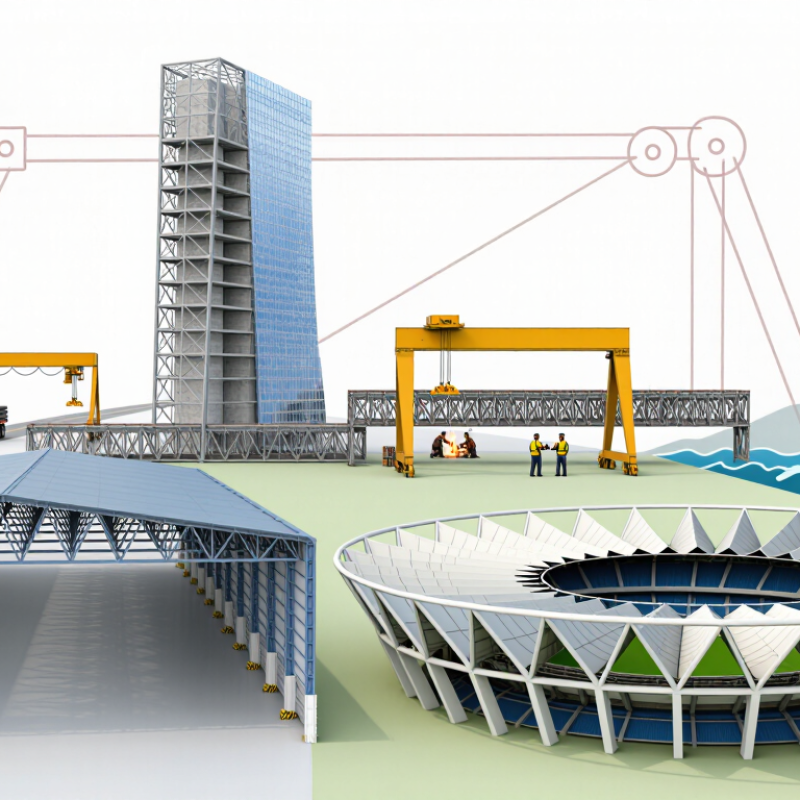
Choosing the best steel structure in China is not a simple matter of selecting the strongest material. The right solution depends on building use, span, height, climate, budget, and construction conditions. A logistics warehouse may benefit from a portal frame with wide, column-free space. A sports stadium may require a space frame or long-span truss. A high-rise project often needs a steel frame combined with concrete cores for strength and stability.
China’s construction market offers extensive experience with these systems. Engineers commonly evaluate steel grades, connection details, corrosion protection, fire resistance, and local wind or earthquake conditions. They also review factory quality, welding procedures, transport routes, and on-site lifting equipment. A structure that performs well in Shanghai may need different detailing in coastal areas or seismic regions. Small decisions matter. An exposed connection near the sea can deteriorate faster without proper coating and maintenance.
There is no universal winner. That conclusion may sound less satisfying, but it is more reliable. In practice, the lowest initial price can create higher maintenance costs later. Some projects also choose an advanced system before checking local fabrication capacity. That mistake can delay delivery. This guide compares common steel structure types used in China and explains where each option performs best. It considers safety, durability, construction speed, design flexibility, and total project value. Readers should treat technical examples as guidance, not a substitute for site-specific engineering review. The best decision comes from verified calculations, qualified professionals, and clear communication between designers, manufacturers, and contractors.
How GB 50017-2017 Classifies Steel Structure Systems in China
What Is the Best Steel Structure Type in China?
How GB 50017-2017 Classifies Steel Structure Systems in China
GB 50017-2017 does not name one universal “best” steel system. It classifies structures by load paths, stiffness, stability, and overall behavior. Common systems include frames, braced frames, tube structures, trusses, arches, suspension systems, and spatial structures. For taller buildings, the code also distinguishes frame, frame-brace, tube, and combined tube systems.
The choice becomes practical on site. A factory may use a portal frame for wide bays and fast crane installation. A high-rise project may need bracing or a tube system to control wind drift. Connections, fire protection, welding access, and foundation reactions can change the preferred solution. Small details matter. A heavier frame is not automatically safer.
China’s scale supports careful system selection. The World Steel Association’s World Steel in Figures 2024 reports 1,019.1 million tonnes of crude steel production in China during 2023. The National Bureau of Statistics reported construction-industry value added of 8.56 trillion yuan in 2023. These figures show capacity, not design quality. GB 50017-2017 still requires project-specific checking.
The classification looks neat on paper. Real buildings are messier. Wind exposure, seismic intensity, fabrication tolerances, and local workmanship may overturn an early concept. In practice, engineers should compare drift, steel tonnage, connection complexity, and inspection requirements before selecting a system.
How Q355 Steel’s 355 MPa Yield Strength Affects Structural Selection
What Is the Best Steel Structure Type in China?
How Q355 Steel’s 355 MPa Yield Strength Affects Structural Selection
China’s “best” steel structure is not a single frame. Q355 steel changes the decision because its nominal yield strength reaches 355 MPa. Under GB/T 1591-2018, this value applies to plates up to 16 mm thick. Thicker plates receive lower specified values, such as 345 MPa from 16 to 40 mm.
Yield strength is not design strength. Designers still check buckling, fatigue, fire resistance, weld quality, and serviceability. For warehouse portals, industrial columns, and long-span trusses, Q355 can reduce section size or steel weight. Smaller members may also simplify transport and lifting. Yet slender members can lose capacity quickly through buckling.
The World Steel Association reported 1.89 billion tonnes of crude steel production worldwide in 2023, with China producing about 1.02 billion tonnes. This scale supports broad material availability, but availability does not replace engineering verification. A practical site lesson is simple: check the mill certificate, plate thickness, and actual connection details before selecting Q355. Column bases often govern before the beam does. Fire protection may also erase expected weight savings. I would not choose Q355 from its grade label alone; compare calculated resistance, fabrication limits, and lifecycle cost for each structural layout.
When Portal Frames Best Serve Single-Story Industrial Buildings
In China, portal frames often suit single-story industrial buildings with wide, unobstructed floor areas. Their rigid, sloped frames transfer roof and wind loads efficiently. This creates practical space for workshops, warehouses, and light manufacturing facilities. A typical frame combines columns, rafters, purlins, and bracing. The system can also reduce internal columns and simplify material handling. Clear spans matter here.
From project experience, portal frames work best when building height, equipment loads, and span requirements remain moderate. They support faster erection because many steel components can be prefabricated and bolted on site. This may shorten construction time and reduce labor around busy industrial sites. However, heavy overhead cranes may require reinforced frames or a different structural arrangement. Multi-story production areas also deserve careful comparison.
Design decisions should reflect local wind, seismic conditions, soil behavior, fire protection, and corrosion exposure. Engineers must check frame connections, roof drainage, insulation, and future equipment changes. A low initial steel weight does not guarantee the lowest lifetime cost. That assumption can fail. The first scheme is rarely perfect. Regular inspections are still necessary, especially around bolted joints and roof penetrations. A portal frame becomes a reliable choice when its simplicity matches the building’s real operational demands.
How Braced and Moment Frames Meet GB 50011 Seismic Requirements
What Is the Best Steel Structure Type in China?
How Braced and Moment Frames Meet GB 50011 Seismic Requirements
China’s best steel frame depends on seismic intensity, site conditions, height, and architectural needs. GB 50011-2010, revised in 2016, requires engineers to consider fortification intensity, site category, design earthquake group, and characteristic period. These inputs shape the frame choice. A strong-looking structure may still perform poorly if its connections lack ductility.
Braced frames Braced frames usually control lateral drift efficiently. Diagonal members form visible load paths, like firm steel triangles across a wall bay. They can reduce beam and column demands, especially in regular industrial buildings. However, braces may interrupt doors, glazing, and equipment routes. Engineers must check brace buckling, connection strength, story drift, and second-order effects under GB 50011 and GB 50017-2017.
Moment frames Moment frames preserve open floor areas. Their beams and columns resist earthquake actions through rigid joints and controlled plastic hinging. The strong-column, weak-beam principle is critical. Welding quality, bolt installation, panel-zone behavior, and inspection records matter greatly. The Ministry of Housing and Urban-Rural Development reported about 740 million square meters of new prefabricated buildings in China during 2023, representing roughly 26.5% of new construction. This growth increases demand for repeatable steel connections, but field tolerances remain a practical concern. In my experience, designers sometimes prioritize architectural openness too early. That decision can increase drift, connection costs, and detailing risk. There is no universal winner.
How Fire Ratings Under GB 50016 Influence the Final Steel Structure Choice
What Is the Best Steel Structure Type in China?
How Fire Ratings Under GB 50016 Influence the Final Steel Structure Choice
In China, the best steel structure is not chosen by strength alone. GB 50016 can change the answer before fabrication begins. Its fire-resistance requirements depend on occupancy, building height, area, and evacuation conditions. A warehouse and a high-rise frame face different risks. That difference matters.
Unprotected steel heats quickly and loses load-bearing capacity during fire. Designers therefore compare sections, fireproofing systems, connections, and inspection access together. H-shaped beams may be economical, but exposed flanges need continuous protection. Box columns can simplify coverage, although trapped moisture and poor detailing remain concerns. Sprayed protection, board systems, and intumescent coatings require tested thickness and careful site control. Small gaps can become serious.
From project experience, the safest choice often comes from early fire engineering coordination, not a late coating decision. The team should verify the required fire-resistance period, load ratios, temperature assumptions, and connection behavior. They should also check penetrations, welds, damaged coating, and future maintenance. A cheaper frame can become expensive when protection is redesigned after erection. I would not treat any early comparison as final. GB standards and local review requirements must be checked in their current versions. No single steel type wins every Chinese project.