

China Top 10 Bait Bayonet Rigs Suppliers for Buyers
Choosing a reliable supplier for Bait Bayonet Rigs takes more than comparing prices or attractive product photos. Buyers need clear specifications, consistent workmanship, and communication they can trust. This guide introduces ten China-based suppliers for consideration and explains practical points to compare before requesting a quotation. Small details matter. Check hook size, rig length, line material, bait-stop design, and packaging options against the needs of your market and fishing applications.
A supplier’s catalog is only a starting point. Ask for current product details, sample availability, production lead times, and quality-control information. If possible, inspect samples closely: look at knots, crimps, hook finishes, and how securely each bayonet holds bait. A fast reply is useful, but it does not prove dependable production. Request specific answers and keep written records of agreed specifications. Buyers should also confirm customization limits, minimum order quantities, and shipping arrangements directly with each company, since these can change. No supplier is perfect, and a shortlist cannot replace your own checks. That is worth remembering. Company information and product claims should be verified before placing an order. The right choice depends on your target customers, budget, order size, and required consistency—not simply on which supplier makes the boldest promise. This overview aims to help buyers ask better questions and compare options with greater confidence.
What Bait Bayonet Rigs Are and How They Work
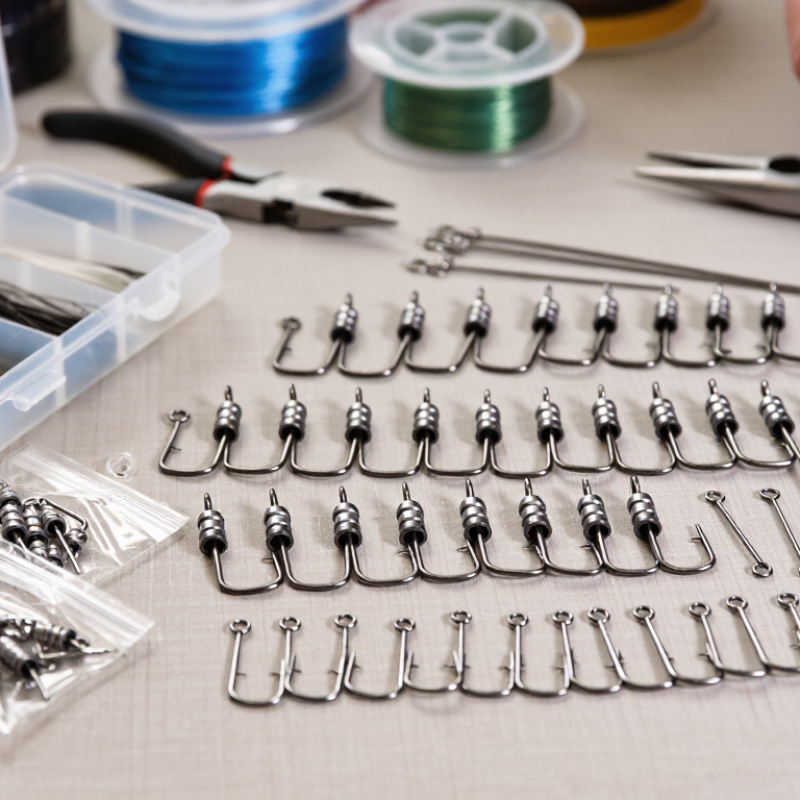
A bait bayonet rig is a hair rig fitted with a short, pointed spike beside the hook. The spike holds the bait without threading it onto the hook itself. This keeps the hook point uncovered. Small detail, big difference. Anglers commonly use bayonets with boilies or wafters, especially when bait needs to sit neatly beside the hook.
To set one up, push the spike into the centre of a firm bait until it holds securely. Check that the hook point stays clear and the bait can move freely. In water, a balanced wafter may lift the hook slightly, while a sinking boilie rests on the lakebed. Test the finished rig in a bucket first. It is a simple check, but bait buoyancy can vary.
FAO’s 2024 State of World Fisheries and Aquaculture reported 185.4 million tonnes of aquatic animal production worldwide in 2022. That figure describes the wider fishing and aquaculture sector, not bait-rig sales. It does, however, show the scale of aquatic food production behind modern fishing activity. Bayonet rigs are not universal: soft or crumbly bait may split when pierced, and an oversized spike can affect presentation. A little trial and error is normal.
How to Evaluate Bait Bayonet Rig Suppliers in China
When evaluating bait bayonet rig suppliers in China, begin with a clear specification rather than a broad price request. State the required bayonet length, wire or hook size, coating, and intended bait type. Ask whether dimensions refer to the finished rig or individual components. Small differences matter. A few millimetres can affect bait fit and presentation.
Request samples from the same production process used for larger orders. Check whether the bayonet holds bait securely, whether the connection stays intact under a steady pull, and whether coatings show scratches after handling. Look closely at crimps and sharp edges. Ask for material details, inspection records, and the supplier’s method for checking batch consistency.
Paperwork helps, but it cannot replace testing. Looks fine on paper.
Also review how the supplier handles a failed sample or unclear specification. A reliable contact should answer with measurable details, not only broad assurances. Compare quotations by packaging, sample charges, lead time, and stated inspection steps; the lowest unit price may leave key checks undefined.
Keep your own notes, because a neat spreadsheet can still miss a weak connection or inconsistent finish.
China’s Top 10 Bait Bayonet Rig Suppliers
China’s Top 10 Bait Bayonet Rig Suppliers can be compared by more than price. Buyers should check hook size, bayonet length, rig material, and the consistency of each finished assembly. Ask suppliers for clear product photos and written specifications. A close-up should show the hook point, knot, and bait-retaining section without hiding details. Small differences matter when rigs need to match a particular bait size.
Tips: Request a sample before placing a large order. Measure the bayonet and inspect the knot yourself. Ask how the supplier checks batch consistency, and confirm packaging details in writing. Keep the sample for comparison when bulk goods arrive.
A useful supplier shortlist includes companies that answer technical questions directly and provide realistic production timelines. Compare sample quality under the same conditions, rather than relying on catalog images alone. A neat photo is not proof of consistent workmanship. Check whether the rig holds bait securely and whether its components match the stated specifications. If a detail is unclear, ask again; this may slow the process, but it can prevent avoidable misunderstandings. No supplier is a perfect fit for every buyer.
Comparing Suppliers by Product Range, Quality, and Service
Buyers comparing China’s bait bayonet rig suppliers should look beyond catalog size. A useful range may include different hook patterns, rig lengths, line strengths, and packaging options. Check whether product descriptions state dimensions and materials clearly. Details matter. Ask for close-up photographs, specification sheets, and samples before placing a large order. A supplier that answers technical questions directly is easier to assess than one relying on broad quality claims.
Quality checks should be specific and repeatable. Inspect hook alignment, knot consistency, line finish, and packaging for damage. Ask how batches are checked and whether replacement parts or corrections are available when a sample differs from the approved specification. Service matters too: compare response times, sample lead times, and how clearly shipping updates are provided. No supplier is perfect, and a wide catalog can make comparisons harder. Keep a simple scorecard, but leave room for practical judgment.
Tips: Request the same sample quantities and specifications from each supplier. Photograph defects beside a ruler, and record replies in writing. Small tests first. A polished sample alone cannot prove every production batch will match; verify again before scaling an order.
How Buyers Can Select and Verify a Supplier
When comparing bait bayonet rig suppliers, request a dated specification sheet for each model. It should state rig length, hook size, bayonet dimensions, materials, and recommended line range. Ask how components are checked for sharp edges, secure crimps, and consistent spacing. Details matter. A difference of a few millimeters can affect bait fit or presentation.
Request samples from the same production batch you may order. Check whether the bayonet holds your chosen bait, knots remain secure under a measured pull, and metal parts show signs of corrosion after exposure to moisture. Ask for batch identification, inspection records, and clear defect or replacement terms. A neat catalog is not proof. I would also compare samples against your own written requirements, rather than relying only on a supplier’s description. Small oversights can happen.
Tips: Confirm specifications in writing before paying a deposit. Keep dated photos of samples and packaging. If a supplier avoids basic questions, pause and verify further. Tie and test several rigs yourself; one sample may not reveal variation.
China Top 10 Bait Bayonet Rigs Suppliers for Buyers - How Buyers Can Select and Verify a Supplier
A practical comparison framework for screening supplier types. Entries are categories, not named or ranked companies; verify each supplier and product directly before ordering.
| No. | Supplier category to consider | Potential fit | Information to request | How to verify | Buyer checkpoint |
|---|---|---|---|---|---|
| 1 | Fishing-tackle manufacturer | Buyers seeking repeat orders and product specifications set at production level. | Factory address, product specification sheet, sample options, production and inspection process. | Compare the legal entity and address on business documents with the quoted seller; request a live factory or production-area video call. | Confirm who makes the rig and who is responsible for defects or rework. |
| 2 | Fishing-rig assembly specialist | Orders where assembly consistency, hook arrangement, and finished-rig presentation matter. | Assembly drawing or sample, hook and line details, process checks, packaging method. | Inspect production samples and compare hook count, spacing, knots, crimps, and finished dimensions with the approved specification. | Put measurable construction details in the purchase specification, not only in product photos. |
| 3 | OEM or private-label producer | Buyers requiring custom packaging, labeling, or agreed product variations. | Customization limits, artwork requirements, sample charges, packaging specifications, and ownership terms for supplied artwork. | Approve a pre-production sample and proofread the final label and carton artwork before production. | Confirm any minimum order quantities and setup costs in writing; these vary by supplier and customization. |
| 4 | Custom tackle workshop | Small runs, prototype development, or non-standard rig configurations. | Prototype process, material options, sample lead time, and ability to reproduce an approved sample. | Order a paid sample and retain an approved reference sample for comparison with the bulk order. | Check whether small-order pricing and production timing are acceptable before committing to a larger order. |
| 5 | Fishing-tackle wholesaler | Buyers prioritizing access to assorted tackle products or consolidated purchasing. | Stock status, product origin, reorder availability, current product specifications, and return terms. | Request current photos and a sample from the same stock or production lot intended for the order. | Ask whether the seller holds inventory or sources the product after receiving an order. |
| 6 | Export-oriented trading company | Buyers needing export communication, order coordination, or mixed-product sourcing. | Legal seller name, sourcing arrangement, payment beneficiary, shipping terms, and manufacturer details where available. | Ensure the contract, invoice, and payment account identify the same verified legal entity or clearly documented parties. | Clarify which party handles product quality, shipping documents, and claims. |
| 7 | Online B2B marketplace seller | Buyers comparing multiple offers or starting supplier outreach remotely. | Marketplace profile details, company registration information, product specifications, sample price, and transaction terms. | Treat platform badges as one screening input only; independently check documents, samples, and the payment recipient. | Keep specifications and order changes in the platform’s documented communication and transaction records where possible. |
| 8 | Regional tackle distributor | Buyers seeking locally available stock or a nearby supply contact. | Warehouse location, available quantities, replenishment source, and domestic or export sales terms. | Confirm stock with dated inventory evidence or a sample shipment; check whether the distributor can replenish the same specification. | Check that replacement stock will match the sample and agreed product specification. |
| 9 | Multi-category outdoor-products supplier | Buyers consolidating fishing tackle with related outdoor or sporting goods. | Product-specific technical details, sourcing responsibility, packaging options, and quality-control arrangements for the rig. | Evaluate the bait bayonet rig as its own product; request a relevant sample rather than relying on general company experience. | Do not assume expertise in one product category proves competence in another. |
| 10 | Contract packer or finishing supplier | Buyers arranging separate rig production and final packing or labeling. | Incoming inspection method, packaging materials, label handling, traceability, and responsibility for packing errors. | Review a packed sample and confirm that product counts, labels, and carton markings match the approved packing list. | Agree on who checks the product before packing and who resolves shortages or packing defects. |
Before placing an order: define the rig’s hook count and size, line material and stated strength, bait-bayonet dimensions, overall rig length, packaging, inspection criteria, quantity, lead time, and defect remedy in writing. Request a representative sample and confirm applicable fishing regulations in the intended sales market.