How to Choose the Best Sink Toys in 2026?
Choosing the best SINK TOY in 2026 means looking beyond bright colors and cheerful packaging. A good choice should fit your child’s age, your sink, and the way your family handles cleanup. Check the maker’s age guidance, inspect small parts, and choose sturdy pieces with smooth edges. For younger children, close adult supervision matters, even during a short water play session.
Think about the details you will notice at home. Will suction cups hold on your basin? Can you rinse and dry each piece without leaving water trapped inside? A spinning wheel may delight a toddler, but a toy with narrow channels can be harder to clean. Small details matter. It is tempting to judge a toy by its photos or star rating, but neither tells you how it behaves on a wet countertop. Reviews can help, yet look for specific comments about durability, water flow, and cleanup rather than broad praise.
The best option is not always the one with the most features. Compare materials, ease of storage, and whether the toy works with your sink’s shape and water pressure. Follow the manufacturer’s care instructions, and check the toy regularly for cracks or loose parts. A practical choice may be less flashy. That is okay. Even careful shoppers can overlook a fiddly piece, so prioritize simple use, clear safety information, and cleanup you can manage every day.
Identify the Child’s Age, Play Needs, and Sink Setup
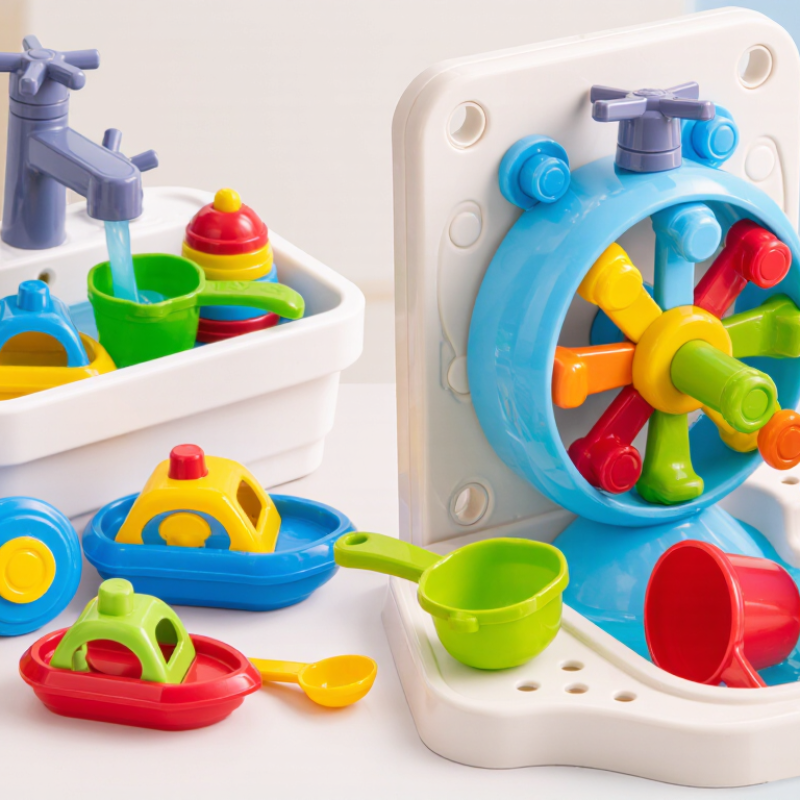
A child’s age should shape the first shortlist. For toddlers, choose large, easy-to-grip pieces with no detachable parts that could fit in the mouth. Check the maker’s age guidance and inspect seams, edges, and moving parts. Older preschoolers may enjoy cups, funnels, and simple water wheels that invite pouring and testing. Keep it simple.
Think about how the child actually plays. A child who likes quiet repetition may prefer scoops and stacking cups. One who enjoys experimenting might stay engaged with a hand pump or floating objects. Look for toys that are easy to rinse and dry; trapped water can encourage mold. I would not assume that more features mean more play. A basic cup can hold attention longer than a noisy, complicated toy.
The sink setup matters just as much. Measure the basin and check whether a faucet, soap dispenser, or divider limits space. A wide, shallow basin can make pouring easier, while a small sink may suit only a few compact toys. Use a stable step stool if needed, and keep an adult within reach throughout water play. Wet floors get slippery fast. Some toys will still be awkward to store, so favor pieces that fit in a ventilated basket and can dry fully between uses.
Check Toy Materials, Safety Features, and Durability
How to Choose the Best Sink Toys in 2026?
For sink play, inspect materials before judging colors or clever features. Choose smooth, nonporous surfaces that are easy to rinse, with no sharp edges, loose magnets, or small detachable parts. Check age guidance and verify that the product meets applicable toy-safety requirements.
In the United States, ASTM F963-23 covers mechanical, physical, and chemical safety for toys. The CPSC’s Toy-Related Deaths and Injuries report estimated 231,700 toy-related emergency-room injuries among children 14 and younger in 2023. That figure covers many toy types, not sink toys alone, but it underscores why safety details matter.
Durability is more than thick plastic. Squeeze cups and floating shapes should keep their form, while hollow toys need openings that let water drain and air circulate. Trapped moisture can encourage mold, even in a toy that looks clean outside. Look closely at seams and joints; they often reveal wear first. No toy stays perfect forever, and I would replace one with cracks, peeling coatings, or a lingering odor.
Tips: After play, rinse toys, shake out water, and air-dry them separately. Check inside hollow pieces weekly. If water will not drain, choose a simpler design.
Compare Size, Water Flow, and Sink Compatibility
The best sink toys are sized for the space, not just the child’s hands. Measure the basin’s usable width and depth, then check whether the toy needs room to sit flat or attach to a surface. A tall spinner may look fun but crowd a shallow sink. Small details matter. Look for rounded edges and pieces large enough to handle comfortably, and follow the maker’s age and supervision guidance.
Water flow changes how a toy works. A gentle stream may turn a small wheel, while a strong faucet can splash water onto the counter. If the faucet has adjustable settings, test the lowest flow first. Check whether the toy needs a direct stream, a filled basin, or simply a few cups of water. Some toys are less engaging than expected when the water pressure is weak; that is worth considering before you buy.
Tips: Measure the sink and faucet clearance, and compare those numbers with the toy’s dimensions. Check that suction cups suit your sink’s surface; textured or curved areas may not hold them well. Rinse toys after use and let them dry fully. Measure twice. A quick fit check can prevent a cluttered basin and disappointing play.
Assess Cleaning, Drying, and Mold-Prevention Needs
When comparing sink toys, look past bright colors and ask what happens after play. A toy that traps water can stay damp inside, even when its outside feels dry. Choose pieces that open fully, have broad drain holes, or contain no sealed water chamber. Small parts should still be easy to handle and suitable for the child’s age. Rinse away soap and visible residue, then follow the care label for detergent or dishwasher use. Don’t assume every toy can take heat. That detail is easy to miss.
Drying matters just as much. Shake out water, separate detachable pieces, and place them where air can reach every surface, not in a closed basket. A clean towel helps, but it cannot dry a hollow cavity. Check seams, valves, and textured grooves regularly for dark spots, odor, or sticky film. Look inside, too. Clean or discard damaged toys, and follow the maker’s care guidance when available. A drainable design is helpful, not magic. Busy routines sometimes leave a toy behind, so keeping only a few in rotation may make drying easier. I’d value simple cleaning over extra features, though a toy children enjoy is more likely to be used—and cleaned.
How to Choose the Best Sink Toys in 2026
Compare common toy designs for cleaning, drying, and mold prevention. Higher scores indicate more favorable design features.
Scores use a 1–5 design-based assessment, not laboratory measurements. Open, easy-to-rinse designs generally dry more readily; sealed toys that trap water are harder to clean and dry thoroughly. Follow the toy maker’s care instructions.
Choose the Best Features and Value for Your Budget in 2026
How to Choose the Best Sink Toys in 2026?
For good value, judge sink toys by how often children can use them, how easily they dry, and whether parts suit their age. A set with a sturdy pour cup, a simple water wheel, and smooth edges may outlast a box of tiny accessories. Check age labels, attachment strength, and cleaning instructions before buying. Look for clear safety information, including ASTM F963 compliance where applicable. The U.S. Consumer Product Safety Commission estimated 231,700 toy-related emergency-room injuries among children aged 14 and younger in 2023. That figure covers toys broadly, not sink toys specifically, but it makes careful age and condition checks worthwhile.
A higher price is not automatically better. Compare the number of durable pieces, replacement availability, and whether the toys fit your sink without blocking the drain. Avoid paying extra for features that are awkward to rinse or store. I’d prioritize easy drying over elaborate designs; damp toys can develop residue, and cleaning them is less fun than play. Still, no feature replaces adult supervision around water.
Tips: Set a budget before browsing. Choose a few washable pieces with secure attachments, then check for cracks or loose parts regularly. Small pieces are a poor fit for young children. Keep play brief, and dry toys fully between uses.