

How to Choose a Coffee Vending Machine in 2026?
Choosing a Coffee Vending Machine in 2026 is not just a matter of comparing prices. The right model must match daily demand, drink preferences, available space, and service capacity. A machine beside a busy office elevator faces different needs from one in a small hotel lobby. Details matter: cup size, milk options, payment methods, refill frequency, and cleaning access can all affect the experience.
Consumer demand offers useful context. The National Coffee Association’s 2024 National Coffee Data Trends report found that 67% of U.S. adults had consumed coffee the previous day, the highest share in the survey’s two-decade history. That figure describes U.S. coffee habits, not vending-machine sales. Still, it signals why reliable access and consistent quality deserve attention. A machine that serves drinks quickly but produces uneven espresso may disappoint regular customers. Small flaws show up fast.
This guide explains how to compare machine types, brewing systems, capacity, operating costs, and after-sales support. Look beyond the purchase price. Ask suppliers about ingredient storage, cleaning routines, warranty coverage, and response times for repairs. If possible, test the menu using the cups and ingredients you expect to use. A specification sheet cannot tell you everything. And no model is perfect: the best choice is the one whose limits fit your location, budget, and maintenance resources.
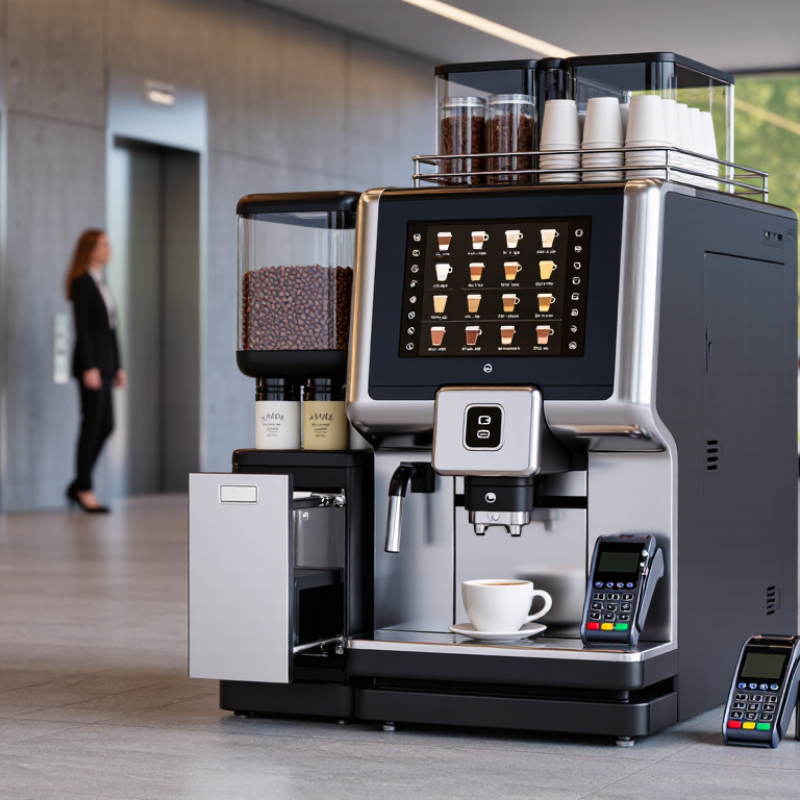
Define Your Location, Users, and Coffee Service Requirements
Before comparing machine features, map the location. A lobby with steady morning traffic needs different capacity from a quiet staff room. Check peak-hour footfall, queue space, power access, water supply, and who will refill the machine. Small details matter. A machine beside a meeting-room entrance may create a queue exactly when people need to pass.
Define who will use it and what they actually drink. The National Coffee Association’s 2024 National Coffee Data Trends report found that 67% of U.S. adults had coffee in the past day. That broad demand does not mean every site needs the same menu. Ask users whether they prefer black coffee, milk-based drinks, decaf, or several cup sizes. A short survey and a week of observing existing habits can prevent costly guesswork.
Then match service requirements to the site’s real limits. NAMA’s 2024 census estimated U.S. convenience-services sales at $26.6 billion in 2023, spanning vending, office coffee, and related services. It signals a substantial service sector, but does not guarantee a particular machine will suit your location. Compare expected cups per day with refill frequency, cleaning time, payment options, and access for maintenance. No spreadsheet is perfect. Leave some room for changing demand, and verify that the proposed service schedule works during the busiest week, not just on a quiet afternoon.
How to Choose a Coffee Vending Machine in 2026? — Define Your Location, Users, and Coffee Service Requirements
| Location | Typical Users and Use Pattern | Planning Demand | Suitable Machine Setup | Site and Utility Requirements | Service and Payment Considerations |
|---|---|---|---|---|---|
| Small office | One team or a single floor; usage is spread across the workday. | About 10–30 drinks per day as an initial planning estimate. | Compact bean-to-cup machine for fresh-ground drinks, or an instant machine where simplicity is the priority. | Check the machine’s dimensions, ventilation clearance, electrical rating, and whether it needs a water tank or a plumbed connection. Provide a nearby waste-water solution if required. | Choose easy-to-clean components and a refill schedule that matches actual use. A staff-access model may not need cashless payment. |
| Medium-sized office | Several teams share the machine, with demand concentrated around breaks and arrival times. | About 30–100 drinks per day as an initial planning estimate. | Commercial bean-to-cup equipment with a suitable grinder, drink selection, and dispensing speed for peak periods. | Confirm water access, drainage needs, electrical supply, counter or floor space, and safe access for refilling and cleaning. | Plan regular milk-system cleaning if fresh milk is used. Contactless or mobile payment can be useful in shared or visitor-accessible areas. |
| Large office or shared workplace | Multiple departments or tenants; several users may arrive at the machine at once. | About 100–250+ drinks per day; validate with observed usage or a trial before selecting capacity. | High-capacity commercial machine, or multiple machines placed near separate user groups. Consider a setup with fast recovery between drinks. | Assess peak-hour throughput, power supply, water connection, drainage, ventilation, and access for delivery and maintenance. | Use a documented cleaning and replenishment schedule. Cashless payment, usage reporting, and remote alerts may simplify operation. |
| Hotel lobby or guest area | Guests and visitors use the service at varying times, often including early mornings and evenings. | Estimate demand from occupancy, opening hours, and expected drink purchases; usage can vary substantially by season. | Self-service machine with clear drink choices and straightforward instructions. Select fresh-milk or ambient-milk options based on cleaning capacity and guest expectations. | Position the machine where guests can queue without blocking entrances. Verify utilities, lighting, spill management, and accessibility of the controls. | Cashless payment may reduce handling needs. Provide visible pricing, allergen information, and a clear contact route for faults or refunds. |
| Retail store or customer waiting area | Customers use the machine intermittently; demand depends on footfall, dwell time, and whether drinks are complimentary or paid. | Measure transactions during representative days before committing to a high-capacity model. | Self-service machine with a simple menu and durable controls. A compact unit may suit limited floor space or uncertain demand. | Allow space for a queue, cup disposal, and cleaning access. Check electrical and water requirements against the site’s available connections. | For paid service, confirm supported payment methods and transaction reporting. For complimentary service, make refill responsibility clear. |
| Factory, warehouse, or staff break room | Shift-based use can create sharp demand peaks at scheduled breaks. | Estimate peak-period drinks as well as the daily total; daily averages alone may understate queueing needs. | Robust commercial machine with a menu suited to quick service. Consider more than one unit if shifts overlap or the site is spread out. | Check the environment, floor stability, cleaning access, and utility connections. Keep the machine away from excessive dust, heat, or moisture unless rated for those conditions. | Set shift-based refill and cleaning checks. Choose payment arrangements that fit site access, such as staff accounts, cashless payment, or free dispensing. |
Planning note: Daily drink volumes are indicative starting ranges, not fixed machine-capacity standards. Actual demand depends on operating hours, menu, user behavior, and peak-time patterns. Confirm the selected machine’s specifications, installation requirements, cleaning procedures, and local electrical and plumbing rules before purchase.
Related Posts
-
Ultimate Comparison of the Top Coffee Vending Machines for Global Buyers in 2023
-
How to Choose a Robot Barista for Your Business?
-

Common Issues Faced with Best Commercial Coffee Machines in Global Sourcing
-
Innovative Approaches for Sourcing Commercial Coffee Machines Globally
-
Unlocking Global Market Potential with Robot Coffee Vending Machines across Diverse Industries
-

China Upgrades Quality of Best Coffee Robot Barista Accelerating Global Sales Success