How to Choose the Best Welding Robots for Your Business?
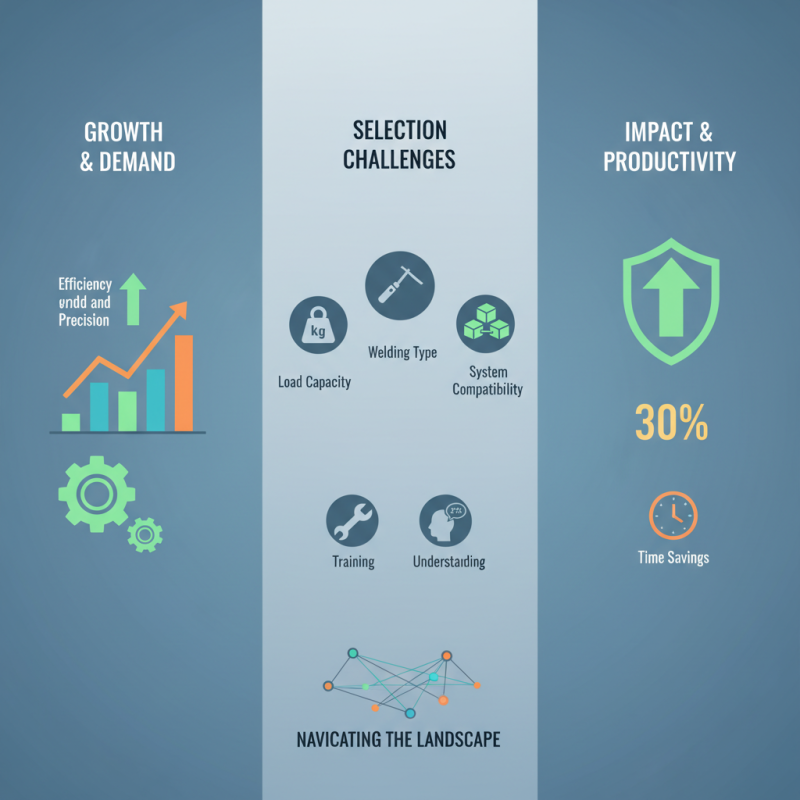
In recent years, the demand for Welding Robots has surged, driven by the need for efficiency and precision in manufacturing. According to a report from ResearchAndMarkets, the global market for welding automation is expected to grow at a CAGR of 6.1% from 2021 to 2026. This growth is largely attributed to advancements in robotics technology and increasing labor costs. Selecting the best welding robot is crucial for businesses aiming to enhance productivity.
Many companies struggle with the right choice of welding robots due to numerous options available. Factors such as load capacity, type of welding needed, and compatibility with existing systems are essential. Industry experts emphasize that failing to consider these elements can lead to increased costs and suboptimal performance. A common pitfall is underestimating the training required for staff to operate and maintain these machines effectively.
Furthermore, the reliability of chosen equipment plays a significant role in a company's bottom line. Research by the International Federation of Robotics highlights that companies incorporating welding robots achieve productivity gains of up to 30%. Yet, many businesses still lack a comprehensive understanding of the long-term implications of their choices. This overview aims to guide companies in effectively navigating the complex landscape of welding robot selection.
Understanding the Different Types of Welding Robots Available
When choosing welding robots, it's essential to understand the different types available. Each type has unique features that cater to specific applications. For instance, articulated robots provide versatility with their multiple joints. They can maneuver in tight spaces and perform complex tasks. On the other hand, gantry robots are ideal for larger projects. Their overhead structure allows for extensive work areas.
Tips: Assess your workload before deciding. Think about the types of materials you frequently use. Some robots excel with metals, while others might handle plastic better.
Consider collaborative robots too. They work alongside humans, enhancing safety and efficiency. These robots offer flexibility but might have limitations in speed. Reflect on your existing workforce and how automation can complement their skills.
Ensure you evaluate training requirements for your team. New technology demands a learning curve. In this ever-evolving field, staying informed is crucial. Explore online resources and connect with industry experts to make an educated choice.
Evaluating Your Business Needs for Welding Automation
When evaluating your business needs for welding automation, it’s essential to consider your production volume. High-volume operations often benefit from automation, leading to consistency and efficiency. Identifying routine tasks can help pinpoint areas where robots can excel. If certain operations are too complex or variable, it may be wise to hold off on automation, at least for now.
Understanding your workforce is equally crucial. Assess if your employees possess the technical skills required to work alongside welding robots. Training might be necessary. Additionally, consider the potential impact on job roles. Automation can enhance productivity but may also lead to workforce displacement concerns. Finding a balance is vital.
Lastly, think about your budget and ROI. Welding robots can be a significant investment. Analyzing costs versus benefits helps in making informed decisions. Are savings on labor exceeding initial expenses? Reflecting on these aspects ensures that your choice aligns with your long-term vision for sustainable growth.
How to Choose the Best Welding Robots for Your Business?
| Dimension | Description | Importance |
| Welding Process | Type of welding (MIG, TIG, Arc, etc.) | Determines the type of robot suitable for tasks. |
| Workpiece Size | Dimensions of the items to be welded. | Influences the reach and payload capacity of the robot. |
| Production Volume | Expected units produced per day/week. | Affects the required speed and efficiency of the robot. |
| Budget | Total expenditure capability for welding automation. | Determines the feasibility of automation solutions. |
| Integration Capability | Compatibility with existing machinery and software. | Essential for seamless operation and productivity. |
| Safety Features | Safety interlocks, emergency stop, etc. | Critical for worker safety and compliance. |
| Maintenance Support | Availability of spare parts and technical assistance. | Impacts long-term operational efficiency. |
Key Features to Consider When Selecting Welding Robots
When selecting welding robots for your business, several key features can significantly influence performance outcomes. First, consider the payload capacity. Many industrial robots have a capacity ranging between 5 kg to over 100 kg. A robot's ability to handle heavier loads can enhance efficiency in complex welds.
Next, evaluate the reach of the robot. A longer reach is essential if your workspace is expansive or if you're dealing with large components. The average reach varies from 500 mm to over 3,000 mm. Beyond specifications, ensure the robot's design simplifies maintenance and integration with existing systems.
Tip: Assess your workflows. Identify areas where robots could replace manual labor. This can lead to better efficiency.
Moreover, look into the programming interface. User-friendly programming helps in quick adaptations to changing needs. Integration with software for simulation can minimize errors during production. It’s worth noting that as reported by the International Federation of Robotics, about 49% of manufacturers cite programming complexity as a barrier to adoption.
Tip: Pilot testing is crucial. Test the chosen robot in real-world conditions to identify potential issues.
Assessing Cost vs. Benefit of Investing in Welding Robots
Investing in welding robots can transform your business’s efficiency. However, it's essential to assess the cost against potential benefits thoroughly. The initial investment can be significant. You need to consider training, maintenance, and integration into existing workflows. These factors can add up quickly, impacting your bottom line.
Evaluate the return on investment (ROI) over time. Welding robots can increase productivity and reduce labor costs. However, if your production volume is low, the benefits may not outweigh the expenses. Conduct a cost analysis to project how long it will take to recoup your investment.
Tips: Start with a pilot program. Test a welding robot on a small scale before full implementation. This strategy allows you to gather data and observe performance without committing large funds upfront. Involve your team in the evaluation process. Their insights can provide you with a practical perspective on the robot's operational impact.
Cost vs. Benefit of Investing in Welding Robots
Maintaining and Upgrading Welding Robots for Optimal Performance
Maintaining welding robots is crucial for optimal performance. Regular inspections can identify wear and tear on key components. Check the welding torch, cables, and robot joints frequently. Even minor damage can lead to significant operational issues. Keep an eye on the parameters as well. Inconsistent settings can decrease quality.
Upgrading software is equally important. Outdated software can limit capabilities and increase downtime. Evaluate your current software's performance periodically. Consider investing in advanced features that enhance automation. Proper training for staff on new systems is vital. This ensures quick adaptation and efficiency.
Reflect on your maintenance practices periodically. Are routines being followed consistently? Gather feedback from your team. They might have insights into recurring issues or inefficiencies. Continuous improvement in maintenance and upgrades will ultimately lead to better productivity and output.