How to Choose the Right Industrial Panel PC for Your Needs?
Choosing the right Industrial Panel PC is crucial for many businesses. These devices serve as crucial interfaces in various industrial settings. They combine computing power with durability and ease of use.
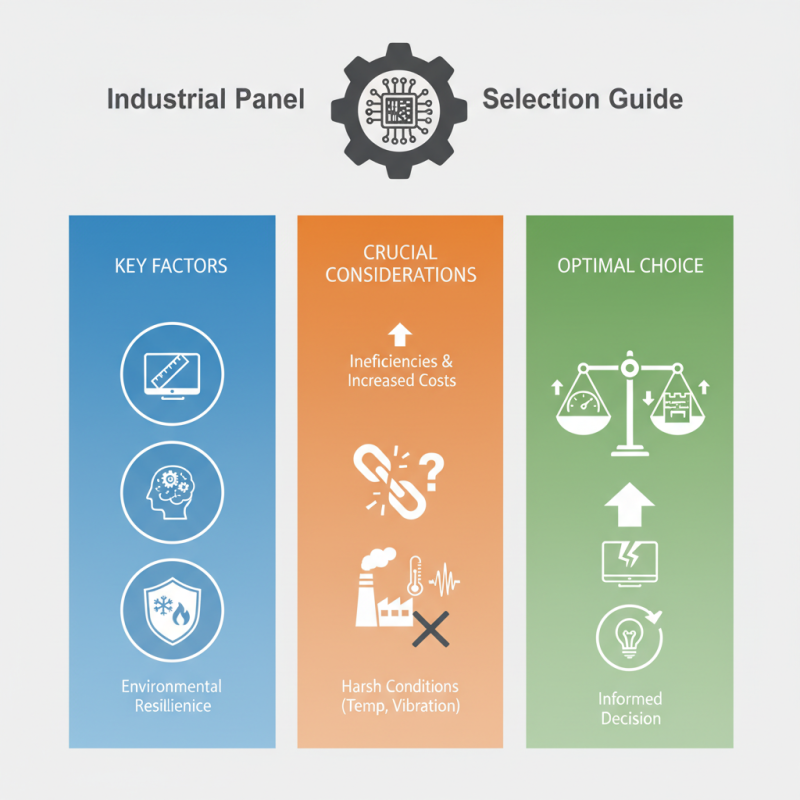
When considering an Industrial Panel PC, factors like size, processing power, and environmental resilience are key. An incorrect choice can lead to inefficiencies and increased costs down the line. Your specific requirements should guide your decision, but many aspects might be overlooked in this process.
For instance, an Industrial Panel PC may need to endure harsh conditions, from extreme temperatures to vibrations. Failing to assess these elements could lead to system failures. Balancing performance and durability is a challenge but essential for optimal operation. Reflecting on your priorities will help you make a better-informed decision.
Understanding Industrial Panel PCs and Their Applications
Industrial panel PCs serve crucial roles in various sectors. They integrate computing, display, and control capabilities into one device. Many industries, like manufacturing and healthcare, rely on these systems. Their rugged design allows them to operate in harsh environments. These devices can handle vibrations, dust, and temperature fluctuations better than regular computers.
Applications vary widely. In factories, workers use them to monitor machinery and streamline processes. In healthcare, they assist with patient data entry and management. The user interface must be intuitive to facilitate quick learning. However, not all models meet usability needs straight out of the box. Some settings require customization, which may take extra time.
Durability is key for industrial applications. A device constantly exposed to dust and moisture needs adequate protection. On the other hand, performance is essential too. A slow system can lead to inefficiencies. Users often find that some industrial panel PCs fall short in processing speed. Reflecting on specific needs helps avoid costly mistakes. Consider the work environment and required software before making a decision.
Key Specifications to Consider When Selecting an Industrial Panel PC
When selecting an industrial panel PC, key specifications are crucial. The processor plays a vital role. A strong CPU ensures quick data processing. Recent industry reports suggest that systems with Intel i5 processors are common in demanding environments. They are efficient for running complex applications. A lesser-known fact is that while these processors are powerful, they may consume more energy, raising operational costs.
Display quality also matters. An IP65-rated screen is desirable. It provides protection against dust and water. A 10-point multi-touch feature enhances user interaction. Some reports highlight that a brighter display can boost productivity by up to 30%. However, excessive brightness might lead to eye strain. This balance should be thoughtfully considered during selection.
Connectivity options can make or break your choice. Multiple USB, Ethernet, and serial ports offer flexibility. Data exchange and communication become seamless with these features. Yet, it's essential not to overlook the importance of wireless capabilities. Industrial settings often necessitate mobility. Robust Wi-Fi and Bluetooth options are advantageous. But they sometimes introduce security risks that need addressing.
Evaluating Performance Needs and Environmental Factors
When selecting an industrial panel PC, performance needs and environmental factors are critical to consider. Determine your application requirements first. For example, high processing power may be essential for graphics-intensive tasks. However, you might not need top-of-the-line specs for simpler operations. Each task demands different resources. Always align the device's capabilities with your specific use case.
Environmental factors play a significant role. Assess the location where the panel PC will operate. Will it be in a dusty factory or a humid environment? Dust-proof and waterproof ratings are crucial. These ratings ensure durability and longevity. Lack of attention to these aspects can lead to failures. It is vital not to overlook temperature ranges as well. Extreme conditions could impact performance.
Tips: Always check the IP rating. A higher rating means better protection. Consider the installation space too. Keep enough room for airflow around the unit. If unsure, consult with experts in the field. Do not compromise on these essentials; the right choice ensures efficiency.
Assessing Connectivity Options and Compatibility Requirements
When choosing an industrial panel PC, connectivity options are crucial. Evaluate your specific needs. Do you require Wi-Fi, Ethernet, or serial ports? Each option has its strengths. Wi-Fi offers flexibility, but can be less reliable in harsh environments. Wired connections often provide stability, but may limit placement.
Compatibility is another vital aspect. Ensure the panel PC supports your existing systems. Check for operating system requirements and application compatibility. An ideal panel should integrate smoothly with your software and peripherals. This reduces potential friction and increases efficiency, but achieving perfect compatibility can sometimes be elusive.
Inspect the expansion options too. Future growth may necessitate additional ports. A panel that allows upgrades often pays off in longevity. However, consider how additional features may complicate setup. If overcomplicated, they can lead to increased maintenance challenges. Balancing these factors is essential for effective decision-making.
Connectivity Options and Compatibility Requirements for Industrial Panel PCs
Budgeting for Your Industrial Panel PC Purchase and Maintenance Costs
When budgeting for an industrial panel PC, consider upfront and ongoing costs. The initial purchase price can vary widely. It often depends on the specifications and features you require. Think about your typical workload. Are you running complex applications? If so, you may need to invest more upfront.
Maintenance costs are equally important. Regular maintenance can extend the life of the equipment. It is vital to factor in these expenses when planning your budget. Sometimes, businesses overlook these figures. This can lead to financial strain. Equipment breakdowns can also be costly. A reliable maintenance plan can mitigate unexpected repair costs.
Furthermore, consider potential upgrades and software expenses. Over time, your needs may change. As technology evolves, keeping your system current can be a challenge. It might require additional investment. Evaluating both current and future needs is a balancing act. A thorough analysis helps make informed decisions. A well-structured budget can prevent future headaches.