

How to Choose the Best Laser Cleaning Equipment?
Choosing Laser Cleaning Equipment is not a wattage contest. The right system must remove the contaminant without damaging the substrate or leaving an unacceptable surface finish. Grand View Research’s Laser Cleaning Market report segments the field by technology, application, and end use—a useful reminder that one machine rarely suits every job. A rusty steel bracket, a thin aluminum panel, and a painted component can react very differently to the same laser settings.
Look beyond headline power. Check pulse characteristics, beam delivery, working distance, extraction needs, and the supplier’s material-testing process. Ask for a trial on your own parts. Watch the treated area under clear lighting; inspect edges, recesses, and heat-sensitive zones. Small details matter. A polished sample plate is not enough.
Laser-processing researcher Dr. Lin Li’s work offers a useful principle: match the process to the material and the required result. This is a paraphrase, not a verified verbatim quotation. A direct quotation should be checked against its original source before publication. That caution matters. Product claims and market summaries cannot replace measured trials, documented settings, and operator training. The best Laser Cleaning Equipment is the system that performs consistently on your real parts—not merely the one with the largest power rating. Sometimes the honest answer is that more testing is needed.
Define the Materials and Contaminants to Be Removed
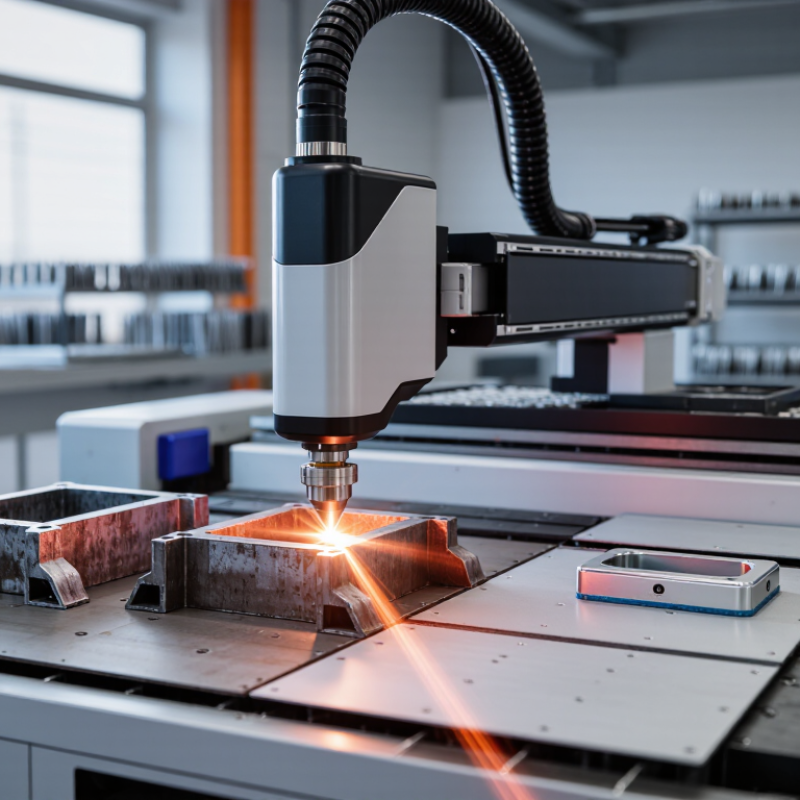
Before comparing laser cleaning equipment, identify the exact material beneath the contamination. Steel, aluminum, stone, and composite surfaces respond differently to laser energy. Even similar-looking metals can vary in reflectivity and heat sensitivity. A thin aluminum part, for example, may need gentler settings than a thick steel plate.
Then describe what must be removed. Rust, paint, oil, oxide layers, and soot do not absorb energy in the same way. Note the contaminant’s thickness, age, and coverage. Is it a light film or a hard, uneven crust? That detail matters. So does the required finish: removing corrosion from a hidden support is different from cleaning a visible, finely machined surface.
A small test area can reveal problems that a written specification misses. Check for discoloration, pitting, residue, or changes to the base material. Record the working distance and settings, then inspect the surface under good lighting. Be cautious with delicate coatings and heat-sensitive parts; a successful test on one area does not guarantee identical results everywhere. The surface may be less uniform than it looks. If the substrate or contaminant is uncertain, pause and identify it before choosing equipment.
Match Laser Type and Power to the Cleaning Task
Choosing laser type starts with the contaminant and the surface beneath it. Short-pulse systems can remove thin oxide, paint, or residue with limited heat transfer when settings are carefully controlled. They suit detailed work on tools, molds, and metal parts where preserving edges matters. Continuous-wave systems deliver steady energy and may clean broad, robust surfaces faster, but they can heat the base material more. That difference matters on thin sheet or heat-sensitive components.
Power is only one part of the match. A high-wattage unit does not automatically clean better; pulse energy, repetition rate, spot size, and scanning speed affect the result. For light rust on a small steel fitting, moderate power and a narrow scan may prevent unnecessary heating. Heavy coating on a large plate may need greater output and a wider working area. Watch the surface. If discoloration or roughness appears, stop and adjust rather than increasing power by habit.
Test on a representative offcut whenever possible. Check the cleaned area under bright light, then inspect for residue and surface change. Keep extraction and protective controls suited to the material and process. Real parts are rarely uniform, unfortunately. A setting that works on one corner may leave stubborn patches elsewhere, so plan for measured adjustments.
How to Choose the Best Laser Cleaning Equipment? - Match Laser Type and Power to the Cleaning Task
| Cleaning Task | Suitable Laser Type | Indicative Output Power | Why It May Fit | Key Selection Considerations |
|---|---|---|---|---|
| Light rust, thin oxide, or light contamination on steel parts | Pulsed fiber laser, commonly around 1064 nm | About 100–300 W | Short pulses can remove surface contamination while limiting heat transfer compared with continuous-wave operation. | Check the required cleaning rate and surface finish. Test settings on a sample, especially on thin or finely finished parts. |
| Heavier rust or larger steel components | Higher-power pulsed fiber laser | About 300–500 W or higher | More average power can increase removal rate for demanding jobs while retaining pulsed operation. | Power alone does not determine performance. Pulse energy, repetition rate, scan width, and beam delivery also matter. |
| Thick coatings, paint, or heavy contamination over large metal areas | Continuous-wave (CW) fiber laser | About 1–3 kW for many high-throughput industrial systems | CW systems can deliver high processing rates over broad areas and are often considered for production-scale work. | Higher heat input can discolor, warp, or damage the substrate. Confirm coating composition, substrate thickness, and thermal limits. |
| Precision cleaning of small metal features or delicate surfaces | Low-power pulsed fiber laser or ultrafast pulsed laser | Typically tens to a few hundred watts, depending on the system | Short, controlled pulses can support localized removal and help reduce heat-affected zones when correctly configured. | For very sensitive materials, prioritize process control and test results over maximum rated power; ultrafast systems may have higher costs. |
| Cleaning sensitive components where visible or near-infrared absorption is unsuitable | UV pulsed laser, commonly around 355 nm | Often a few watts to several tens of watts | Shorter-wavelength UV light can suit certain precision processes and materials, depending on how the contaminant and substrate absorb it. | UV is not automatically safer for the substrate. Verify compatibility, cleaning speed, optical access, and laser safety requirements. |
| Removing surface residues from molds, tools, or equipment with complex geometry | Pulsed fiber laser with suitable scanning optics and access options | About 100–500 W for many general-purpose applications | A scanning head can cover practical working areas, while pulsed operation can be adjusted for localized cleaning. | Check focal distance, working-area coverage, head weight, extraction needs, and whether recesses or shadowed areas can be reached. |
| Cleaning a coating from a heat-sensitive or thin substrate | Low-power pulsed laser; consider ultrafast or UV options if trials justify them | Application-dependent; begin with the lowest effective process settings | Carefully controlled energy delivery may reduce unwanted heating compared with high-power continuous exposure. | Run a representative test and inspect for discoloration, pitting, coating residue, or changes to the substrate before production. |
Note: Power ranges are indicative examples, not universal specifications. The right choice depends on the contaminant, substrate, required removal rate, surface-quality limits, beam and pulse settings, and workplace safety controls. Confirm performance with sample testing and follow applicable laser-safety requirements.
Assess Cleaning Speed, Precision, and Work Area
How to Choose the Best Laser Cleaning Equipment?
Assess Cleaning Speed, Precision, and Work Area
Choosing laser cleaning equipment starts with the job, not the advertised maximum speed. Test the actual material and contaminant, such as rust on a steel bracket or paint near a seam. A fast pass can leave residue in corners. That matters. Track the time needed to reach the required finish, including setup and repositioning. A small test area is useful, though it may not represent a large, uneven part.
Precision depends on pulse settings, beam control, and operator handling. On thin sheet metal, excessive heat can discolor or warp an edge. On cast parts, a wider scan may remove deposits faster but miss narrow grooves. Request sample results under repeatable conditions, then inspect them under consistent lighting. Keep a record of settings. Minor variation is normal; no test captures every surface perfectly.
The usable work area is more than the marked scan width. Measure the largest part, then allow room for clamps, rotation, and safe movement around the beam path. A broad panel may need a larger field or several overlapping passes; overlaps can create visible bands if settings drift. Check working distance and focus across the whole surface. On curved components, one fixed position may not keep the beam equally sharp. Choose equipment that suits typical jobs, not only the biggest occasional item.
Compare Safety Features, Ease of Use, and Operating Costs
Choosing laser cleaning equipment starts with safety, not headline power. Check for a guarded work area, an emergency stop, and interlocks that prevent accidental operation. Confirm that the supplied eyewear suits the laser’s wavelength, and ask how fumes and dust are managed for your materials. A live demonstration can reveal details a brochure misses, such as stray reflections or awkward access to a workpiece.
Ease of use affects output every day. Try the controls with a representative part, and see whether operators can set cleaning parameters without guesswork. Ask about training, routine maintenance, replacement optics, electricity use, and extraction requirements. Compare these expenses over a typical year, not just the purchase price. Fast is not always cheap. A comparison can look neat on paper, but actual results may vary with coatings, part shape, and operator skill.
Tips: Bring a sample with real residue. Time setup and cleaning, then inspect the surface under consistent lighting. Record the labor, consumables, and downtime. Leave room for uncertainty; one test is rarely the whole story.
How to Choose the Best Laser Cleaning Equipment?
Compare safety features, ease of use, and operating costs
Indicative buyer-guide ratings on a 1–5 scale, where 5 is most favorable; the operating-cost score reflects lower routine costs. These are qualitative comparisons, not standardized test results. Actual safety depends on the complete system, including enclosure, interlocks, and work procedures; costs vary by application and configuration.
Check Compliance, Service Support, and Long-Term Suitability
Before comparing cleaning speed, check whether the equipment fits your workplace requirements. Ask for current conformity documents, clear operating instructions, and details about required protective measures. Requirements vary by location and application, so verify them with a qualified safety professional. Look closely at beam enclosures, interlocks, warning indicators, and fume extraction. Paperwork matters. So does a safe setup on the shop floor.
Service support affects uptime long after delivery. Ask who handles installation, operator training, troubleshooting, and routine maintenance. Confirm response times, service coverage, and the availability of common replacement parts. A useful test is to describe a realistic fault, such as a warning light during a shift, and ask what happens next. Vague answers are worth noting.
Think about the work you expect to do over several years, not just the first sample. Compare the system’s working area, mobility, power needs, and compatibility with your materials and production schedule. Request a practical demonstration on representative parts, then inspect the finish under consistent lighting. Keep those results. A spreadsheet cannot capture every inconvenience, and I would not treat a perfect demo as a guarantee. Still, written test conditions make later comparisons more reliable. Check whether staff can operate the equipment comfortably and whether the service plan can grow with changing workloads.