How to Choose the Right Carbon Steel Shaft?
Choosing the right Carbon Steel Shaft begins with understanding its real working environment, not just its catalog grade. A shaft turning at 1,800 revolutions per minute faces different demands from one supporting a slow conveyor. Torque, bending loads, shock, temperature, corrosion, and operating hours all influence the decision. A bright, polished surface may look reliable, yet a hidden keyway can create a serious stress concentration.
Richard G. Budynas, a respected mechanical-design author and co-author of Shigley’s Mechanical Engineering Design, offers a useful principle: “A shaft is not designed for strength alone; deformation and fatigue also govern its performance.” That guidance remains practical on the factory floor. Engineers should compare yield strength, fatigue resistance, hardness, machinability, and heat-treatment response. Diameter matters too. A small increase can greatly improve torsional capacity, but it may create alignment or cost problems.
The selection process should also examine material certificates, dimensional tolerances, straightness, surface finish, and supplier consistency. For example, a shaft with a rough shoulder can accelerate crack initiation under repeated loading. Moisture near a bearing seat may invite corrosion, even when the steel grade appears suitable. No choice is perfect. I have seen designs that met static calculations but failed after vibration exposed overlooked fatigue damage. That is why a reliable Carbon Steel Shaft should be selected through calculations, application history, and inspection evidence. When uncertainty remains, prototype testing and conservative safety factors are wiser than relying on a familiar grade.
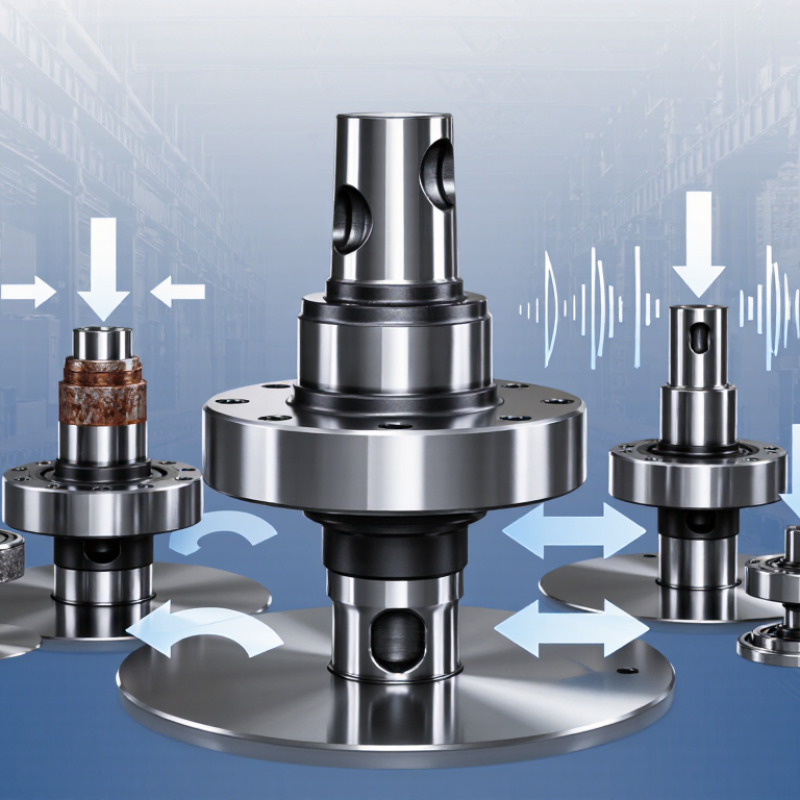
Define the Required Shaft Function and Operating Conditions
How to Choose the Right Carbon Steel Shaft?
Define the shaft’s function before choosing its material or diameter. Is it transmitting torque, supporting a pulley, guiding a roller, or carrying a rotating load? A drive shaft may face torsion and bending together. A conveyor shaft may experience shock from uneven loading. Write down the torque, speed, span, bearing positions, and expected service life. Small omissions create expensive redesigns.
Operating conditions matter just as much. Record temperature, humidity, dust, chemicals, start-stop cycles, and misalignment risks. ISO 20816-3 evaluates rotating-machine vibration through RMS velocity, helping engineers identify unacceptable vibration levels. ISO 281 defines bearing L10 life at 90% reliability, which is useful when checking shaft-bearing compatibility. These figures do not replace a complete calculation. They only frame the decision.
Material data must match real conditions. ASTM A29/A29M provides dimensional and mechanical requirements for carbon and alloy steel bars, but the selected grade still needs verification through certified test reports. Check yield strength, hardness, machinability, and heat-treatment response. Then calculate torsional stress, bending stress, deflection, and fatigue safety. Surface corrosion may reduce fatigue strength faster than expected. I have seen shafts fail near keyways, not at their smooth centers. That detail is easy to overlook. A conservative design should also examine stress concentration, assembly tolerances, and actual load changes instead of relying only on catalog values.
Select the Appropriate Carbon Steel Grade and Strength Level
Choosing the right carbon steel shaft starts with its strength level, not its diameter.
AISI 1020 suits lightly loaded shafts, pins, and spacers where machinability matters more than high torque capacity.
AISI 1045 offers a stronger option for keyed shafts, couplings, and moderate shock loads.
ASM Handbook, Volume 1, reports typical normalized 1045 steel values near 565 MPa tensile strength and 310 MPa yield strength. These figures are useful benchmarks, not guarantees.
Heat treatment changes the answer significantly.
Normalizing refines the structure, while quenching and tempering can raise strength but may reduce toughness if poorly controlled. ASTM A29/A29M defines chemical and general material requirements, yet the delivered shaft still needs a certified condition and test report.
Ask for hardness, tensile results, heat-treatment records, and grain-direction information.
ISO 6892-1 provides the tensile-testing method used to verify mechanical properties.
Strength alone can mislead.
A shaft with high tensile strength may fail at a keyway, shoulder, or corroded surface. Check yield strength, fatigue loading, impact exposure, and allowable deflection together.
A common mistake is selecting 1045 simply because it “sounds stronger.” That choice may increase cost without solving fatigue problems.
I would also question catalog values when no heat-treatment condition is stated. Small details matter. Select the grade after defining torque, speed, shock, diameter, and service temperature.
Match Shaft Dimensions to Load, Speed, and Deflection Limits
How to Choose the Right Carbon Steel Shaft?
Match Shaft Dimensions to Load, Speed, and Deflection Limits
Choosing a carbon steel shaft starts with the working load, not the outside diameter. Measure torque, bending force, shaft length, and support spacing. A shaft carrying a steady torque may need less diameter than one facing shock loads. Service conditions matter.
Use the design torque to estimate torsional stress, then check bending stress at the most heavily loaded section. For a solid round shaft, diameter strongly affects strength and stiffness. A small diameter increase can greatly reduce deflection. This is often more valuable than simply choosing a harder steel grade.
Speed adds another concern. A long shaft may approach a critical speed, causing vibration, noise, or fatigue damage. Check the shaft’s natural frequency against the operating range. Keep a suitable margin, especially when the drive starts and stops frequently. Keyways, shoulders, and threads create stress concentrations. Do not ignore them.
Deflection limits should come from the connected equipment. Excessive movement can misalign bearings, enlarge seals, or reduce gear contact. For rotating systems, inspect both angular and lateral deflection. A beam calculation provides a useful estimate, but real assemblies are less cooperative. Bearing stiffness, mounting accuracy, and manufacturing tolerances can change the result. Recheck the design after adding keys, couplings, or surface treatments. The first calculation may look convincing. It may still be incomplete.
Verify Manufacturing Quality, Tolerances, and Service Compatibility
How to Choose the Right Carbon Steel Shaft?
Verify Manufacturing Quality, Tolerances, and Service Compatibility
A carbon steel shaft should match the machine, not just the drawing. Check the material grade, heat number, hardness range, and mill certificate. These records support traceability and reveal whether the supplied steel matches the specification. Ask how straightness, diameter, surface finish, and keyway dimensions were inspected. Reliable suppliers can provide inspection reports with actual readings, not only target values. I have seen shafts pass visual checks yet fail because their journals were slightly oversized.
Tips: Measure mating parts before ordering. Confirm dimensional tolerances, runout limits, and the required fit. For rotating assemblies, even a small alignment error can create vibration, noise, and premature bearing wear. Consider independent inspection for high-load or safety-critical applications.
Service conditions deserve equal attention. Estimate torque, bending load, shock, speed, and operating temperature. Then check whether the shaft’s strength and fatigue resistance meet those demands. Carbon steel can perform well, but moisture and chemicals may cause corrosion without suitable protection. Review coating, lubrication, sealing, and maintenance requirements together. Also verify compatibility with bearings, couplings, gears, and keys. A shaft may meet the drawing but still perform poorly in the complete assembly. One overlooked detail is thermal expansion; it can alter clearances during long operation. Allow room for review, because initial assumptions are often incomplete.
How to Choose the Right Carbon Steel Shaft?
Verify manufacturing quality, dimensional tolerances, and service compatibility before purchasing or machining a shaft.
Reference values for normalized carbon steel grades commonly specified under EN 10083-2. Values are representative minimum or lower-bound values for standard section sizes; the material certificate and exact product size should always be checked.
Manufacturing Quality
Request chemical composition, heat-treatment condition, surface condition, and a traceable EN 10204 inspection certificate.
Dimensional Tolerances
Define the shaft diameter, roundness, straightness, surface roughness, and ISO 286 tolerance class according to the bearing or mating-part fit.
Service Compatibility
Select the grade according to torque, bending fatigue, shock loading, hardness requirements, operating temperature, and corrosion exposure.