

top of page

What Is a Cold Storage Condensing Unit and How Does It Work?

A Cold Storage Condensing Unit is the working heart behind many refrigerated rooms, warehouses, and food distribution facilities. It removes heat from the storage space and releases that heat outdoors. The process sounds simple. The details are not.

Inside the system, refrigerant leaves the evaporator as a low-pressure vapor. The compressor raises its pressure and temperature. The condenser then rejects heat through metal tubes and fins, often helped by a fan. After that, the expansion device reduces pressure before the refrigerant returns to the evaporator. The cycle repeats while the room remains below its target temperature.

Dr. Andy Pearson, a respected refrigeration engineer and former Group Engineering Director at Star Refrigeration, often explains the core principle this way: “Refrigeration is the controlled movement of heat.” That idea matters when examining a Cold Storage Condensing Unit. The unit does not create cold. It moves unwanted heat away.

A practical example helps. In a frozen-food room, warm air enters whenever a worker opens the insulated door. Moisture may also form frost on the evaporator coil. The condensing unit must handle that changing load without excessive cycling or pressure instability.

Small errors matter.

An undersized unit may run continuously. An oversized unit may short-cycle and waste energy. Poor airflow can raise discharge pressure, damage components, and shorten service life. These problems are easy to overlook during planning.

This guide explains each component, operating stage, selection factor, and maintenance concern. It also acknowledges an uncomfortable truth: field conditions rarely match design assumptions perfectly. Reliable performance requires measurement, correct commissioning, regular cleaning, and advice from qualified refrigeration professionals.
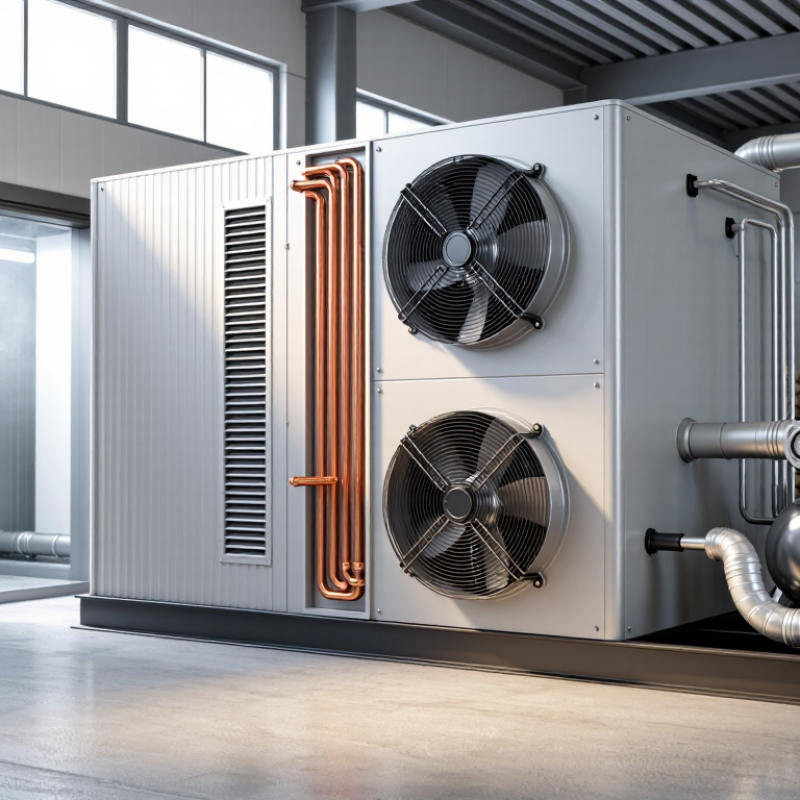
What Is a Cold Storage Condensing Unit and How Does It Work?

Definition and Main Components of a Cold Storage Condensing Unit

What Is a Cold Storage Condensing Unit and How Does It Work?

A cold storage condensing unit is the heat-rejection section of a refrigeration system. It removes heat from a storage room and releases it outside. The unit usually contains a compressor, condenser coil, fan, liquid receiver, filter-drier, and control devices. Together, these parts maintain the refrigerant cycle and support stable room temperatures.

The compressor draws in low-pressure vapor from the evaporator and raises its pressure. This creates hot, high-pressure gas. The condenser coil then transfers heat to surrounding air, while the fan improves airflow across the coil. After condensation, liquid refrigerant passes through the receiver and filter-drier. An expansion valve later reduces its pressure before the refrigerant returns to the evaporator. It sounds simple. In practice, the neat diagram is never the whole story. Dirty coils, restricted airflow, or incorrect refrigerant charge can reduce performance and increase energy use. A technician should confirm pressures, electrical readings, airflow, and temperature under actual operating conditions.

Tips: Keep the condenser coil clean and leave clear space around the fan outlet. Check unusual vibration, oil marks, frost patterns, or long running times early. These signs may indicate leakage, airflow problems, or control faults. Record temperature readings regularly. Small errors matter, especially when products require tight temperature control. Maintenance records also help technicians identify changes before a minor issue becomes an expensive repair.

What Is a Cold Storage Condensing Unit?

A cold storage condensing unit removes heat from the refrigeration circuit and rejects it to the surrounding air or water. Its main components are the compressor, condenser, receiver, liquid-line filter-drier, service valves, and control devices. The compressor raises the refrigerant pressure, while the condenser changes high-pressure vapor into liquid.

The chart shows representative evaporating-temperature ranges commonly used for different cold-storage applications. Actual values depend on product requirements, room heat load, refrigerant selection, defrost method, and system design.

How the Refrigeration Cycle Transfers Heat from Cold Storage

A cold storage condensing unit drives the refrigeration cycle outside the insulated room. Its compressor draws in low-pressure refrigerant vapor and compresses it into a hot, high-pressure vapor. The condenser then releases heat to outdoor air. The vapor becomes a high-pressure liquid. The heat has moved elsewhere.

The liquid passes through an expansion valve, where pressure drops sharply. Its temperature falls, creating a cold refrigerant mixture. Inside the storage room, the evaporator absorbs heat from air and products. Refrigerant boils inside the coil, while fans circulate air around cartons, pallets, or hanging meat. The vapor returns to the compressor, and the cycle repeats. It is simple in theory.

The ideal diagram hides practical losses. Frost on an evaporator reduces airflow, while a dirty condenser raises discharge pressure. Small operating errors can increase energy use. The International Institute of Refrigeration estimates refrigeration represents about 17% of global electricity consumption. The IEA’s The Future of Cooling report also warns that cooling demand may triple by 2050. These figures show why pressure control, insulation, defrost timing, and door discipline matter. A door left open for two minutes feels harmless. It is not always harmless. Technicians should verify superheat, subcooling, airflow, and refrigerant charge during service, rather than trusting temperature readings alone. (Sources: International Institute of Refrigeration, Informatory Note; International Energy Agency, The Future of Cooling, 2018.)

The Step-by-Step Operation of a Condensing Unit

A cold storage condensing unit drives the refrigeration cycle that protects food, medicine, and other temperature-sensitive goods. Its main parts include a compressor, condenser coil, fan, and control devices. The process begins when the compressor draws low-pressure refrigerant vapor from the evaporator. It compresses the vapor, raising its pressure and temperature.

The hot vapor then enters the condenser coil. Outdoor air removes heat through the coil, while the fan improves airflow. As the refrigerant cools, it changes into a high-pressure liquid. A filter-drier can remove moisture and particles from the circuit. The liquid reaches the expansion valve, which meters its flow into the evaporator. Pressure drops sharply there.

Now the refrigerant becomes cold and absorbs heat from the storage room. Fans move air across the evaporator, keeping temperatures more even around stacked products. The refrigerant changes back into vapor and returns to the compressor. The cycle repeats.

A technician checks suction pressure, discharge pressure, superheat, and condenser cleanliness during service. Frost patterns also reveal useful clues. Uneven frost may indicate airflow trouble, restricted refrigerant flow, or an incorrect valve setting. Small errors matter. A dirty coil can raise energy use and operating pressure. In practice, readings should be compared with the equipment specification, not guessed from appearance. Door openings, warm products, and poor insulation can also overload the system, even when the condensing unit works correctly.

Key Factors Affecting Cooling Performance and Efficiency

What Is a Cold Storage Condensing Unit and How Does It Work?

A cold storage condensing unit removes heat from an insulated room. Its compressor raises the refrigerant pressure and temperature. The condenser then releases heat into the surrounding air. After expansion, the refrigerant becomes cold and absorbs heat inside the evaporator. This cycle continues while the thermostat demands cooling. In practice, stable performance depends on several connected details, not compressor size alone. Ambient temperature matters greatly. A condenser exposed to hot air works harder and consumes more electricity. Restricted airflow creates similar stress.

Clean coils help. Dirty fins act like a blanket around the condenser. Technicians should also check refrigerant charge, suction pressure, superheat, and electrical connections. Incorrect charge can reduce capacity and damage the compressor over time. Door openings add warm, humid air. Poor insulation makes the system run longer. Frequent defrost cycles may also increase room temperature. I have seen a system appear weak when the real problem was a damaged door seal. Small faults can become expensive. A perfect setting rarely lasts.

Tips: Keep condenser fins clean and leave clear space around the unit. Record room temperature, suction pressure, and compressor run time weekly. Watch for unusual frost, oil marks, or short cycling. Use calibrated instruments during service. Do not adjust refrigerant by guesswork. Check the evaporator fan and drain line, too. They are often overlooked. Seasonal conditions can change the readings, so compare records rather than relying on one inspection.

What Is a Cold Storage Condensing Unit and How Does It Work? - Key Factors Affecting Cooling Performance and Efficiency

Typical operating data and design considerations for air-cooled cold-storage condensing units

System Dimension Component or Parameter Typical Data or Range How It Works Effect on Cooling Performance and Efficiency
System Definition Condensing unit Compressor + condenser coil + condenser fan + controls The compressor raises the refrigerant pressure and temperature. The condenser then rejects heat to outdoor air before the refrigerant travels to the expansion device and evaporator. Correct component matching is essential for stable suction pressure, adequate capacity, and reliable operation.
Cooling Application Medium-temperature cold room Approximately 0°C to 7°C room temperature Used for products that require chilled rather than frozen storage. The evaporator normally operates below the room air temperature to absorb heat. A smaller evaporator temperature difference can improve product quality but may require a larger heat-transfer surface.
Cooling Application Low-temperature freezer room Approximately -18°C to -25°C room temperature The evaporator operates at a much lower temperature to remove sensible and latent heat from the storage space. Lower evaporating temperatures reduce compressor capacity and increase power consumption, so insulation and door control become especially important.
Compressor Compression ratio Discharge absolute pressure ÷ suction absolute pressure The compressor circulates refrigerant and creates the pressure difference needed for heat transfer between the evaporator and condenser. A higher compression ratio generally increases discharge temperature and electrical input while reducing system efficiency.
Refrigerant Circuit Evaporating temperature Typically 5–12 K below the target room temperature Refrigerant absorbs heat and boils inside the evaporator at a controlled low pressure and temperature. An excessively low evaporating temperature lowers capacity and COP; an excessively high temperature may prevent the room from reaching its setpoint.
Refrigerant Circuit Superheat Often about 5–8 K at the evaporator outlet; manufacturer-dependent Superheat is the temperature of vapor above its saturation temperature. It helps ensure that liquid refrigerant does not enter the compressor. Too little superheat can cause liquid floodback; too much superheat can reduce evaporator utilization and cooling capacity.
Refrigerant Circuit Subcooling Often about 3–8 K at the condenser outlet; system-dependent Subcooling lowers the liquid refrigerant temperature below its condensing temperature before the expansion device. Adequate subcooling reduces the risk of flash gas in the liquid line and supports consistent expansion-device feeding.
Condenser Condensing temperature Commonly 8–15 K above outdoor air temperature for air-cooled systems The condenser rejects heat absorbed in the room plus the compressor’s input energy to the surrounding air. Dirty coils, blocked airflow, or high outdoor temperature raise condensing pressure and increase compressor power.
Airflow Condenser coil cleanliness Fins should remain visibly open and free of heavy dust or grease Open coil passages allow the condenser fan to move air across the heat-transfer surface. Restricted airflow increases condensing temperature, may activate high-pressure protection, and can shorten compressor life.
Heat Transfer Evaporator air temperature difference Commonly about 6–12 K between room air and evaporating temperature The temperature difference drives heat flow from the storage room air and products into the evaporator refrigerant. A larger difference can reduce coil size but may increase product dehydration and frost formation.
Electrical Performance Coefficient of performance (COP) Cooling capacity ÷ compressor and system electrical input COP indicates how much cooling is delivered for each unit of electrical energy consumed. COP normally improves with higher evaporating temperature and lower condensing temperature.
Load Calculation Heat-load sources Transmission, infiltration, product load, lighting, fans, people, and defrost The condensing unit must remove both heat entering the room and heat generated inside the room. Oversizing can cause short cycling and poor humidity control; undersizing can lead to long runtimes and unmet temperature targets.
Building Envelope Insulation and vapor barrier Panel performance depends on material, thickness, joints, and installation quality Insulation reduces conductive heat gain, while the vapor barrier limits moisture migration into cold panels. Gaps, damaged seals, and thermal bridges increase compressor runtime and may cause condensation or icing.
Door Management Door opening and infiltration Load varies with opening frequency, duration, room size, and temperature difference Warm, humid air enters whenever the door is opened, adding sensible heat and moisture to the cold room. Strip curtains, air curtains, automatic closers, and disciplined door use can significantly reduce cooling demand and frost.
Defrost Defrost method and interval Off-cycle, electric, or hot-gas defrost; scheduled by time or demand Defrost removes ice from the evaporator so that airflow and heat transfer can be maintained. Insufficient defrost restricts airflow; excessive or prolonged defrost adds heat to the room and wastes energy.
Controls Temperature setpoint and differential Setpoint is application-specific; differential is commonly a few kelvin The controller starts and stops the refrigeration system according to measured room temperature and the selected differential. A properly selected differential reduces short cycling while keeping product temperature within the required range.
Maintenance Inspection frequency Visual checks routinely; detailed service at least annually or as required by operating conditions Maintenance includes coil cleaning, fan inspection, electrical checks, leak testing, drain inspection, and control verification. Preventive maintenance helps preserve heat-transfer performance, detect refrigerant loss, and avoid unplanned shutdowns.
Note: The numerical ranges are typical engineering guidelines rather than universal design values. Final selection should be based on the refrigerant, compressor model, outdoor conditions, room dimensions, product load, insulation, local regulations, and the equipment manufacturer’s data.

Common Types, Applications, and Maintenance Requirements

A cold storage condensing unit removes heat from refrigerated spaces. It combines a compressor, condenser, fan, receiver, and controls. The compressor raises the refrigerant pressure. The condenser then releases heat into the surrounding air. This cycle helps maintain stable temperatures for food, medicine, flowers, and industrial materials.

Common types include air-cooled, water-cooled, and low-temperature units. Air-cooled models suit many warehouses because installation is simpler. Water-cooled systems can perform well where water service is reliable. Low-temperature units support frozen storage, but they demand careful oil management and defrost planning. Applications range from small cold rooms to distribution centers. A unit selected only by cooling capacity may still perform poorly. Door openings, insulation, ambient heat, and product loading matter too.

Tips: Keep condenser coils clean and unobstructed. Check refrigerant lines for unusual vibration or oil marks. Inspect fan blades, electrical terminals, drain paths, and safety controls regularly. Record suction pressure, discharge pressure, temperature, and energy use. Small changes can reveal trouble early. Technicians should follow manufacturer procedures and local safety requirements. Do not ignore frost patterns. They may indicate airflow problems, poor defrosting, or an incorrect charge. A maintenance schedule helps, but real operating conditions require judgment.

bottom of page