
top of page

How to Find China Best Coffee Machine Suppliers?

Finding the right Coffee Machine supplier in China requires more than comparing factory prices. It demands evidence, technical judgment, and practical testing.

The International Coffee Organization reported global coffee consumption at about 177 million 60-kilogram bags in 2023/24. That scale creates strong demand for reliable commercial equipment. Meanwhile, the Specialty Coffee Association emphasizes consistency, water quality, extraction control, and barista training. These factors should guide supplier evaluation, not attractive product photos alone.

As coffee expert Scott Rao has stated, “The goal is a sweet, balanced, and complex beverage.” His point applies directly to purchasing decisions. A low-cost machine may look efficient, yet unstable temperature, weak steam pressure, or delayed spare parts can damage daily operations. Ask suppliers for test results, component brands, warranty terms, and service response times. Request a live demonstration using your preferred coffee and water.

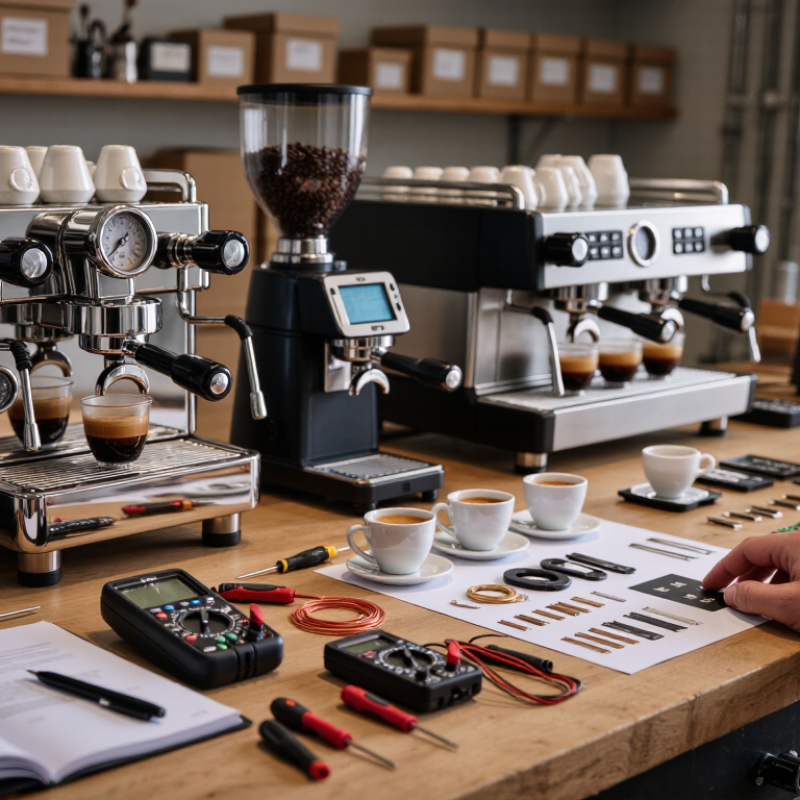
Small details matter. Check the boiler recovery after ten consecutive shots. Inspect the group head, pump, wiring, and safety certification. Ask who repairs the machine when it fails overseas. Written answers are better.

Still, supplier selection is not perfectly predictable. Reports describe market trends, but they cannot measure every factory’s honesty. Factory audits can also miss problems between production batches. That limitation deserves attention.

The strongest China-based supplier usually offers transparent communication, stable quality control, documented compliance, and realistic after-sales support. Price matters. It should not lead. A dependable Coffee Machine must protect flavor, uptime, and customer trust.
How to Find China Best Coffee Machine Suppliers?

Define Your Coffee Machine Sourcing Requirements

Before contacting China coffee machine suppliers, define the machine you actually need. A vague request produces vague quotations, even from experienced factories. Record beverage types, daily output, peak-hour demand, and available counter space.

A small café may need 40 cups per hour, while a hotel breakfast area may need 180. Specify espresso, filter, capsule, or hybrid operation. Include voltage, plug standard, water source, grinder requirement, boiler capacity, and cleaning method.

These details make comparisons fair and expose hidden cost differences. Measure the doorway too. It sounds minor.

Write a practical requirement sheet with essential features and preferred options separated. Ask for brewing temperature range, extraction consistency, noise level, water-contact materials, warranty terms, spare-part availability, and operator training.

Request test videos, sample results, factory quality records, required market documentation, and a clear inspection process before shipment. Do not rely on attractive photos alone. They can hide inconvenient controls.

Calculate total ownership cost, including filters, maintenance, shipping, and electricity. Leave room for doubt. Your first capacity estimate may be optimistic during seasonal demand.

I once treated counter space as an afterthought; the machine fit, but staff movement became awkward. A pilot order or on-site simulation can reveal such problems. Keep every requirement measurable, and ask suppliers to confirm each item in writing.

Research China’s Coffee Machine Supplier Market

Research China’s Coffee Machine Supplier Market

China’s coffee machine supplier market is broad, but product quality varies sharply. A serious buyer should compare manufacturers, not only online listings. Check factory experience, production capacity, export history, and quality-control procedures. Ask for technical files, test reports, warranty terms, and spare-part availability. A video factory tour can reveal more than polished product photos. Look at assembly lines, storage areas, and final inspection records. My early mistake was trusting fast replies too much. Response speed does not prove engineering strength.

Tips: Request two samples from different production batches. Test brewing temperature, pressure stability, noise, cleaning time, and power consumption. Record every result. Ask whether key components are produced in-house or purchased from third parties. Small details matter. Also, compare minimum order quantities, customization fees, packaging standards, and delivery schedules. A low quotation may exclude essential testing or after-sales support.

Market research should include customer feedback from several regions. Search for repeated complaints about leakage, inconsistent extraction, delayed repairs, or unclear manuals. Speak with sales engineers, not only general representatives. Their answers should be specific and measurable. Verify certificates through issuing organizations whenever possible. Do not accept vague claims such as “European standard” without documents. Currency changes, shipping costs, and import requirements can affect the final price. Supplier research is never perfectly clean; even reliable data may become outdated. Keep written records and review assumptions before signing a purchasing agreement.

Evaluate Supplier Quality, Experience, and Certifications

Choosing China’s best coffee machine supplier requires more than comparing prices. Begin with product quality at the factory floor. Request a production sample, then inspect brew temperature, pressure stability, water leakage, and electrical insulation. Ask how each machine is tested before shipment. Reliable suppliers should provide batch records, component traceability, and clear quality standards.

Look beyond polished showrooms. A practical factory visit should include assembly lines, testing stations, spare-parts storage, and quality-control records. Experience matters when a supplier has handled similar machines, export packaging, installation, and after-sales repairs. Ask for recent customer references and production photos with dates. Vague answers are warning signs. So are unusually low prices.

Certifications need careful verification. Request copies of relevant certificates, test reports, and factory audit documents. Check their issuing organizations, validity dates, product models, and applicable markets. ISO 9001 may indicate a documented quality system, but it does not guarantee every machine performs well. Safety marks must match the destination country’s requirements. I have seen suppliers present valid certificates for different products, which can easily confuse buyers. A second review is worthwhile. Compare sample performance with mass-production results, and include inspection terms in the contract. Even strong suppliers can make mistakes when specifications remain unclear.

This supplier evaluation framework prioritizes quality control, manufacturing experience, relevant certifications, product compliance, and after-sales capability. The percentages are recommended assessment weights for comparing coffee machine suppliers and are not market-share data.

Compare Pricing, Customization, and Production Capabilities

Finding China’s best coffee machine supplier requires more than comparing the lowest quotation. The International Coffee Organization reported global coffee consumption of about 177.9 million 60-kilogram bags in 2023/24. Demand remains strong, but supplier capacity varies widely. Request a cost breakdown for the boiler, pump, grinder, control board, packaging, tooling, and quality inspection. A quote 15% lower may exclude spare parts, testing, or after-sales support. Check the factory’s monthly output, production lines, lead times, and recent export experience. Ask for dated factory videos and sample records.

Customization should be measured, not promised. Confirm whether the supplier can modify water tanks, heating systems, displays, voltage, language settings, and exterior materials. For private-label projects, clarify mold ownership and minimum order quantities. A new housing mold can affect both price and delivery time. Production capability matters more than attractive samples. Compare pilot-run results, defect rates, pressure stability, temperature accuracy, and packaging protection. Request inspection reports based on recognized electrical and safety standards.

The global coffee machine market is expected to grow at over 6% annually through 2030, according to Grand View Research. This growth encourages factories to accept unfamiliar projects. That can be risky. Numbers can mislead. I would score suppliers across price, customization, capacity, quality control, and communication. Leave room for revision. A perfect first quotation is rarely a perfect production plan. Examine one working sample under repeated brewing cycles before signing a larger order.

Verify Samples, Contracts, Shipping, and After-Sales Support

How to Find China Best Coffee Machine Suppliers?

A reliable supplier should provide a working sample before you discuss large orders. Test brewing temperature, pressure stability, noise, cleaning access, and steam performance. Use the same coffee beans for every sample. This makes comparisons more useful. Ask for a sample inspection video, including the machine serial number and packing process. A polished demonstration is not enough. I once overlooked the water tank fitting, and later found it difficult to remove during daily cleaning. Small details matter.

Your contract should describe model numbers, materials, electrical specifications, production quantity, inspection standards, warranty terms, and replacement responsibilities. Include approved sample photos and test results as attachments. Avoid vague promises such as “high quality.” Write measurable requirements instead. Confirm payment stages and the procedure for handling defective units. A signed document protects both sides. It also reveals whether the supplier communicates carefully.

Shipping needs equal attention. Confirm carton dimensions, gross weight, pallet requirements, shipping marks, and export documents before production begins. Request photos of inner protection and drop-test results when appropriate. Moisture can damage machines during long transit, even when cartons look clean. Ask who handles customs questions and missing parts. After-sales support should include spare-part lists, repair videos, response times, and technician training. Test their support before ordering. Send a practical question and judge the answer. Fast replies are useful, but clear instructions are more important. Mistakes still happen, so leave room for inspection and correction.

bottom of page