What Is Float Glass and What Is It Used For?
Float Glass is the clear, flat sheet found in windows, shopfronts, mirrors, and many architectural façades. Its smooth surface may seem effortless. The manufacturing process is more precise than it looks: molten glass flows across a bath of molten tin, where it spreads into a level ribbon before cooling. Sir Alastair Pilkington, whose team developed the modern process, is often associated with the guiding question, “Why not float glass on molten tin?” The wording is commonly repeated, though exact historical quotations should be checked against their original source.
That simple idea reshaped how flat glass could be made. The tin supports the hot glass evenly, helping produce sheets with consistent thickness and smooth faces. After cooling, the ribbon is cut into practical sizes. A pane on a desk or storefront began as a glowing sheet moving through a carefully controlled production line.
This guide explains what Float Glass is, how manufacturers make it, and where it is used. It also distinguishes ordinary float glass from treated options, such as tempered, laminated, or coated glass. Those differences matter. A clear pane may suit a picture frame, while a building façade can require added strength, solar control, or safety features. Glass selection depends on the application, specifications, and installation conditions—not appearance alone. Even a flawless-looking sheet has limits, and those deserve attention.
What Float Glass Is: Soda-Lime Glass Formed on a Molten Tin Bath
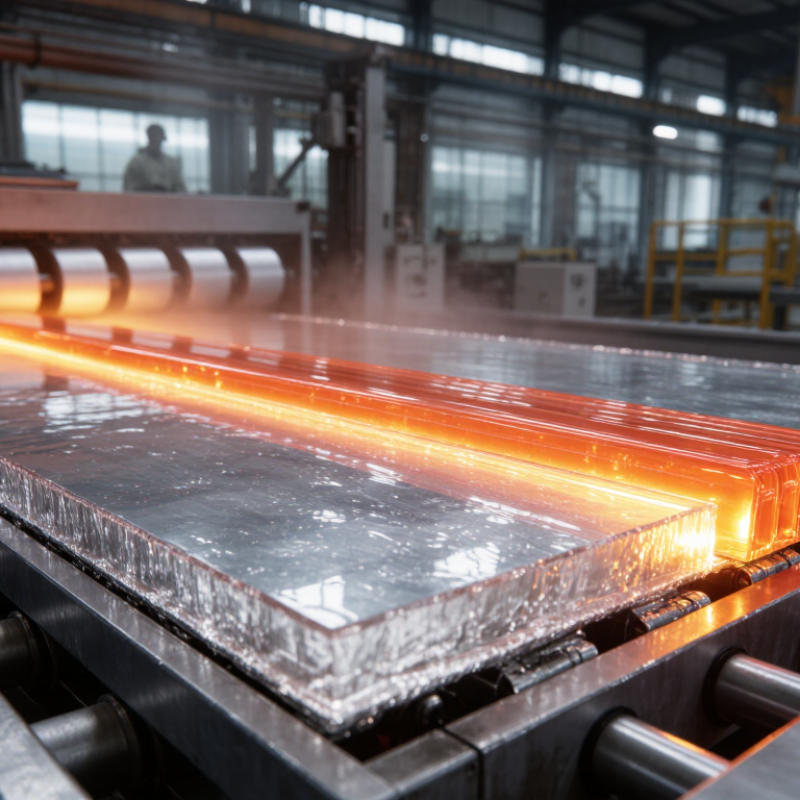
Float glass is soda-lime-silica glass shaped on a bath of molten tin. Its main ingredients are silica, sodium compounds and lime. The melt spreads across the tin under gravity, forming smooth, nearly parallel surfaces without routine mechanical polishing. The European Commission’s 2013 Best Available Techniques Reference Document for the Manufacture of Glass places glass melting temperatures broadly around 1,500–1,600°C. That is serious heat. After forming, the sheet moves through an annealing lehr, where controlled cooling reduces internal stress. The result is clear, flat glass ready for cutting and further processing.
The European standard EN 572-2 lists float-glass nominal thicknesses from 2 to 25 millimetres. Thin sheets suit many interior and window applications; thicker products can serve façades, depending on design and performance needs. Float glass also becomes the base for mirrors and coated glazing. For vehicle windows or impact-resistant building panels, it may need further treatment, such as tempering or lamination. That neatness can be misleading: a flawless-looking sheet is not automatically safety glass. Its strength and thermal performance depend on thickness, processing and installation. Small edge damage matters, too.
What Is Float Glass and What Is It Used For? - What Float Glass Is: Soda-Lime Glass Formed on a Molten Tin Bath
| Dimension | Fact or Typical Value | What It Means |
| Glass type | Usually soda-lime silicate glass | A widely used glass made primarily from silica, with soda and lime among its other main constituents. |
| How it is formed | Molten glass flows across a bath of molten tin | The glass spreads into a continuous ribbon; the tin bath helps produce smooth, nearly parallel surfaces. |
| Cooling and finishing | Ribbon is cooled in a controlled annealing lehr | Controlled cooling reduces internal stresses before the glass is inspected and cut. |
| Common thicknesses | Often available from about 2 mm to 25 mm | Available sizes depend on the production line and intended application. |
| Density | Approximately 2,500 kg/m³ | A useful approximate value for estimating the weight of ordinary soda-lime glass. |
| Light transmission | Clear 4 mm glass typically transmits about 90% of visible light | The actual value varies with thickness, tint, coatings, and measurement conditions. |
| Typical uses | Windows, doors, façades, mirrors, furniture, and vehicle glazing substrates | Its flat surfaces and optical clarity make it a common starting material for many glass products. |
| Further processing | Can be cut, coated, heat-strengthened, tempered, or laminated | Processing can add functions or improve performance; suitability depends on the final design and applicable safety requirements. |
| Safety note | Annealed float glass is not automatically safety glass | Where impact safety is required, the specified product may need to be tempered or laminated in accordance with local building codes. |
How Float Production Works: A Glass Ribbon Spreads Across Tin at About 1,000°C
Float glass begins as a measured blend of silica sand, soda ash, limestone, and recycled glass. The batch melts in a furnace, then flows onto a bath of molten tin at about 1,000°C. The glass is less dense than tin, so it spreads across the surface rather than sinking. Gravity helps form a broad, level ribbon.
No rollers touch it. The ribbon’s thickness is controlled by the amount of glass entering the bath and by carefully set machinery. Its upper surface becomes smooth, while the tin supports the underside. The process looks calm, but small temperature changes can affect thickness and quality. That precision is easy to underestimate.
As the ribbon moves forward, it cools gradually and enters an annealing chamber. There, controlled cooling reduces internal stress before the glass is cut into sheets. A sudden chill could leave it more likely to crack later. The finished panels are used in windows, doors, mirrors, and many other products. Even so, float glass is not automatically suitable for every job; its strength and safety depend on later processing and the intended use.
Which Thicknesses Are Standard: EN 572-2 Covers Nominal Sizes from 2 to 25 mm
What Is Float Glass and What Is It Used For?
Float glass is made by forming molten glass into a flat ribbon on a bath of molten metal. Its smooth surfaces and consistent thickness make it a common starting material for windows, doors, partitions, and furniture. EN 572-2:2012+A1:2016 lists nominal thicknesses from 2 to 25 mm: 2, 3, 4, 5, 6, 8, 10, 12, 15, 19, and 25 mm. EN 572-1 sets general requirements for basic soda-lime-silicate glass products. These standards are useful references, but the nominal size alone does not specify the right glass for every project.
Thin sheets can suit picture frames or light interior glazing, while thicker glass is often considered for larger panes or heavier-duty settings. The application matters. Pane dimensions, support, wind exposure, and safety requirements all affect selection. A 6 mm pane is not automatically suitable just because its thickness appears on the standard list. Fit is not strength. Float glass may also be heat-treated or laminated after manufacture, changing its performance and intended use.
Tips: Check the product specification and local building requirements before ordering. Confirm actual thickness, pane size, edge support, and any required safety treatment with a qualified glazing professional. A small measurement error can complicate installation.
Where Float Glass Is Used: Windows, Facades, Mirrors, and Vehicle Glazing
Float glass is made by allowing molten glass to spread across a bath of molten tin. The process creates broad, smooth sheets with nearly parallel surfaces. That flatness is useful. It helps window panes provide clear views without noticeable distortion. In homes and offices, glass can also be insulated, tinted, or coated to manage heat and glare. The right choice depends on the building’s climate, orientation, and frame.
On façades, float glass may form large exterior panels that bring daylight into shared spaces. Designers often specify coatings or laminated layers to address solar gain, wind pressure, and impact concerns. The glass is only one part of the system; seals, supports, and installation matter too. A striking façade can still feel uncomfortable if heat and reflections are overlooked. That deserves more attention.
Mirrors use float glass as a smooth base for a reflective coating and protective backing. Small surface flaws can show clearly in a mirror, especially under bright bathroom lighting. Vehicle glazing has different demands. Windshields commonly use laminated glass, with a plastic interlayer that helps hold fragments together if the pane breaks. Side and rear windows are often tempered, though designs vary. Vehicle glass must suit its location and safety requirements; ordinary window glass is not a substitute.
How Processing Changes Its Performance: Tempered Glass Can Be About Four Times Stronger Than Annealed Glass
Float glass is made by carrying molten glass across a bath of molten tin, creating smooth, parallel surfaces. It is then slowly cooled, or annealed, to reduce internal stress. This is the baseline. Its strength depends on thickness, edge quality, and how loads are applied.
Heating annealed glass and rapidly cooling its surfaces creates tempered glass. The National Glass Association’s technical guidance describes fully tempered glass as about four times stronger than annealed glass of comparable thickness. ASTM C1048 defines requirements for heat-strengthened and fully tempered flat glass; it does not make every pane equally strong. The four-times figure is a useful comparison, not a guarantee. Scratched surfaces and damaged edges can still weaken a pane.
The difference matters around doors, shower enclosures, and other places where accidental impact is possible. When fully tempered glass breaks, it generally fragments into small pieces rather than large, sharp shards. That behavior can reduce injury risk, but it does not make the glass unbreakable. A pane may look flawless and still have vulnerable edges. That detail is easy to overlook.