

top of page

How to Buy Used Measurement Devices Safely?

Buying Used Measurement Devices can reduce capital costs, but the savings are not automatic. A cheap oscilloscope with a missing probe, expired calibration, or damaged input stage can become an expensive mistake. The device may look clean under bright warehouse lights. Its measurement history may still be unknown.

Industry reports show a growing test and measurement equipment market. Grand View Research’s 2024 market analysis identifies electronics, telecommunications, automotive, and manufacturing as major demand sectors. MarketsandMarkets also forecasts continued expansion through 2029. These reports describe market growth, not product quality. That distinction matters. Market estimates vary by scope, region, and device category.

Reliable buying depends on evidence. ISO/IEC 17025:2017 provides the recognized framework for competent calibration laboratories. ILAC P10:2020 explains how calibration results should maintain metrological traceability. NIST guidance adds a practical requirement: traceability needs an unbroken calibration chain and documented measurement uncertainty. Ask for the original serial number, recent calibration certificate, uncertainty data, service records, and operating-hour information. Check whether the certificate identifies the same device. A mismatched serial number is a serious warning.

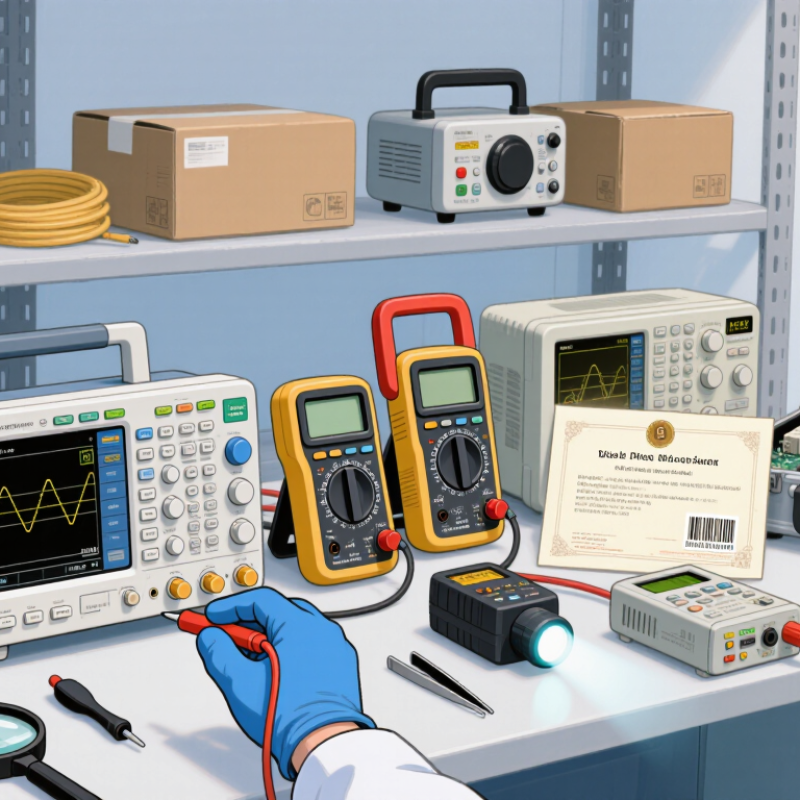
Test every critical function before payment. Measure a known reference signal. Inspect connectors, displays, cooling fans, batteries, and internal corrosion. Confirm software licenses and firmware compatibility. Do not trust photographs alone. That assumption deserves doubt.

A reputable seller should explain return terms and known defects clearly. Independent calibration is often worth the extra cost. Still, no checklist removes every risk. Older instruments can behave unpredictably after transport. A careful inspection, qualified technician, and documented acceptance test provide stronger protection than a discount alone.
How to Buy Used Measurement Devices Safely?

Define Your Measurement Needs and Acceptable Used-Device Conditions

How to Buy Used Measurement Devices Safely?

Define your measurement needs before comparing used devices. Write down the target range, resolution, accuracy, frequency, and operating environment. A temperature logger for a warehouse needs different capabilities from one used near machinery. Check whether the device supports your required inputs, connectors, software, and power supply. Small mismatches can make an affordable device useless.

Define acceptable condition in practical terms. A clean case is helpful, but it does not prove accurate readings. Ask for recent test results, calibration records, and photos of the display, ports, probes, and battery compartment. Confirm whether accessories are included and whether the seller permits functional testing or returns. Scratches may be acceptable. Missing labels, unstable readings, cracked insulation, or damaged connectors should not be ignored. I have seen buyers focus on appearance and overlook service history. That is an expensive mistake.

Tips: Create a simple acceptance checklist. Require readings from a known reference, when possible. Compare several points across the device’s range. Ask how it was stored and used. If the seller cannot explain its history, treat that uncertainty as a cost. Leave room for recalibration, replacement parts, and unexpected faults. Cheap is not always practical.

Research Sellers, Device History, and Available Documentation

How to Buy Used Measurement Devices Safely?

When buying used Measurement Devices, research the seller before trusting polished photographs. Check business registration, trading history, repair records, and return terms. Ask for the serial number before payment. Compare it with calibration certificates, service invoices, and ownership notes. A credible seller answers specific questions. Vague replies are evidence too. The 2024 ILAC annual report describes an international accreditation arrangement covering more than 100 economies. This helps buyers verify calibration providers across borders. However, accreditation does not prove that every individual device remains accurate.

Device history deserves equal attention. Look for the last calibration date, measurement range, environmental conditions, overload events, and replacement parts. A certificate without traceability details is weak documentation. ISO/IEC 17025 guidance emphasizes competent laboratories, valid methods, and traceable results. ILAC G24 and OIML D10 also connect recalibration intervals with risk, usage, and historical performance. There is no universal “calibration still valid” label. I have seen clean instruments with incomplete records. That mistake is easy to repeat. Ask for uncertainty values, reference standards, adjustment results, and any out-of-tolerance findings. Missing documents should reduce the price, not your caution.

Tips: Request a live demonstration with a known reference. Photograph the display, connectors, seals, and serial plate. Confirm software versions and included accessories. Ask whether the device was stored near dust, vibration, heat, or moisture. Keep every message and document in one purchase file. If the seller refuses basic verification, walk away. The cheapest instrument can become the most expensive one.

Verify Specifications, Calibration Records, and Operational Status

Buying a used measurement device safely requires more than checking its display or casing. Verify the exact model, measurement range, resolution, input limits, and required accessories. Compare these specifications with your planned application, not the seller’s description. A device may power on yet fail under temperature, load, or continuous operation. Ask for clear photos of labels, connectors, screens, and internal warnings. Record the serial number and match it across the quotation, calibration report, and delivery note. Small mismatches matter.

Calibration records deserve careful attention. Check the calibration date, laboratory identity, reference standards, measured points, stated uncertainty, and pass or fail results. A certificate without traceable references is weak evidence. Confirm whether calibration covered the ranges you will actually use. Ask about repairs, overloads, storage conditions, and battery replacement. Then request an operational demonstration using a known reference or suitable test source. Observe warm-up behavior, stable readings, noise, alarms, and communication ports. Do not accept “works perfectly” as a test result. I have learned that a clean enclosure can hide drift, and a recent certificate cannot prove today’s condition.

Tips: Use a written acceptance checklist. Require a return period for failed verification. Photograph the package before opening it. Test the device immediately after arrival. If readings seem plausible but inconsistent, stop and investigate. Independent technical review may cost less than repeated measurements. I sometimes overlook accessory compatibility, so I now check every cable, probe, adapter, and software requirement before payment.

Inspect the Device, Accessories, Labels, and Signs of Damage

How to Buy Used Measurement Devices Safely?

A careful inspection begins before switching the device on. I check the housing for cracks, dents, loose screws, and signs of impact. A clean exterior can still hide internal damage. I examine the screen, buttons, switches, ports, and adjustment knobs for uneven movement.

Corrosion around the battery compartment often indicates poor storage or liquid exposure. I also inspect cables, probes, adapters, and protective covers for cuts, bent pins, or missing insulation. They must match the device and carry suitable ratings. Do not assume included accessories are safe.

Labels provide useful evidence. The model information, serial label, warning marks, and electrical ratings should remain readable and firmly attached. I compare these details with the seller’s description and request clear photographs when necessary.

Missing labels create uncertainty about specifications, history, and maintenance. Calibration records are valuable, but they do not replace physical testing. If possible, I compare the device with a trusted reference under controlled conditions. Stable readings matter more than a bright display.

My early checklists were too short. I once focused on appearance and overlooked a worn connector. That mistake changed my inspection habits.

Look closely. Small defects can become expensive problems. If the seller avoids reasonable questions or refuses basic testing, I would pause the purchase rather than rely on optimistic assumptions.

Complete a Secure Purchase with Testing, Warranty, and Return Protection

Buying a used measurement device safely requires more than checking its appearance. A scratched case may still hide reliable electronics, while a clean exterior may conceal drift. Request clear photos of the display, ports, probes, seals, and identification label. Ask for recent operating records and calibration documentation. A certificate should show the test date, standards used, and measured uncertainty. It is evidence, not a guarantee.

Test the device before payment whenever possible. Check power-up behavior, screen stability, button response, battery condition, and every connector. Compare readings with a trusted reference under known conditions. Record the results, including room temperature and test values. Small differences can matter. I once overlooked a loose cable because the main reading looked correct. That mistake changed my inspection routine. Now I test accessories separately and repeat critical measurements.

Tips: Put the agreement in writing. Confirm the exact model, included parts, serial number, condition, and test results. Require a clear warranty period, even if it is limited. The warranty should explain covered faults, repair responsibilities, and response time. Also confirm the return window before purchasing. Ask who pays return shipping and whether a restocking fee applies. Keep screenshots, emails, invoices, and delivery photos. If the seller avoids practical questions or refuses a reasonable test, pause the purchase. A lower price is not protection.

bottom of page