

What Is a Lifting Anchor and How Does It Work?
A Lifting Anchor is a cast-in component that connects a precast concrete element to lifting equipment. It may look like a small steel fitting, but its safe performance depends on the complete load path: the anchor, surrounding concrete, attached clutch, and lifting gear. During a lift, these parts must work together as the element leaves the mould and moves through the air. A chipped concrete edge or a mismatched clutch can change the conditions. Details matter.
This guide explains what a Lifting Anchor does, how its geometry transfers force into concrete, and what to check before use. It also looks at anchor selection, installation, inspection, and common mistakes. A drawing can make the system seem simple. Real lifting conditions are less tidy; load direction, spacing, concrete strength, and handling all affect performance. This introduction does not include a named expert quotation because no verifiable source was provided. Inventing one would weaken the reliability of the article. A sourced quotation from a qualified lifting-anchor specialist can be added when its original wording and attribution are confirmed. Until then, use manufacturer data and project-specific engineering guidance, and never treat a general explanation as approval for a particular lift.
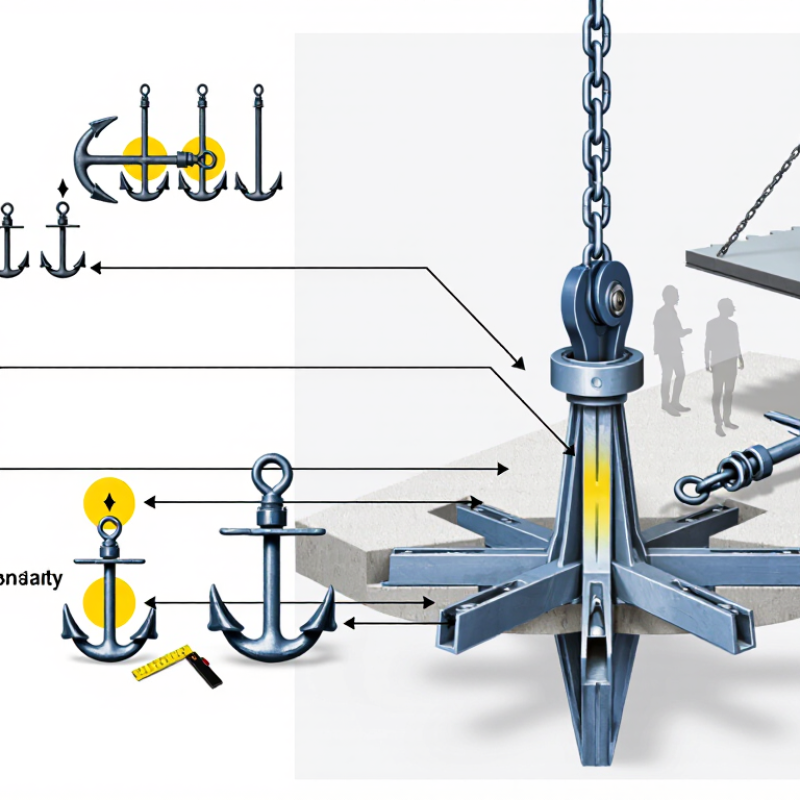
Definition and Purpose of a Lifting Anchor
A lifting anchor is an engineered connection point used to raise and move a concrete element, often a precast wall, beam, or stair flight. Many anchors are cast into the concrete before it hardens. The exposed end connects to a compatible lifting clutch or rigging assembly, while the embedded part transfers force into the concrete. It is not just a hook. Its shape, embedment, and position all affect how the load is carried.
The anchor’s purpose is to provide a controlled lifting point during stripping, turning, transport, and installation. Its capacity depends on more than the metal itself. Concrete strength at lifting, load direction, anchor spacing, edge distance, and the element’s weight can all matter. Small details matter. A tilted panel may place different forces on its anchors than a panel lifted straight upward. Crews should check the specified anchor type, clutch fit, placement, and lifting sequence against the project design. A quick visual check helps, but it cannot confirm hidden embedment or concrete strength. That part is easy to overlook. Even a correctly selected anchor can perform poorly if it is misplaced or loaded in an unintended direction.
| Dimension | Description | Purpose or Working Principle |
|---|---|---|
| Definition | A lifting anchor is a purpose-designed insert cast into, or otherwise securely fixed to, a precast concrete element to provide a connection point for lifting equipment. | It transfers lifting forces from the element to a compatible lifting clutch, hook, or other approved attachment. |
| Main purpose | To allow concrete components such as wall panels, beams, stairs, and other precast units to be lifted, moved, and positioned. | The anchor creates a planned load-transfer point instead of relying on an improvised attachment to the concrete. |
| Typical components | A lifting system may include an embedded anchor, a compatible detachable lifting clutch, and the rigging connected to the crane or hoist. | The anchor remains in or on the concrete element; the clutch connects to it for lifting and is usually removed after the lift. |
| Common anchor forms | Examples include spherical-head anchors, threaded lifting inserts, and plate or flat lifting anchors. The form depends on the element design and lifting system. | Different forms connect to different compatible lifting devices and suit different installation and loading arrangements. |
| How the connection works | The lifting device engages with the anchor using its specified connection method, such as a locking head or matching thread. | When engaged correctly, the connection transmits the lifting force through the anchor and into the surrounding concrete. |
| Load transfer | The anchor transfers tension and, depending on its design and orientation, may also be subject to shear or combined loading. | Load capacity depends on the complete lifting arrangement, including the anchor, concrete, reinforcement, embedment, and load direction. |
| Common applications | Precast concrete panels, columns, beams, stairs, pipes, and other manufactured concrete elements. | Anchors provide designated lifting points during demoulding, transport, handling, and installation. |
| Selection factors | Consider the element’s weight and geometry, lifting-point layout, concrete strength at lifting, load direction, edge distances, reinforcement, and rigging arrangement. | These factors help the responsible designer choose and position a suitable anchor system for the planned lift. |
| Rated capacity | Use the working load limit and installation requirements specified for the particular anchor system and lifting configuration. | There is no single capacity that applies to all lifting anchors. Do not infer capacity from appearance or use a rating from a different system. |
| Basic lifting sequence | Inspect the anchor and clutch, attach the compatible lifting device, confirm full engagement, connect the rigging, and lift in accordance with the approved plan. | Correct engagement and a controlled load path help reduce the risk of connection failure or unintended loading. |
| Inspection considerations | Check for visible damage, deformation, corrosion that may affect use, concrete cracking or spalling around the anchor, and wear or damage to reusable lifting devices. | Remove questionable equipment from service and follow the system’s inspection instructions and site procedures. |
| Important safety note | Only trained personnel should plan and carry out lifts using approved equipment and documented lifting instructions. | Follow the anchor-system instructions, applicable regulations, and project engineering requirements. Never exceed the specified limits. |