PCB Manufacturing Trends at 2026 Canton Fair What to Expect?
The 2026 Canton Fair promises to be a pivotal event for the PCB Manufacturing industry. From April 15 to May 5, the fair will showcase cutting-edge technologies and innovations in advanced manufacturing. Attendees can expect a rich variety of electronic products, particularly in PCB manufacturing. With a focus on quality and compliance, businesses will seek suppliers that meet key certifications like ISO and CE.
AI-powered search tools will streamline the experience for buyers. These tools will help identify suppliers quickly and efficiently. The fair spans over 1.5 million square meters, making navigation essential. Smart navigation features will enhance movement across the expansive exhibition area. However, challenges may arise as not all suppliers will meet high-quality standards or certifications.
The trends emerging from this influential event will shape the future of PCB manufacturing. It invites reflections on areas needing improvement and growth in the industry. The integration of AI signals a shift toward a more efficient marketplace, yet the reliance on technology poses risks. Attendees should remain vigilant about quality assurance. Overall, the 2026 Canton Fair is set to be a significant platform for innovation in PCB manufacturing.
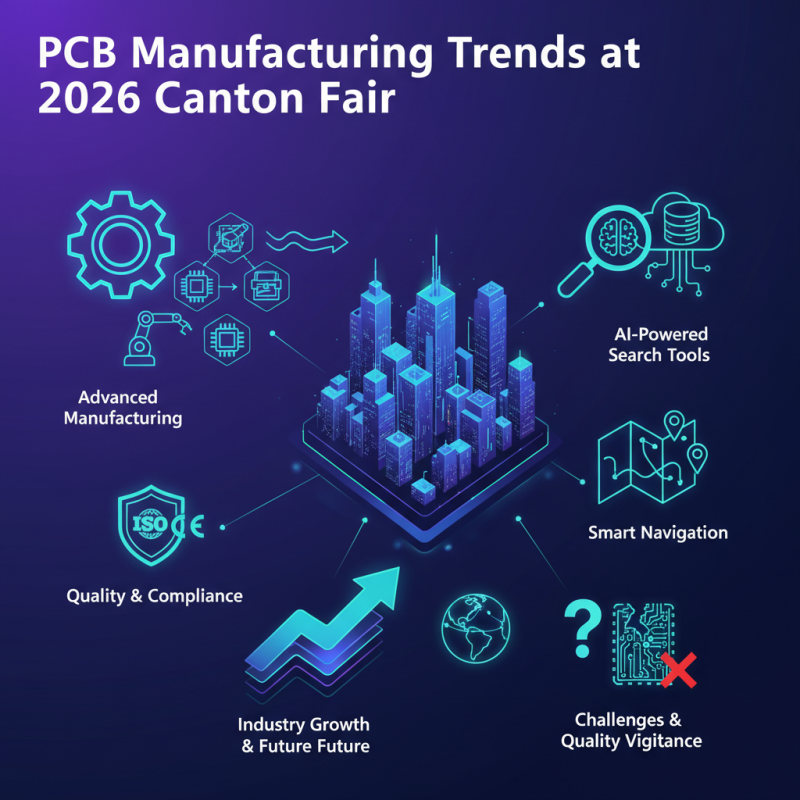
Overview of PCB Manufacturing Trends in 2026
The PCB manufacturing landscape is rapidly evolving. In 2026, the Canton Fair will showcase innovative technologies and methods. Sustainable practices will take center stage. Manufacturers are looking to reduce waste and energy consumption. Eco-friendly materials are becoming more popular. This shift is crucial for long-term industry viability.
Additionally, automation will streamline production processes. Advanced robotics and AI are reshaping assembly lines. However, not all companies are prepared for this change. Some struggle with adapting to new technologies. The potential benefits make it essential to explore these tools.
Market demands are shifting towards smaller, more complex boards. This trend presents challenges for manufacturers. High-density interconnect (HDI) techniques will be more common. Yet, many companies need to invest in training. Keeping up with these trends will require flexibility and innovation. The future of PCB manufacturing is bright, but it comes with hurdles.
Key Innovations in PCB Technology Expected at the Canton Fair
The 2026 Canton Fair is poised to showcase transformative innovations in PCB technology. According to industry reports, the global PCB market size is expected to reach $70 billion by 2026, driven by advancements in miniaturization and efficiency. This demand will prompt manufacturers to explore new materials and processes that improve performance while reducing costs.
One notable trend is the shift towards flexible PCBs. These circuits are not only lightweight but can also conform to various shapes. This opens up vast opportunities in sectors like wearables and medical devices. Reports suggest that the flexible PCB market alone could grow by 12% annually from 2024 to 2029. While there are exceptional benefits, the reliability of flexible PCBs still raises some concerns that need addressing.
Another innovation involves the integration of AI in PCB manufacturing. AI can optimize production processes, reducing waste and increasing efficiency. However, this technology is still evolving. Some manufacturers face challenges in implementing AI tools effectively. The balance between embracing new tech and maintaining traditional craftsmanship is a delicate one, and it’s something many will need to reflect on as they prepare for the fair.
PCB Manufacturing Trends at 2026 Canton Fair What to Expect? - Key Innovations in PCB Technology Expected at the Canton Fair
| Innovation | Description | Expected Impact | Market Application |
| Flexible PCBs | Development of thinner and more flexible materials for complex applications | Increased design possibilities and reduced space in electronic devices | Wearables, IoT devices |
| HDI Technology | High-Density Interconnector (HDI) for multilayer circuitry | Improved signal integrity and performance in compact devices | Smartphones, tablets |
| Eco-friendly Materials | Use of biodegradable and recyclable materials in PCB production | Reduction in environmental impact and compliance with regulations | Consumer electronics, automotive |
| Advanced 3D Printing | Utilization of 3D printing techniques for PCB manufacturing | Faster prototyping and reduced manufacturing costs | Prototype development, custom designs |
| AI in Design | Integration of AI algorithms for optimizing PCB layout and design | Enhanced efficiency and reduced time-to-market | Automotive, aerospace |
Sustainability Practices in PCB Manufacturing by 2026
As the 2026 Canton Fair approaches, sustainability practices in PCB manufacturing are on the forefront of discussions. The industry faces mounting pressure to adopt eco-friendly methods. Many manufacturers are seeking ways to reduce waste and minimize energy consumption. Renewable energy sources are becoming popular, yet not all companies have made the shift.
Innovations, such as biodegradable materials, are emerging but still in the early stages. It's crucial to note that some practices are not yet scalable. While advancements are being made, the challenge of integrating sustainable practices into traditional processes remains. Manufacturers must navigate this delicate balance.
Despite these challenges, the drive for sustainability offers a chance for transformation. As environmental concerns gain attention, many players are re-evaluating their strategies. The goal is not just compliance but also genuine commitment. As we move towards 2026, the hope is to see significant progress in the PCB sector's sustainability efforts.
Impact of Global Supply Chains on PCB Production Trends
In recent years, global supply chains have had a profound impact on PCB production trends. The ongoing shifts in these supply chains affect availability and pricing of materials. According to a report by Market Research Future, the global PCB market is expected to reach approximately $89 billion by 2026, highlighting the urgent need for manufacturers to adapt.
The ongoing semiconductor crisis further complicates this landscape. Factors like geopolitical tensions and localized manufacturing disruptions contribute to variability in material delivery. Many companies need to rethink their sourcing strategies. Lean inventory models might not provide the flexibility needed during such turbulent times. Understanding these dynamics is crucial for hopeful market players.
Tip: Consider diversifying suppliers to hedge against potential disruptions.
Another challenge surfaces with increased demand for environmentally friendly PCBs. The industry must prioritize sustainable solutions. As per a study by Research and Markets, eco-friendly PCB manufacturing is projected to grow significantly in the coming years. Companies need to invest in innovative materials and processes. Balancing sustainability with cost-effective production is no easy task.
Tip: Invest in R&D to enhance eco-friendly practices without compromising quality.
Emerging Markets for PCB Manufacturers by 2026
The PCB manufacturing landscape is evolving. By 2026, emerging markets will become crucial for PCB manufacturers. These markets include renewable energy, automotive electronics, and smart devices. Manufacturers must adjust strategies to tap into these opportunities.
Tips: Focus on local regulations and standards to enhance market entry strategies. Understanding cultural differences can foster better partnerships and customer relationships.
Renewable energy is a significant growth area. Solar panels and electric vehicles need advanced PCBs. Companies must innovate to meet these demands. Shortening production cycles is essential. This shift may be challenging for some manufacturers. Embracing flexibility will be necessary for success.
Tips: Invest in research and development. Staying ahead requires a commitment to continuous improvement. Collaboration with tech startups can drive innovation.
The automotive sector offers potential too. With the rise of electric and autonomous vehicles, reliable PCBs are essential. Companies may struggle to keep pace with rapid advancements. Yet, addressing these challenges can open doors to new markets. Manufacturers should remain adaptable and proactive.