Why Choose PP Geogrid for Soil Stabilization?
Why Choose Pp Geogrid for Soil Stabilization?
Weak soil can turn a well-designed road into a maintenance problem. Ruts appear after heavy trucks, while saturated ground loses strength beneath repeated traffic. Pp Geogrid offers a practical method for improving soil performance in these conditions. Made from polypropylene, it creates tensile support within aggregate layers and helps distribute applied loads more evenly. This can reduce aggregate movement, limit rut formation, and improve structural stability over time.
Field experience shows that installation quality matters as much as product selection. The grid must be placed on a properly prepared surface, overlapped according to engineering requirements, and covered without unnecessary displacement. Site drainage also deserves careful attention. A geogrid cannot correct every weakness.
Its value becomes clearer on soft subgrades, temporary access roads, working platforms, and paved road foundations. Engineers typically assess soil type, moisture content, traffic loading, and expected service life before specifying a product. Laboratory testing and project-specific calculations provide stronger evidence than general claims. Pp Geogrid may reduce excavation and imported aggregate requirements, which can lower construction disruption and material use. However, results vary when soil conditions, installation methods, or loading assumptions change. That limitation should remain visible. A reliable stabilization design combines suitable geogrid, verified specifications, skilled installation, and ongoing site observation. Small details matter. The strongest decision is not always the cheapest one, but the one supported by measurable performance and realistic field conditions.
What Is PP Geogrid and How Does It Stabilize Soil?
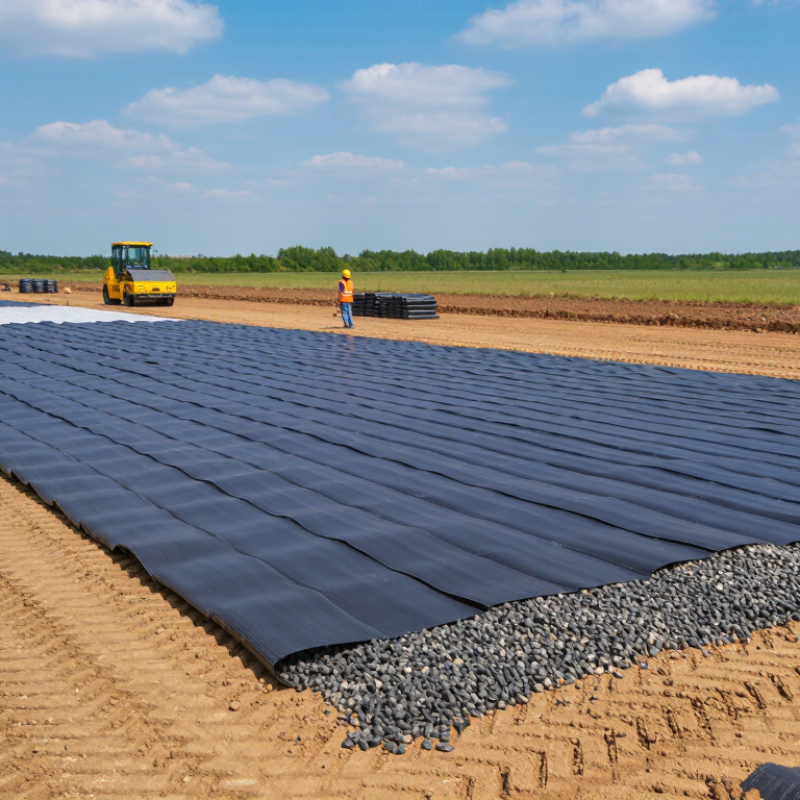
PP geogrid is a polymer grid made from polypropylene. It contains strong ribs and regular openings called apertures. These openings allow soil particles to press through and lock into the grid. This mechanical interlock creates a stronger layer beneath roads, embankments, and working platforms. A plastic sheet alone cannot provide the same restraint. The grid must connect with compacted soil.
When vehicle or foundation loads reach the stabilized layer, the geogrid helps spread stress across a wider area. Its ribs resist lateral soil movement, especially in weak or poorly graded ground. This reduces rutting, surface deformation, and the loss of aggregate into soft subsoil. Field installation also shows an important detail: good results depend on tight placement, correct overlap, and proper compaction. A strong product cannot correct careless preparation.
PP geogrid can reduce aggregate thickness in some designs, but it is not a universal solution. Soil strength, moisture, traffic, drainage, and expected loads still require professional assessment. Engineers often review laboratory data and site conditions before selecting aperture size and tensile strength. I have found that small installation mistakes can create large performance differences. Wrinkles, gaps, or insufficient cover may weaken the system. That reality deserves more attention.
Key Material Properties of PP Geogrid
Polypropylene (PP) geogrid is valued for its balance of strength, low weight, and chemical resistance. Its polymer structure absorbs very little water, helping maintain dimensional stability in wet soil. On construction sites, rolls are easy to handle beside drainage trenches or compacted fill. The open apertures allow aggregate particles to lock into the grid. This mechanical interlock improves load distribution and can reduce rutting under repeated traffic.
A key material property is tensile stiffness, not tensile strength alone. Stiffness controls how quickly the geogrid mobilizes during loading. Engineers should review strength at the expected strain, junction efficiency, aperture size, and long-term creep performance. PP also tolerates many acids, alkalis, and salts found in ordinary ground conditions. That resistance is useful near road bases, retaining structures, and industrial yards. Temperature still matters. High heat can reduce stiffness, while prolonged ultraviolet exposure may damage uncovered material.
Installation quality remains part of the material’s real performance. Wrinkles, poor overlaps, or sharp aggregate can create weak points. Field teams should inspect placement before covering the grid and follow project specifications closely. Independent testing under recognized standards can verify tensile behavior, junction strength, and durability. No geogrid solves every soil problem. Soft organic soil, extreme heat, or unusual chemicals may require additional investigation. A cautious design review is sometimes slower, but it prevents confident mistakes.
How PP Geogrid Improves Soil Bearing Capacity
PP geogrid improves soil bearing capacity by controlling how weak ground responds under repeated loads. When trucks pass, soft soil tends to move sideways, forming ruts and uneven settlement. The grid’s ribs interlock with compacted aggregate, creating a restrained layer above the subgrade. This interaction spreads wheel loads across a wider area and reduces local stress. That matters on wet access roads, temporary yards, and working platforms over silty or clayey soil. Field crews often notice a firmer surface during compaction. Small changes matter.
Better confinement can reduce aggregate migration and help the layer retain its shape after rainfall. However, the improvement depends on design, installation, and actual soil conditions. Engineers should review subgrade strength, drainage, traffic intensity, aggregate quality, and required service life. Laboratory CBR results can guide design, but they do not replace field verification. Plate load tests or proof rolling may reveal weak zones missed during sampling.
Installation also requires care. The surface should be trimmed, the geogrid laid without folds, and aggregate placed without dragging it. Insufficient overlap or poor compaction can limit performance. PP geogrid is not a cure for saturated soil or uncontrolled drainage. I have seen well-designed sections underperform when water remained trapped below the platform. That limitation is easy to underestimate. Used with proper drainage and verified compaction, the grid can make bearing performance more predictable, though not perfect.
Factors to Consider When Selecting PP Geogrid
Why Choose PP Geogrid for Soil Stabilization?
Selecting PP geogrid requires more than checking its advertised tensile strength. Polypropylene resists moisture, many chemicals, and biological decay. These properties suit weak subgrades and areas with repeated wetting. However, soil conditions should guide the decision. Test bearing capacity, drainage, plasticity, and expected traffic loads before specifying the product. A high-strength grid may perform poorly if the soil remains saturated.
Aperture size matters because aggregate particles must interlock with the grid. On a rural access road, properly matched openings reduced rutting under loaded trucks. The result depended on careful placement, not the grid alone. Check tensile strength in both directions, junction efficiency, and long-term creep resistance. Installation quality matters greatly. Wrinkles, poor overlaps, and sharp stones can reduce performance before service begins.
Chemical compatibility also deserves attention near industrial fill or recycled materials. Ask for independent test data, installation guidance, and quality-control records. Field measurements can confirm compaction and layer thickness. Laboratory results are useful, but they cannot predict every site condition. I have seen specifications focus heavily on strength while overlooking drainage. That mistake can leave water trapped beneath the aggregate layer. Consider UV exposure during storage, equipment movement, and the actual construction sequence. These practical details often decide whether PP geogrid delivers stable support.