

10 Tips for Choosing a Trash Can Manufacturer?
Choosing the right Trash Can MANUFACTURER involves more than comparing prices and product photos. In real purchasing work, small details often reveal major differences. Check the manufacturer’s material choices, production capacity, quality controls, and communication habits. A stainless steel bin should have clean welds, even polishing, and a lid that closes without rattling. Plastic containers should resist cracking, fading, and deformation under normal use. Details matter.
A reliable supplier should provide clear specifications, sample policies, factory information, and realistic production timelines. Ask about recycled content, surface treatments, packaging, warranty coverage, and replacement parts. Request test reports and relevant quality certifications, such as ISO 9001, when appropriate. Certifications do not replace inspection. They only support confidence. An experienced manufacturer should also explain how products perform in hotels, offices, public facilities, or outdoor environments. Ask better questions.
A polished website proves little. Factory videos can be outdated, and impressive claims may lack evidence. Consider an independent factory audit or a pre-shipment inspection before placing a large order. Review communication speed, sample accuracy, defect handling, and after-sales support. These practical experiences often predict future cooperation better than a low quotation. No supplier is perfect. Even strong manufacturers may miss a deadline or misunderstand a custom request. The real test is how openly they respond and correct the issue. This guide presents ten practical tips for evaluating manufacturers with clearer expectations, stronger evidence, and fewer costly surprises.
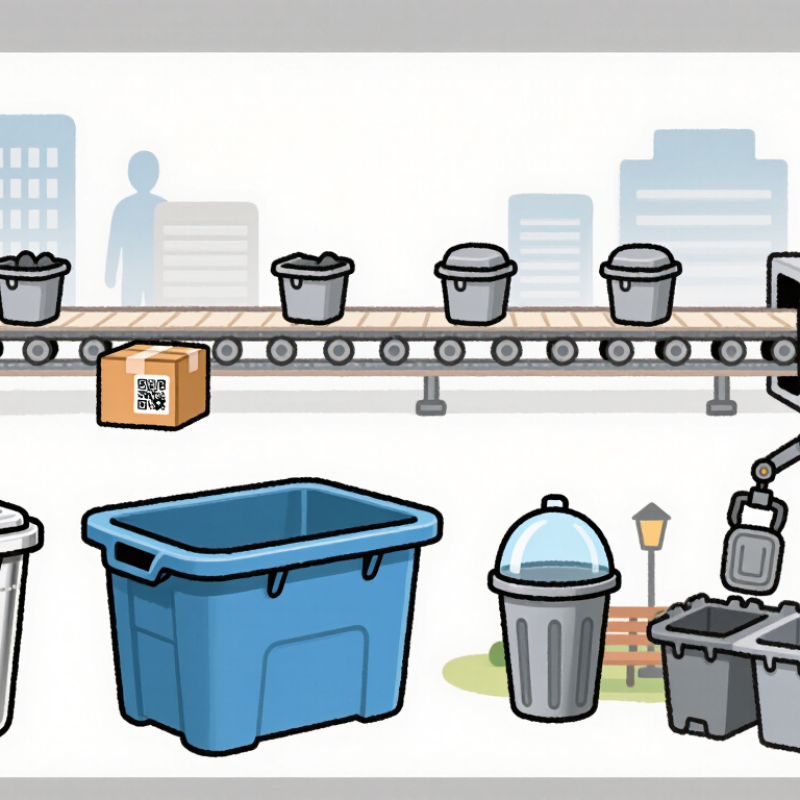
Define Your Trash Can Requirements and Intended Use
Before comparing manufacturers, define where and how the trash can will work. A kitchen bin faces food residue, moisture, and daily opening. An outdoor unit needs UV resistance, drainage, and stable footing. A warehouse container may require wheels, thick walls, and easy lifting. Measure available width, height, and clearance under counters. Record expected daily volume, not an ideal guess. If unsure, observe one busy week. Real use often exposes flawed assumptions.
Tip: Write a simple requirement sheet before requesting quotations. Include capacity, material, lid style, color, odor control, cleaning method, and target service life. Consider who handles the container. Children, hospitality staff, and maintenance teams may need different heights or lid mechanisms. Specify whether liners, casters, or replacement parts must be available. Ask manufacturers for test details, tolerance ranges, and sample inspection procedures. Vague requirements invite inconsistent products.
Tip: Match the manufacturer’s experience to your operating environment. Request drawings, load information, and photographs of comparable production details. Check how they control dimensions, surface finish, and batch consistency. A low price can hide frequent repairs or awkward cleaning. I once underestimated lid clearance; the bin looked suitable, but it struck the cabinet each morning. That small mistake changed the specification. Leave room for revision, because practical feedback may challenge your first design.
Evaluate Material Quality, Design, and Manufacturing Standards
Choosing a trash can manufacturer requires more than comparing catalog photos. Material quality affects hygiene, durability, and replacement costs. The U.S. Environmental Protection Agency reported 292.4 million tons of municipal solid waste in 2018, or about 4.9 pounds per person daily. Heavy use exposes weak plastic, thin steel, and poor hinges quickly.
Ask for resin specifications, metal grades, wall thickness, and surface-treatment details. Recycled content can be valuable, but suppliers should disclose its percentage and consistency. A container with uneven plastic may crack near the handle. Small defects become expensive. Test samples with loaded lids, repeated pedal cycles, and controlled drop tests. Check odor retention, corrosion resistance, ultraviolet stability, and wheel performance on rough floors. I would also inspect the underside, where manufacturers sometimes reduce material without explaining it.
Design must match the waste stream. Tight lids help control odors and pests, while rounded interiors simplify cleaning. However, overly complex mechanisms can trap residue and increase service calls. UNEP’s Global Waste Management Outlook 2024 estimates global municipal waste will rise from 2.3 billion tonnes in 2023 to 3.8 billion tonnes by 2050. Capacity, mobility, and easy maintenance will matter more as collection volumes grow. Request documented quality procedures, batch traceability, and factory inspection records. ISO 9001 certification supports process control, but certification alone does not prove product strength. Look for independent test results and realistic warranty terms. Ask difficult questions. Some evaluation criteria remain subjective, and even experienced buyers can overvalue polished finishes.
Check Customization Options, Production Capacity, and Lead Times
10 Tips for Choosing a Trash Can Manufacturer
A reliable manufacturer should understand your product requirements before quoting. Ask whether it can provide custom sizes, colors, materials, lids, liners, wheels, and surface finishes. Tip: Send a clear drawing with measurements. A sample or prototype can reveal weak hinges, sharp edges, or unstable bases before mass production. Check whether the factory uses documented quality inspections for raw materials, welding, coating, assembly, and packaging. Request recent production photos or arrange a video audit. Details matter.
Tip: Ask for the minimum order quantity. A low quantity may cost more per unit, but it can reduce inventory risk. Tip: Confirm tooling ownership and revision charges in writing. Custom molds may affect both budget and schedule. Review the manufacturer’s daily and monthly output, not only its equipment list. Production capacity should include available labor, inspection staff, and backup machinery. A factory may appear large yet struggle during seasonal demand. That happens.
Lead times need careful questioning. Request separate estimates for sampling, tooling, production, inspection, and shipping preparation. Tip: Ask what happens when materials arrive late. A dependable supplier should explain its contingency plan clearly. Add a reasonable buffer for approvals and rework. I once underestimated approval time on a custom finish; the factory was ready, but the order still moved slowly. That mistake was avoidable. Confirm progress updates, acceptance standards, packing details, and the person responsible for communication before signing.
10 Tips for Choosing a Trash Can Manufacturer? - Check Customization Options, Production Capacity, and Lead Times
| No. | Selection Tip | What to Evaluate | Practical Benchmark or Requirement | Evidence to Request | Priority |
|---|---|---|---|---|---|
| 1 | Define the required product type | Material, capacity, application, lid style, mobility, and installation method | The manufacturer should clearly support the intended indoor, outdoor, commercial, healthcare, or industrial application. | Technical drawings, product specifications, load limits, and application references without undisclosed brand information | High |
| 2 | Check customization options | Dimensions, colors, openings, handles, wheels, liners, labels, and packaging | Confirm which changes use existing tooling and which require new molds, dies, or production fixtures. | Customization matrix, tooling quotation, color samples, drawings, and approval workflow | High |
| 3 | Verify material quality | Material grade, thickness, recycled content, corrosion resistance, UV resistance, and chemical compatibility | Material claims should be supported by specifications or test documentation; outdoor products should address weather exposure. | Material certificates, thickness reports, safety data where applicable, and relevant laboratory test results | High |
| 4 | Assess production capacity | Monthly output, available equipment, labor, shifts, and capacity during peak periods | Capacity should exceed the forecast order volume with contingency for maintenance, rejects, and seasonal demand. | Capacity statement, equipment list, production plan, recent output records, and site-audit results | High |
| 5 | Compare lead times carefully | Sampling, tooling, material purchasing, production, inspection, and shipment preparation | Request separate timelines for samples, first production, repeat orders, and customized products rather than one general estimate. | Written production schedule, milestone dates, order cut-off times, and delay-management procedure | High |
| 6 | Review quality-control systems | Incoming inspection, in-process checks, final inspection, defect handling, and traceability | Quality criteria should be documented before production, with agreed inspection points and acceptance standards. | Quality manual, inspection checklist, sample inspection report, corrective-action records, and traceability examples | High |
| 7 | Confirm compliance requirements | Applicable product, material, fire-safety, accessibility, packaging, and environmental requirements | Requirements vary by country and end use; the buyer should provide the destination market and intended application in writing. | Declarations, test reports, compliance statements, packaging details, and document validity dates | High |
| 8 | Evaluate minimum order quantities | Minimum order by product, color, size, packaging configuration, and custom tooling | Ask whether mixed sizes or colors are allowed and whether smaller trial quantities carry setup or packaging surcharges. | Quantity-break quotation, mixed-order rules, setup fees, tooling terms, and storage policy | Medium |
| 9 | Calculate total landed cost | Unit price, tooling, packaging, inspection, freight, duties, taxes, and after-sales costs | Compare suppliers using the same specifications, delivery terms, quantity, currency, and packaging assumptions. | Itemized quotation, Incoterm, freight assumptions, payment terms, warranty coverage, and replacement policy | Medium |
| 10 | Test communication and after-sales support | Response speed, engineering support, spare parts, warranty handling, and issue escalation | A reliable supplier should provide one responsible contact, documented response procedures, and clear warranty exclusions. | Sample communication log, warranty terms, spare-parts list, escalation contacts, and service-level commitments | Medium |
Compare Pricing, Certifications, Warranties, and Service Support
10 Tips for Choosing a Trash Can Manufacturer
Price is important, but the lowest quotation can hide costly details. Compare unit prices, sample fees, tooling charges, packaging, freight, and replacement parts. Request an itemized quotation with identical specifications. Check material thickness, capacity, lid performance, and production quantity before comparing figures. A cheaper can may have weaker hinges or uneven wheels.
Certifications deserve careful checking. Ask for current documents, issuing organizations, test methods, and covered product models. Confirm that certificates match the materials and markets you serve. Do not accept a logo alone. Review factory quality procedures, inspection records, and product test samples. One practical lesson is simple: paperwork should support physical evidence.
Warranty terms reveal a manufacturer’s confidence. Check coverage periods, excluded damage, claim procedures, and replacement responsibilities. Service support matters after delivery. Ask how quickly technical questions receive answers and whether spare parts remain available. A clear response-time promise is useful. However, vague service language needs questioning. I once focused too heavily on purchase price and overlooked slow sample revisions. That delay affected an entire launch schedule. A reliable partner should provide inspection photos, packing updates, corrective actions, and honest explanations when problems occur. Some comparisons still feel imperfect, because forecasted freight and maintenance costs can change. Keep a written scoring sheet, and update it after sample testing.
Verify Manufacturer Reputation Through Reviews and Sample Orders
Choosing a trash can manufacturer requires more than comparing prices on a spreadsheet. Reviews can reveal how a supplier performs after payment. Look for repeated comments about delivery accuracy, weld quality, packaging, and communication. One glowing review proves little. Check dates, product models, and reviewer details when available. I also contact several past buyers, although not every buyer responds.
A sample order turns claims into observable evidence. Request one unit matching the intended material, capacity, finish, and lid design. Inspect the rim for sharp edges, test the pedal repeatedly, and measure the actual dimensions. Check whether the inner container fits without wobbling. Photograph dents, uneven seams, and weak hinges before reporting them. A reliable manufacturer should answer specific questions with test records or clear explanations. Vague replies worry me.
During my own evaluations, I once trusted polished photos too quickly. The delivered sample looked acceptable, but its thin liner shifted during use. That mistake changed my process. I now compare the sample with the quotation, drawings, and promised specifications line by line. Ask about replacement parts, inspection steps, and packaging tests before placing a larger order. Do not ignore small defects; they often become expensive complaints later.
10 Tips for Choosing a Trash Can Manufacturer: Verify Reputation Through Reviews and Sample Orders
This verification scorecard highlights the most practical evidence to review before placing a production order. Prioritize manufacturers with consistent customer feedback, responsive sample-order communication, stable product quality, complete compliance documents, and reliable after-sales support.