

top of page

Who Are the Top 10 7th Axis Robot Manufacturers in China?

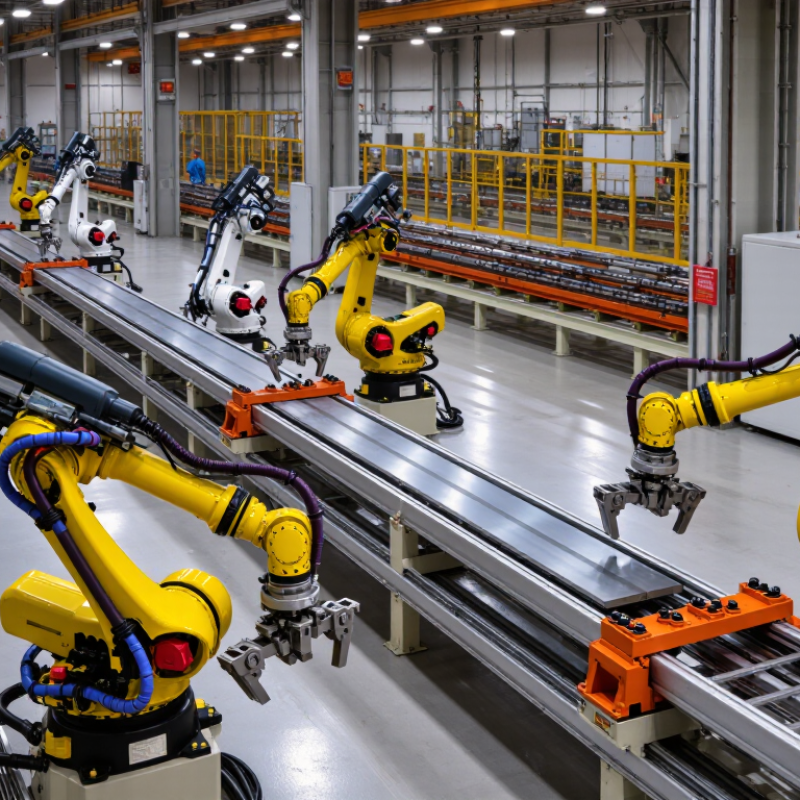
A 7Th Axis Robot can turn a fixed industrial arm into a moving workcell partner. Mounted on a linear rail, the robot travels between stations, reaches longer parts, and serves multiple fixtures without requiring a separate robot at every position. The rail may look simple, but choosing one involves payload, stroke, speed, accuracy, floor space, and integration. Small differences matter. A carriage that travels smoothly under load can save valuable cycle time; poor coordination with the robot controller can create delays instead.

Joseph Engelberger, a pioneer of industrial robotics, is often quoted as saying, “I can’t define a robot, but I know one when I see one.” That observation offers a useful reminder: specifications alone do not reveal how well equipment fits a real production line. Buyers should examine the complete system, not just the axis. Ask how the manufacturer handles rail stiffness, cable routing, repeatability, installation, and after-sales support. Look for documented test conditions, clear technical drawings, and practical integration experience. And verify claims.

This guide introduces ten Chinese manufacturers associated with 7th-axis and robotic automation solutions. It is intended as a starting point, not a final ranking or a substitute for supplier checks. Product ranges and capabilities can change. Some companies publish more detail than others, and that difference deserves attention. Compare each option against your own robot model, workpiece, travel distance, and operating environment. A short site visit or engineering review may reveal what a brochure misses. The right choice is rarely the longest rail or the lowest quote. It is the system that works reliably in your actual cell.
Who Are the Top 10 7th Axis Robot Manufacturers in China?

What Is a 7th-Axis Robot and How Does It Work?

A 7th-axis robot usually combines a standard six-joint arm with a powered linear track. The track moves the whole arm along a workcell, extending its reach beyond one fixed position. It is an external axis, not an extra joint built into the robot’s wrist.

A servo motor drives a carriage along rails, often through a rack-and-pinion or screw mechanism. Sensors report the carriage position to the controller. The controller coordinates track travel with the robot’s joints, helping the tool reach targets along a longer production line. It is not magic. The robot still needs a programmed path and accurate calibration.

In practice, setup can be messier than diagrams suggest. Engineers must check payload, track length, stopping distance, cable routing, and floor alignment. A small positioning error can affect a weld seam or pick point. Small errors matter. The system also needs suitable guarding and emergency stops, based on the cell’s risk assessment. Before production, teams should test motion at low speed and verify that the arm and carriage do not collide. Rail wear or loose fasteners can change repeatability over time, so inspection belongs in routine maintenance.

How Are Chinese 7th-Axis Robot Manufacturers Evaluated?

Evaluating Chinese 7th-axis robot manufacturers starts with matching the rail to the robot and the actual task. Buyers should compare rated payload, travel length, positioning repeatability, and maximum speed. These figures need context. A long rail carrying a heavy robot may behave differently from a short, lightly loaded setup. Ask for test conditions, not just catalogue values. A dial indicator, sample workpiece, and recorded positioning results can make claims easier to assess.

Engineering details matter on the factory floor. Check how the linear axis communicates with the robot controller, handles cable routing, and responds to emergency stops. Inspect rail covers, lubrication points, and access to replacement components. Practical tests should include repeated moves, starts and stops, and the full working stroke. Watch for vibration at the far end. It is easy to overlook.

Manufacturing capability also includes documentation and support. Review drawings, inspection records, installation guidance, spare-parts availability, and response times. A factory visit or witnessed acceptance test can reveal differences between a polished presentation and repeatable production. Compare suppliers using the same test plan and load conditions. Still, no score is perfect; site layout, operator training, and maintenance habits affect results. Buyers should record these assumptions before choosing, even when that adds time.

Who Are the Top 10 7th Axis Robot Manufacturers in China? - How Are Chinese 7th-Axis Robot Manufacturers Evaluated?

A reliable top-10 ranking requires comparable, independently verifiable data for each manufacturer. The table below provides a transparent evaluation framework rather than asserting an unsupported company ranking. The proposed weights are editorial guidelines, not published market statistics.

Evaluation Dimension Suggested Weight Evidence to Check How to Evaluate
Positioning and repeatability 12% Published accuracy and repeatability specifications, plus test conditions. Compare like-for-like figures and look for results measured using recognized robot performance test methods, such as ISO 9283 where applicable.
Payload and carriage capacity 12% Rated robot payload and the linear axis's allowable load, including tooling and cable-management loads. Check the full load configuration, center of gravity, and operating conditions—not just a maximum headline figure.
Usable travel and stroke 10% Available rail lengths, usable travel, and any limits imposed by robot, cable, or installation configuration. Confirm the required working envelope and whether the quoted stroke is usable after end stops and mounting allowances.
Travel speed and acceleration 8% Rated speed, acceleration, deceleration, and any load-dependent operating limits. Assess achievable cycle time under the intended payload and motion profile rather than relying on no-load maximum speed.
Robot and controller integration 10% Supported robot/controller configurations, motion coordination, interface documentation, and commissioning requirements. Verify the proposed system works as a coordinated external axis with the specific robot and controller in the project.
Safety design and documentation 10% Risk-assessment materials, safety functions, guarding guidance, and applicable conformity documents. Review the complete cell-level safety design against applicable machinery and robot safety requirements, including relevant ISO 10218 provisions.
Mechanical design and serviceability 8% Rail and carriage design, drive and guidance components, lubrication requirements, and access for maintenance. Check that design details and maintenance intervals are documented for the actual duty cycle and environment.
Environmental suitability 7% Specified operating temperature, ingress protection, contamination limits, and available protective options. Match documented limits to the installation environment; request test or conformity evidence for any claimed rating.
Customization and configuration 8% Options for rail length, mounting, cable routing, robot interface, and project-specific engineering. Evaluate documented options, design approval steps, lead-time commitments, and the scope of customization.
Warranty, spare parts, and technical support 7% Written warranty terms, spare-parts availability, service coverage, response commitments, and technical documentation. Compare written service commitments and verify that support is available for the installation location and expected operating life.
Total proposed weighting 100% Use the same evidence standard and scoring method for every candidate.

Ranking note: This framework does not identify or rank ten manufacturers. A defensible ranking should be based on verified, comparable product data, documented project requirements, and consistent scoring; no company-specific performance claims are made here.

Who Are the Top 10 7th-Axis Robot Manufacturers in China?

Who Are the Top 10 7th-Axis Robot Manufacturers in China?

China’s seventh-axis market includes manufacturers of robot travel tracks, linear-motion systems, and integrated automation equipment. These systems let a robot move along a floor-mounted rail, reaching several workstations without needing a separate robot at each one. There is no single top-ten list that fits every factory. A suitable shortlist depends on robot model, payload, travel distance, and application.

Compare suppliers by measurable details. Check rated load, usable stroke, positioning repeatability, travel speed, and compatibility with the robot controller. Ask how the rail handles dust, cable movement, and repeated acceleration. Request drawings and test data for the proposed configuration, not just a catalogue specification. Small differences matter. A long rail may need extra support, while a fast cycle can expose vibration that a basic demonstration misses. I would also verify service response and spare-part availability; these points are easy to overlook.

Tips: Share your robot model, payload, cycle time, and required travel distance before requesting a quote. Ask for a reference installation with similar conditions. If possible, test the track under load. A polished demo is useful, but it does not tell the whole story.

How Do the Top Manufacturers Compare in Technology and Applications?

Comparing China’s leading seventh-axis manufacturers is less about rail length alone and more about how well the axis works with a robot. Stronger engineering teams match servo drives, controllers, and robot communication protocols before installation. They also account for payload, acceleration, floor flatness, and stopping distance. Small details matter. A rail carrying a welding robot may need heat shields and protected cable carriers, while a palletizing cell may prioritize speed and long travel. Buyers should request measured repeatability under load, not just catalog figures. Not always easy to verify.

Technology varies in practical ways. Some manufacturers offer modular rails with standard lengths and faster delivery; others provide custom bases, longer strokes, or tighter integration with factory control systems. These differences affect setup time and maintenance access. For machine tending, smooth positioning and reliable coordination can reduce idle time. For automotive assembly, payload capacity and precise synchronization may matter more. Ask for installation references, service response times, and test data from comparable applications. A specification sheet rarely shows every limitation. It is worth admitting that published accuracy figures may not reflect real factory conditions, especially when foundations or robot payloads differ.

How Can Buyers Choose the Right 7th-Axis Robot Manufacturer?

When comparing the top 10 7th-axis robot manufacturers in China, look beyond rankings and polished demonstration videos. Start with your actual process: robot payload, required reach, rail travel, cycle time, and floor conditions. A steel rail carrying a welding robot may need different support and protection from a rail serving a light pick-and-place task. Ask for drawings, load calculations, and test results for a configuration close to yours. Specific evidence matters.

Check how the manufacturer integrates the rail with the robot, controller, cable routing, and safety equipment. Ask about positioning repeatability under load, acceleration limits, lubrication intervals, and replacement-part lead times. Request a clear commissioning plan and named technical support contacts. A low purchase price can lose its appeal if installation takes weeks longer than expected. Even experienced buyers can overlook cable movement along a long axis; it deserves a real test.

Tips: Share your workpiece dimensions, target cycle time, and shift schedule before requesting a quotation. Ask to see a full-speed trial, not only a slow motion demo. Confirm warranty scope and service response times in writing. If possible, visit a working installation and inspect rail joints, guards, and cable carriers. Small details reveal a lot. Manufacturers may give different repeatability figures, so compare test conditions, not just the numbers.

bottom of page