China Top 10 Scooter Sport Bike Brands for Global Buyers
Choosing among China’s top 10 Scooter Sport Bike brands requires more than comparing engine size or sharp bodywork. Global buyers need evidence from daily riding, factory consistency, after-sales support, and export experience. A glossy fairing may attract attention, but reliable brakes, stable suspension, clear instrumentation, and accessible replacement parts matter more after several thousand kilometres.
Soichiro Honda, a respected engineer and motorcycle industry pioneer, once said, “Success represents the 1% of your work which results only from the 99% called failure.” His principle remains useful here. Strong brands refine small details repeatedly: throttle response in crowded streets, seat comfort during long commutes, cooling performance under heat, and panel fit after rough transport. These details are easy to overlook.
This guide examines ten Chinese brands from a global buyer’s perspective. It considers performance, build quality, technology, pricing, dealer networks, warranty practice, and compliance with destination-market requirements. Some models may look impressive in showroom photographs. Real ownership can reveal different truths. A powerful engine cannot compensate for weak support.
The ranking is not perfect. Market data changes, distributor quality varies, and one factory may produce different results across model years. That uncertainty deserves honest attention. Buyers should verify certifications, service availability, parts lead times, and local registration rules before ordering. Test reports, factory communication, and owner feedback should be read together.
The best Scooter Sport Bike is not always the fastest. It is the model that performs predictably, remains serviceable, and suits the rider’s roads, climate, budget, and expectations. Nakne details matter. Reliability wins.
China’s Scooter Sport Bike Market and Its Global Role
China’s Scooter Sport Bike Market and Its Global Role
China’s scooter sport bike sector is no longer only a domestic manufacturing story. The China Association of Automobile Manufacturers reported more than 20 million motorcycles produced and sold in 2023. China Customs data also placed motorcycle export value at roughly US$10 billion that year. These figures show strong industrial capacity, but they do not measure sport scooters separately.
For global buyers, China’s role combines large-scale production with flexible engineering. Many factories now offer 125cc to 400cc platforms, liquid cooling, fuel injection, digital displays, and anti-lock braking systems. The International Energy Agency has also identified China as a leading market for electric two- and three-wheelers. That experience is influencing battery packaging, motor control, and urban commuting designs.
A product sheet is not enough.
Buyers should verify homologation, emissions compliance, battery certification, spare-part access, and warranty procedures in each destination. Export success can hide uneven dealer support. The data is strong, but the market remains difficult to compare because classifications vary between reports. A scooter listed as “sport” in one country may be recorded as a standard motorcycle elsewhere. In practice, inspection of frame welds, brake feel, fastener quality, and cold-start behavior still matters. No report can replace that physical evidence.
China’s motorcycle exports increased from approximately 7.4 million units in 2019 to 11.1 million units in 2023, highlighting the country’s expanding role as a global production and supply hub. The figures cover all motorcycle categories and are used as a market-scale proxy for scooter sport bikes; they do not represent any individual company or brand.
Source: China Association of Automobile Manufacturers (CAAM), annual motorcycle export statistics; values rounded to the nearest 0.1 million units.
How the Top 10 Chinese Brands Are Selected and Compared
When global buyers compare Chinese scooter sport bike brands, selection must begin with evidence, not showroom shine. Our review framework examines production history, export experience, dealer support, and documented quality systems. We also check whether technical specifications remain consistent across catalogs, manuals, and delivered units. Small discrepancies matter. They can signal weak control.
Performance comparison uses practical checkpoints: engine response, braking feel, suspension stability, fuel use, seat comfort, and vibration after extended riding. Test riders record cold starts, city traffic behavior, and highway passing response where legally permitted. Independent inspection of welds, fasteners, wiring, and tire markings adds another layer. We weigh published data against road impressions. Neither source is perfect.
Scores are adjusted for buyer priorities. A commuter may value service parts and warranty clarity, while a touring rider may prioritize range and wind protection. We review dealer response times, parts availability, recall communication, and language support. Import rules, emissions requirements, lighting standards, and registration documents are checked for the target market. Some evidence remains limited, especially for newer producers. That uncertainty is recorded rather than hidden. A careful ranking should show both strengths and unanswered questions.
Profiles of China’s Top 10 Scooter Sport Bike Brands
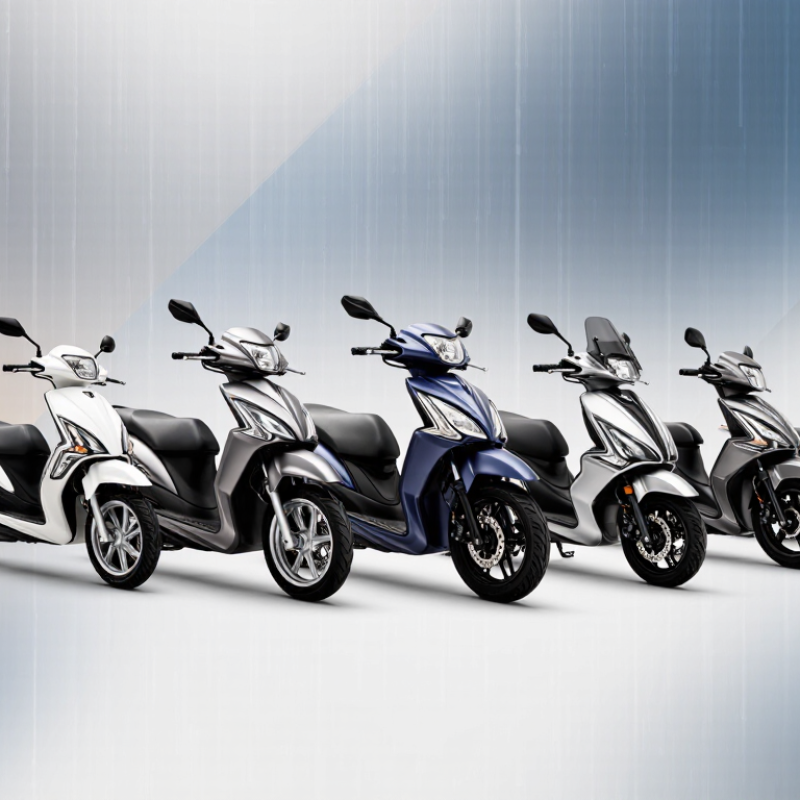
China’s scooter sport bike market now serves commuters, weekend riders, and export-focused dealers. Each leading maker follows a different design path.
One manufacturer emphasizes compact frames, sharp fairings, and easy parking in crowded streets. Another focuses on liquid-cooled engines, stable cornering, and stronger acceleration. A third builds practical scooters with wide seats, under-seat storage, and simple controls. One export specialist offers right-hand and left-hand traffic configurations. Details matter.
Another company develops lightweight models for younger riders and short urban trips. Its digital display is clear, although some interfaces still feel less refined. A performance-oriented maker uses larger brakes, adjustable suspension, and better wind protection for longer rides. One established producer highlights fuel efficiency and durable body panels. Owners often praise its low maintenance needs. A smaller factory competes through flexible colors, useful accessories, and responsive dealer support. Its parts network may require closer checking before purchase. The tenth maker combines sporty styling with quiet operation and practical lighting.
From a buyer’s perspective, factory claims need real inspection. I would compare frame welds, brake feel, tire quality, and wiring protection. Ask for service records and spare-parts timelines. Test the seat height carefully. A scooter can look aggressive yet feel awkward after thirty minutes. Some models impress at launch but reveal vibration through the handlebars later. Independent testing, transparent specifications, and dependable warranty communication remain more valuable than glossy photographs. Availability also varies by market, so local certification and technician training deserve attention.
China Top 10 Scooter Sport Bike Brands for Global Buyers - Profiles of China’s Top 10 Scooter Sport Bike Brands
| Profile | Primary Product Focus | Typical Powertrain | Engine / Motor Range | Transmission | Braking Equipment | Typical Fuel Tank / Battery | Common Buyer Segment | Export Suitability |
| Profile 01 | Urban sport scooter | Single-cylinder petrol engine | 125–160 cc | Automatic CVT | Front disc; CBS or ABS depending on market | 6–9 L | Daily commuters and entry-level riders | Strong for Southeast Asia, Africa and Latin America |
| Profile 02 | Premium maxi-scooter | Liquid-cooled single-cylinder engine | 250–350 cc | Automatic CVT | Dual-channel ABS with front and rear discs | 12–16 L | Touring riders and higher-income urban users | Best suited to Europe, the Middle East and developed Asian markets |
| Profile 03 | Sport-styled commuter scooter | Air-cooled petrol engine | 110–125 cc | Automatic CVT | Front disc or drum; CBS common | 5–6.5 L | Value-focused commuters and delivery users | Highly suitable for price-sensitive markets |
| Profile 04 | Connected smart scooter | Fuel-injected petrol engine | 150–200 cc | Automatic CVT | Dual-channel ABS | 8–10 L | Technology-oriented urban riders | Suitable where smartphone connectivity and emissions certification are supported |
| Profile 05 | Light electric scooter | Hub motor with removable battery | 1.5–3.0 kW | Direct drive | Front disc and rear drum or disc | 1.5–3.0 kWh | Short-distance commuters and rental fleets | Best where charging access and electric-vehicle incentives exist |
| Profile 06 | Long-range electric scooter | Mid-drive or high-output hub motor | 4.0–8.0 kW | Direct drive | Dual-channel hydraulic disc brakes | 4–8 kWh | Premium EV users and urban touring riders | Appropriate for markets with established charging infrastructure |
| Profile 07 | Adventure-style maxi-scooter | Liquid-cooled single-cylinder engine | 300–500 cc | Automatic CVT | Dual-channel ABS with traction-control options | 13–18 L | Weekend touring and mixed-road riders | Strong potential in Europe, Oceania and Southeast Asia |
| Profile 08 | Retro-modern scooter | Fuel-injected single-cylinder engine | 125–200 cc | Automatic CVT | Front disc with CBS or dual-channel ABS | 6–9 L | Lifestyle buyers and city commuters | Suitable for lifestyle-oriented dealer networks |
| Profile 09 | Fleet and commercial scooter | Fuel-injected petrol engine or electric motor | 110–150 cc or 2–5 kW | Automatic CVT or direct drive | CBS or combined hydraulic braking | 5–8 L or 2–5 kWh | Courier companies, rental operators and institutions | Requires durable parts supply and fleet service support |
| Profile 10 | Performance-oriented scooter | Liquid-cooled petrol engine | 200–300 cc | Automatic CVT | Dual-channel ABS with hydraulic discs | 10–14 L | Sport-focused commuters and younger riders | Attractive for markets seeking higher performance at moderate cost |
Note: The profiles use representative specification ranges commonly found in China-produced scooter and electric-scooter categories. Actual specifications, homologation status, equipment and export availability vary by model, production year and destination-market regulations.