

top of page

Who Are the Top Golf Towel Manufacturers in China?

Choosing a Golf Towel manufacturer in China involves more than comparing catalog photos or unit prices. A towel may look simple, yet fabric weight, microfiber blend, edge stitching, colorfastness, and clip attachment all affect its use on the course. These details become clear after repeated washing. Small differences matter.

This guide examines manufacturers and suppliers without treating “top” as a universal ranking. The right partner depends on order size, customization needs, delivery expectations, and whether you prefer a factory or a trading company. Buyers can request product samples and confirm dimensions, fabric weight, embroidery options, packaging, and quality checks in writing. Ask how defects are handled, and whether quoted lead times include sampling and production. Clear answers are useful evidence. Polished brochures alone are not.

The comparison considers what company information can—and cannot—verify, including product range, export experience, production capabilities, and communication. Claims are best checked against samples, facility details, references, and consistent documentation where available. No checklist removes all uncertainty; a sample may not represent every bulk order. That is worth remembering. The goal is a practical shortlist, not a promise that one supplier suits every buyer. By comparing evidence and asking specific questions, readers can identify Golf Towel manufacturers that better match their product standards and purchasing needs.
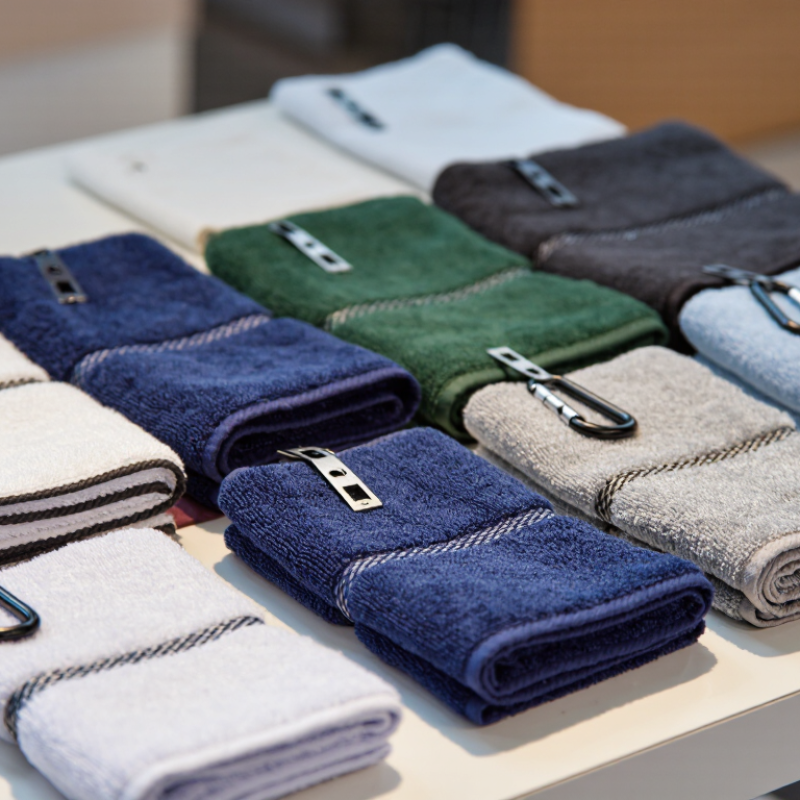
Who Are the Top Golf Towel Manufacturers in China?

What Defines a Golf Towel Manufacturer in China?

A golf towel manufacturer in China is defined by more than sewing equipment or a large catalog. The key is control over the full production process, from selecting microfiber or cotton to cutting, stitching, printing, and final inspection. Ask how fabric weight, absorbency, and colorfastness are checked. Clear answers matter.

Construction details show practical experience. Look for reinforced edges, even seams, secure hanging loops, and consistent dimensions across a production run. A towel should absorb moisture without becoming stiff or shedding fibers after washing. A sample helps, but it cannot prove every batch will match. Repeat orders are the harder test.

Reliable manufacturers document specifications and explain what can change when materials or designs are adjusted. They should be able to discuss minimum order quantities, sample timelines, and quality checks without vague promises. Communication is part of production quality. Small differences in pile texture or stitching can affect how a towel feels on the course. No supplier is flawless, and buyers should review samples critically. Even a neat finish may hide uneven absorbency, so simple wash and use tests are worth doing before approving a larger order.

How China's Golf Towel Manufacturing Industry Is Structured

China’s golf towel industry is better understood as a production network than a row of specialist factories. Many suppliers combine towel weaving or knitting with cutting, sewing, embroidery, and export coordination. Others outsource dyeing or stitching to nearby workshops. Not a neat chain. A cotton terry towel may start at a weaving mill, then receive a corner grommet, hanging loop, and embroidered mark at separate facilities.

The National Bureau of Statistics reported about 4.7 trillion yuan in 2023 operating revenue for China’s textile industry among enterprises above designated size. The China National Textile and Apparel Council reported textile and apparel exports of about US$293.6 billion that year. These figures show the scale of the wider manufacturing and export base, not golf towels specifically. That distinction matters: public industry data rarely isolates golf towel output.

Manufacturers typically compete through fabric choice, absorbency, color consistency, stitching, and order flexibility. Cotton terry feels familiar and absorbs well; microfiber can dry quickly and pack small. Samples should be checked after washing, especially around seams and metal fittings. Supplier descriptions can blur the line between a factory and a trading intermediary. Ask which steps happen in-house, and request material specifications and a production sample. Even then, one sample cannot reveal every batch inconsistency.

Which Chinese Manufacturers Are Notable in the Golf Towel Market?

China’s golf towel market includes traditional towel mills and sports-textile manufacturers, particularly in established textile regions such as Jiangsu, Zhejiang, and Guangdong. Notable suppliers are often those that can produce both soft cotton terry towels and quick-drying microfiber versions. Some offer jacquard patterns, embroidery, custom sizes, and corner grommets or clips. Small details matter.

A capable manufacturer should explain fabric weight, absorbency, colorfastness, and stitching choices clearly. Ask for samples and compare them after repeated washing: does the towel keep its shape, stay absorbent, and hold its color? A neat sample is useful, but it does not prove every production batch will match. Request written specifications and confirm tolerances before placing a larger order. Some supplier listings look impressive, yet leave basic questions unanswered. That is worth noticing. Manufacturers with consistent sampling, transparent production updates, and practical customization options are stronger candidates than those competing on price alone. A brief factory audit or independent quality inspection can help verify claims, especially when production volumes rise.

How to Compare Manufacturers by Materials, Quality, and Capabilities

Comparing golf towel manufacturers in China starts with the material, not the catalog photo. Cotton feels soft and absorbs well, while microfiber dries faster and can lift grit from club grooves. Ask for fabric composition, weight, and a physical sample. A towel that looks thick may still feel rough after washing. Details matter.

Check the stitching around the edges and the strength of the hanging loop. Request wash-test information, colorfastness results, and the manufacturer’s inspection steps. These details help distinguish a stable process from a polished sales sheet. Still, test results need context: ask how many pieces were checked and under what conditions. One sample is useful, but it cannot prove every production run will match.

Production capability matters when you need custom sizes, woven labels, embroidery, or several colors. Ask about minimum order quantities, sample lead times, monthly capacity, and how defects are handled. Clear answers are a good sign. Vague promises are not. Compare written specifications with the sample in your hands, then confirm key details before approving a bulk order. A small mismatch can be easy to overlook.

How to Compare Golf Towel Manufacturers: Materials, Quality & Capabilities

Example fabric compositions used in towel production—not manufacturer-specific data or universal formulas.

How to use this comparison: Cotton terry is shown as 100% cotton; a common microfiber example is 80% polyester and 20% polyamide; polyester knit is shown as 100% polyester. Actual specifications vary. When evaluating suppliers, also request fabric weight (GSM), colorfastness and wash-test results, stitching samples, customization options, minimum order quantities, and lead times.

What Buyers Should Verify When Evaluating a Manufacturer

When comparing golf towel manufacturers in China, look beyond polished catalog photos. Request written details for fabric composition, dimensions, stitching, colorfastness, and attachment hardware. Then compare those details with a production sample. Check whether the towel absorbs water evenly and whether its clip holds securely on a golf bag. Small details matter. Ask how the factory checks bulk orders and handles defects. Clear, specific answers are more useful than broad quality claims.

Tips: Request a dated sample and a simple inspection checklist. Photograph the towel before and after washing, then check shrinkage, loose threads, and color transfer. Confirm production lead times, minimum order quantities, packaging, and whether custom specifications require extra fees.

A good sample is helpful, but it does not guarantee every production unit will match. Ask what inspection records are available and how often checks occur. If a specification is vague, get it clarified in writing before placing an order. Some buyers focus heavily on price; that can leave durability and consistency underexamined. Even a careful process has limits, so build time for sample review and corrections.

Who Are the Top Golf Towel Manufacturers in China? - What Buyers Should Verify When Evaluating a Manufacturer

Evaluation dimension What buyers should verify Evidence to request Practical evaluation signal
Factory identity and production capability Confirm the legal entity, factory address, and whether the supplier manufactures towels itself or outsources production. Business registration details, a live factory video or visit, production-line photos, and a written description of any subcontracting. Details are consistent across documents and the factory can explain which processes it performs in-house.
Product specifications Agree on dimensions, fabric composition, weight per area (GSM), hems, stitching, attachment type, and permitted tolerances before production. A signed specification sheet, approved pre-production sample, and measurement records for finished goods. Specifications use measurable values; there is no single universal GSM or towel size suitable for every buyer.
Material and performance quality Check absorbency, colorfastness, shrinkage, seam strength, linting, and the durability of clips, grommets, or other attachments where applicable. Test reports tied to the actual material or finished product, plus sample-testing results and the stated test methods. Acceptance limits and test methods are agreed in writing before ordering rather than described only as “high quality.”
Quality management system If ISO 9001 is claimed, verify that the certificate is current and that its scope and site cover the relevant manufacturing activity. Certificate number, issuing body, validity dates, covered site, and scope; confirm details with the issuing body or its official register. A certificate is supporting evidence of a management system, not proof that every towel will meet the buyer’s specifications.
Chemical and product claims For an OEKO-TEX STANDARD 100 claim, check that the certificate covers the relevant article and product class. For recycled-content claims, check the applicable GRS documentation and scope. Current certificate details, covered products and facilities, and transaction or material documents when required by the scheme. A certificate for a different product or site should not be treated as evidence for the towels being purchased.
Customization and artwork control Confirm embroidery or print method, artwork proof approval, color references, placement, and handling of buyer-provided designs. Production-ready artwork proof, approved sample, color and placement specifications, and written approval records. The production order identifies the approved artwork version and how changes are authorized.
Capacity and lead time Check whether stated output and lead time account for sampling, material sourcing, customization, inspection, and peak-season capacity. A production schedule, confirmed material availability, order-specific capacity plan, and defined sample and shipment dates. Dates are linked to order milestones and dependencies, not offered as an unsupported guarantee.
Inspection and defect handling Agree on inspection timing, sampling approach, defect definitions, acceptance criteria, and corrective-action process. Written quality-control plan, inspection checklist, sample records, and procedure for rework, replacement, or credit. The contract or purchase order states what happens if the shipment does not meet agreed requirements.
Packaging and shipping readiness Confirm individual and carton packaging, labeling, carton dimensions and weight, shipping marks, and required destination-market documentation. Packaging artwork, carton specification, packing list example, and a document checklist agreed with the buyer or freight provider. Packing and document requirements are confirmed before production and reflected in the order documents.
Commercial terms and communication Clarify minimum order quantity, sample charges, payment milestones, quotation validity, delivery terms, and responsibility for tooling or setup costs. Itemized quotation, pro forma invoice, written payment terms, and a named point of contact for production updates. Costs, responsibilities, and delivery terms are unambiguous and consistent across the quotation and purchase order.

Note: This is a buyer verification checklist, not a ranked list or independent certification of any manufacturer. Confirm applicable product and import requirements for the destination market.

Article Source:

bottom of page