

7 Best Threaded Linear Shaft Suppliers Worldwide?
Threaded Linear Shaft technology remains a practical choice for guided movement, positioning, and compact mechanical assemblies. Its value appears in quieter indexing systems, adjustable fixtures, packaging equipment, and laboratory instruments. Buyers now expect accurate threads, consistent straightness, corrosion resistance, and dependable delivery.
Industry reports provide useful market context. Grand View Research’s Linear Motion Market report identifies automation, robotics, and industrial equipment as major growth drivers. MarketsandMarkets also connects rising factory automation with stronger demand for precision motion components. However, these reports usually combine shafts, guides, screws, and related systems. They rarely isolate the Threaded Linear Shaft category. That limitation deserves attention.
Professor Alexander H. Slocum, a recognized authority in precision machine design, writes, “Precision machine design is a blend of art and science.” His observation applies directly here. A shaft can look flawless, yet poor thread geometry or weak surface treatment may cause binding, vibration, and early wear. Small details matter.
This guide reviews seven leading Threaded Linear Shaft suppliers worldwide. The comparison considers material grades, thread accuracy, surface finishes, customization, production capacity, documentation, and shipping reliability. Supplier claims are not treated as proof. Technical drawings, inspection records, tolerances, and application experience matter more.
Some rankings may remain debatable. Regional strengths can change quickly. A supplier with excellent machining may offer limited after-sales support. Another may provide attractive prices but inconsistent lead times. These practical differences shape purchasing risk, especially when one shaft failure stops an entire production line.
What Are Threaded Linear Shafts and How Are They Used?
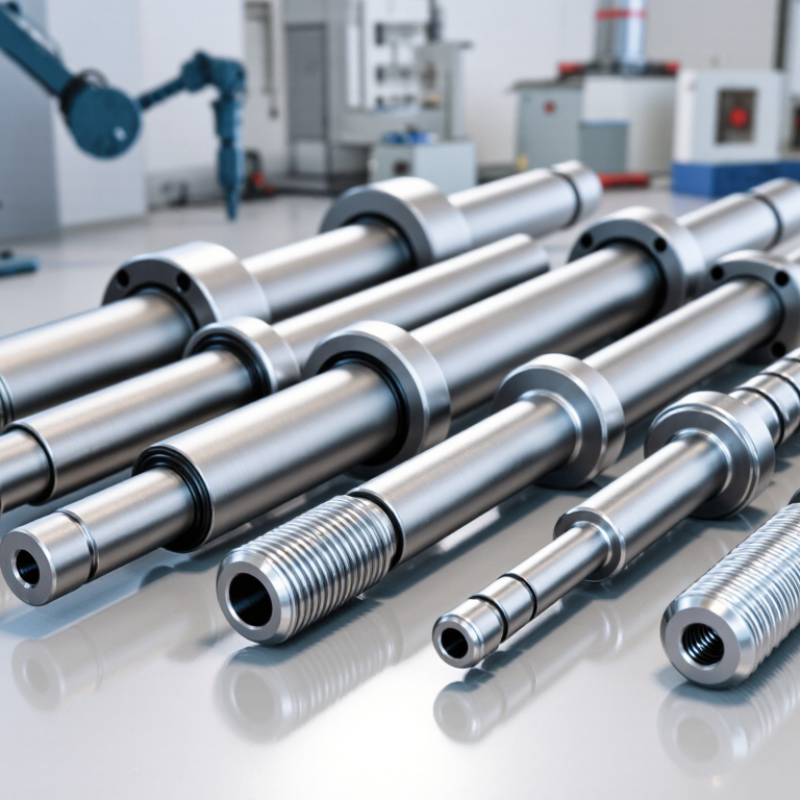
Threaded linear shafts combine a precision shaft with external threads for guided movement and secure positioning. Unlike a plain shaft, the threaded section can connect with a nut, bearing block, or adjustable support. When the shaft rotates, the matching nut moves along its length. This converts rotary motion into controlled linear travel.
These components appear in packaging equipment, laboratory instruments, automation systems, and compact lifting mechanisms. For example, a threaded shaft may move a sensor slowly across a rail or adjust a cutting head by measured increments. Engineers usually assess thread pitch, shaft diameter, material hardness, straightness, and surface finish. The correct choice depends on load, travel speed, alignment, and operating environment. A polished surface may reduce friction, but it cannot correct poor installation.
Tips: Confirm the thread standard before ordering. Measure the usable length, not only the overall length. Check the nut material and lubrication requirements together. Suppliers should provide dimensional tolerances, inspection records, and material information. These details support reliable sourcing worldwide.
In practical projects, selection is rarely perfect on the first attempt. A shaft can meet its load rating yet produce unwanted vibration. Fine threads offer careful adjustment, but they may increase movement time.
Coarse threads move faster, though positioning can become less precise. Real testing still matters. Ask for samples when tolerances are critical, and inspect runout before full production.
Key Criteria for Comparing Global Threaded Shaft Suppliers
When comparing global threaded linear shaft suppliers, start with the shaft’s working conditions, not the catalog photograph. Diameter, thread form, pitch, hardness, straightness, and surface finish affect motion accuracy. Ask for material certificates and inspection records. A supplier should explain its testing method clearly. Vague answers deserve caution. Small details matter.
Request samples made to your actual drawing. Check thread engagement with the mating nut, runout over the full length, and burrs near the ends. In one production review, a shaft met the stated diameter but showed uneven plating, which increased friction during cycling. That defect was not obvious at first. It became expensive later. Suppliers with documented process controls, calibrated gauges, and traceable batch numbers are easier to trust. Still, paperwork alone cannot prove field performance.
Compare manufacturing capacity, minimum order quantities, lead times, packaging, and technical communication across regions. Confirm how the supplier handles design changes, nonconforming parts, and replacement claims. Clear escalation contacts reduce downtime. Ask whether heat treatment and straightening occur in-house or through subcontractors. This can reveal hidden variation. Price deserves attention, but total cost includes inspection, freight, rejects, and maintenance. A cheaper shaft may not remain cheaper after installation. I would also review references from applications with similar loads and travel speeds, while admitting that supplier promises can look stronger than real-world results.
Seven Leading Threaded Linear Shaft Suppliers Worldwide
The seven leading threaded linear shaft suppliers worldwide usually differ by engineering strength, not marketing language. Some specialize in hardened steel shafts for factory automation. Others focus on stainless steel parts for clean rooms, packaging equipment, and outdoor machinery. Several offer custom threading, tight diameter control, and ground surfaces for smoother motion. Experienced buyers should examine material certificates, thread accuracy, straightness, surface hardness, and production repeatability. A supplier with strong inspection records often delivers more reliable results than one offering the lowest quotation. Custom support also matters when shaft length, pitch, or mounting details fall outside standard drawings.
A practical comparison should include seven supplier profiles from different manufacturing regions. Review machining equipment, heat-treatment control, export experience, engineering communication, and after-sales response. Do not judge quality from polished photographs alone. Factory audits, inspection reports, and application references provide stronger evidence. Some suppliers may excel at prototypes but struggle with volume production. Others may offer excellent capacity yet provide limited design guidance. No list is flawless. Buyers should reconsider rankings after testing actual parts in their own assemblies. This step reveals noise, friction, alignment problems, and service gaps that brochures rarely mention.
How to Evaluate Materials, Precision, Customization, and Lead Times
When comparing seven threaded linear shaft suppliers worldwide, begin with material evidence, not polished photographs. Ask for the steel grade, hardness range, surface treatment, and corrosion test results. A reliable supplier should provide mill certificates and inspection records for each production batch. Stainless steel may suit humid equipment, while hardened alloy steel often handles repeated loads better. The correct choice depends on speed, load, lubrication, and operating temperature.
Precision requires measurable details. Request shaft diameter tolerance, straightness, thread accuracy, surface roughness, and radial runout. Ask how these values are inspected. A supplier using calibrated gauges and documented sampling procedures deserves greater confidence. During a previous sourcing project, a shaft met its diameter specification but still caused vibration. The overlooked factor was slight runout near the threaded section. Small defects matter.
Customization should begin with a clear drawing, including thread length, end chamfers, keyways, and mounting features. Confirm whether prototypes receive the same inspection as full production. Lead times also need evidence. Separate sampling, machining, treatment, inspection, and shipping time in writing. A low quoted lead time can hide outside processing delays. Request production photos or milestone updates when schedules are critical. I once accepted an attractive timeline too quickly; packaging requirements later added several days. That mistake changed how I compare suppliers.
Choosing the Right Supplier for Your Application and Budget
Choosing among the seven best threaded linear shaft suppliers worldwide requires more than comparing prices. Your application should guide the decision. Check shaft diameter, thread type, travel length, load direction, and operating speed. A shaft for a packaging machine may need different surface hardness than one used in laboratory equipment.
Reliable suppliers provide material certificates, dimensional reports, and clear tolerance data. Ask whether each shaft is ground, polished, or simply machined. Surface finish affects friction and service life. Confirm thread accuracy with sample parts before ordering large quantities. In my experience, a low quotation can become expensive when poor alignment causes vibration, noise, or premature wear. Budget lies sometimes. Lead time, packaging quality, replacement support, and shipping stability also deserve attention.
Tips: Request a sample shaft and test it with your actual nut, bearing, or support block. Measure fit after cleaning the part. Ask for batch traceability and inspection records. Compare the complete cost, including tooling, freight, rejected parts, and downtime. Do not select the cheapest option automatically. It may perform well, but only under conditions different from yours. I have seen technically excellent shafts fail because the surrounding structure was too flexible. Supplier advice matters, yet your own application data should make the final decision.
7 Best Threaded Linear Shaft Suppliers Worldwide? - Choosing the Right Supplier for Your Application and Budget
| Supplier Profile | Primary Supply Region | Common Shaft Materials | Typical Thread Standards | Typical Shaft Diameter Range | Typical Length Range | Surface Finish Options | Typical Dimensional Tolerance | Typical MOQ | Indicative Lead Time | Budget Position | Best-Fit Applications |
|---|---|---|---|---|---|---|---|---|---|---|---|
| Profile A | North America | Carbon steel, stainless steel, alloy steel | UNC, UNF, metric coarse, metric fine | 8–50 mm | 100–2,000 mm | Ground, polished, black oxide, electroless nickel | Generally IT6–IT9, depending on process | 1–10 pieces for standard sizes | 2–5 weeks | High | Prototype work, automation equipment, replacement parts, low-volume precision builds |
| Profile B | Western Europe | Hardened carbon steel, stainless steel, tool steel | Metric coarse, metric fine, custom thread profiles | 10–80 mm | 150–3,000 mm | Induction-hardened, chrome-plated, ground, polished | Typically IT5–IT8 for precision-ground products | 1–5 pieces for engineered orders | 4–8 weeks | High | High-speed linear motion, machine tools, inspection systems, high-duty industrial equipment |
| Profile C | Central Europe | Stainless steel, carbon steel, case-hardened steel | Metric coarse, metric fine, left-hand threads on request | 6–60 mm | 80–2,500 mm | Rolled, ground, polished, corrosion-resistant coatings | Typically IT6–IT9 | 5–20 pieces | 3–7 weeks | Medium to high | Packaging machinery, robotic assemblies, material-handling systems, general factory automation |
| Profile D | East Asia | Stainless steel, alloy steel, chrome-molybdenum steel | Metric coarse, metric fine, JIS-compatible specifications | 8–70 mm | 100–3,000 mm | Ground, polished, hard-chrome plated, nitrided | Typically IT6–IT9; tighter grades available by quotation | 10–50 pieces | 3–6 weeks | Medium | Electronics equipment, compact automation, medical-device mechanisms, laboratory machinery |
| Profile E | China | Carbon steel, stainless steel, bearing steel, alloy steel | Metric coarse, metric fine, UNC, UNF | 6–100 mm | 50–4,000 mm | Rolled, polished, ground, black oxide, hard chrome | Typically IT7–IT10 for standard production; tighter tolerances by request | 20–100 pieces, with samples often available | 2–6 weeks | Low to medium | Cost-sensitive automation, OEM production, conveyors, fixtures, and replacement components |
| Profile F | United Kingdom and Ireland | Stainless steel, carbon steel, tool steel | Metric, BSW, UNC, UNF | 8–50 mm | 100–2,000 mm | Bright polished, ground, hard chrome, passivated stainless steel | Typically IT6–IT9 | 1–10 pieces for stocked or semi-standard items | 2–5 weeks | Medium to high | Maintenance, laboratory equipment, custom machinery, small-batch engineering projects |
| Profile G | Southeast Asia | Stainless steel, carbon steel, alloy steel | Metric coarse, metric fine, UNC, UNF | 6–75 mm | 100–3,000 mm | Polished, ground, black oxide, zinc or nickel plating | Typically IT7–IT10 | 25–100 pieces | 4–8 weeks | Low to medium | High-volume OEM parts, general industrial equipment, agricultural machinery, and cost-focused projects |
Note: The figures above are representative industry ranges for anonymized supplier profiles, not quotations from named companies. Actual capability, tolerance, minimum order quantity, pricing, material certification, and delivery time should be confirmed against the supplier’s current technical drawing and quotation.