What Are the Top Types of White Thermal Transfer Labels?
White Thermal Transfer Labels may look similar on a roll, but their face stock and ribbon pairing shape how they perform. Paper labels suit many cartons, shelves, and shipping workflows. Synthetic films, such as polypropylene and polyester, offer better resistance to moisture, scuffing, or chemicals when matched with the right ribbon. The details matter. A label on a chilled bottle faces different conditions from one on a dry warehouse carton.
A note on attribution: no source article or expert quotation was provided, so the line below is an original editorial rule of thumb, voiced by fictional composite specialist Dana Cole—not a verified quotation from a real industry expert. “Choose the label for the surface, environment, and handling it must survive.” It is simple, but useful. Even a durable film can fail if the adhesive does not suit the container or temperature. Likewise, a low-cost paper label may be entirely adequate for a short-lived indoor application.
This guide compares common white thermal transfer label types, including matte and coated paper, polypropylene, and polyester. It also considers ribbon compatibility, print clarity, and application conditions. Look closely at small practical cues: a glossy bottle, a damp cold room, or a carton rubbed during transit. No single material wins every time. The right choice depends on the job, and real-world trials can reveal gaps that a specification sheet misses.
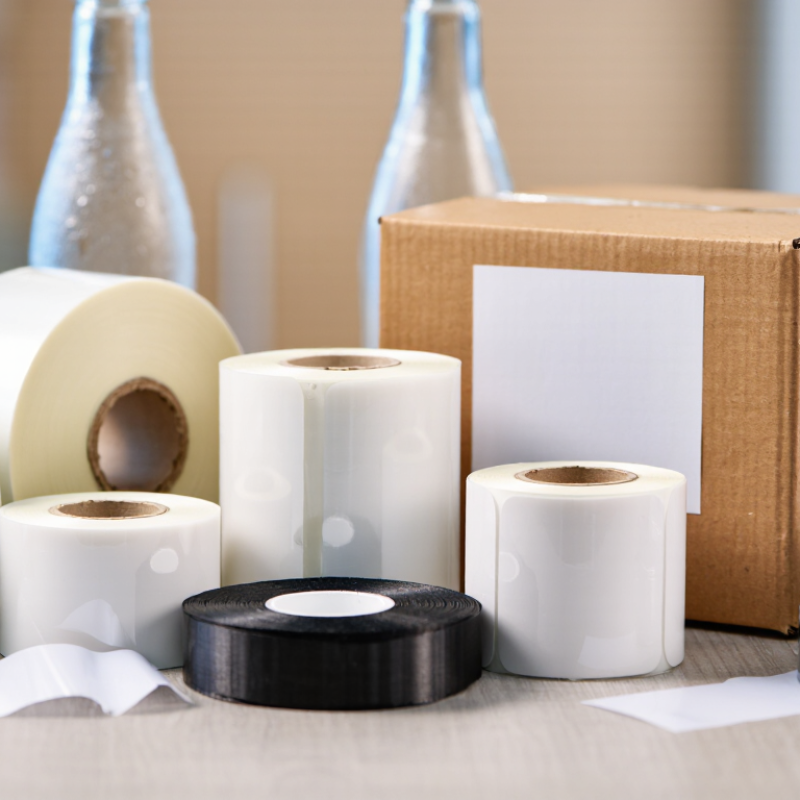
Key Materials and Construction of White Thermal Transfer Labels
What Are the Top Types of White Thermal Transfer Labels?
Key Materials and Construction of White Thermal Transfer Labels
White thermal transfer labels commonly use paper or synthetic film as their face material. Coated paper is economical and prints crisp black text for cartons, shelves, and indoor tracking. It can wrinkle or tear when exposed to moisture. Polyester and polypropylene films resist water and abrasion better, making them useful for containers or equipment that gets handled often. They usually cost more. The right choice depends on the label’s actual environment, not just its appearance.
A label is a small layered structure. The white face stock receives the printed image; a surface coating helps control ink transfer and print sharpness. Beneath it, pressure-sensitive adhesive bonds the label to a surface, while a release liner protects the adhesive before use. Adhesive performance varies with surface texture, temperature, and cleanliness. A label that sticks well to smooth glass may lift from dusty cardboard. Testing matters.
Tips: Match the ribbon to the face material, then print a small test batch. Check whether fine text stays legible and whether the edges lift after application. Also consider storage conditions. White paper can yellow or scuff over time, and film is not automatically suitable for every surface. I have seen material choices look obvious on a desk, then disappoint on a curved container. That assumption deserves a second look.
Polypropylene and Polyethylene White Thermal Transfer Labels
White thermal transfer labels commonly use polypropylene (PP) or polyethylene (PE) face stocks. Both are printed with a ribbon, and the coating must match the ribbon for clear, durable marks. PP is relatively firm and can produce crisp text on flat cartons, jars, and inventory tags. It handles moisture better than paper, but a sharp crease may stress the film.
PE is softer and more conformable. It can sit neatly on squeeze bottles, curved containers, and packages that flex during handling. That flexibility helps, though the label may feel less rigid during application. A sample that looks smooth on a bench can wrinkle on a narrow bottle. Small detail, real headache.
Choose by the container, exposure, adhesive, and print setup—not by material name alone. Film grades and coatings vary, so test the actual combination. Print a short run, check barcode readability, rub the image, and bend the labeled package. If it will be chilled or exposed to moisture, test those conditions too. Settings matter. Inspect the corners after several bends, not just immediately after printing.
Polyester and Vinyl White Thermal Transfer Labels
White thermal transfer labels commonly use polyester or vinyl. Both provide a light background for dark text, barcodes, and symbols. Polyester is typically firmer and dimensionally stable, with resistance to moisture, abrasion, and many chemicals. Performance depends on the specific grade. On a smooth equipment panel, polyester can keep small serial numbers legible through routine handling. It may be less suitable for sharply curved or squeezable items. That matters.
Vinyl is more flexible, so it can conform to curved containers, cables, and some textured surfaces. Certain grades resist water and scuffing, but check specifications for heat and chemical exposure. There is no universal winner. It is easy to overfocus on material names and overlook the adhesive or printer setup. Use a compatible ribbon, then adjust heat and pressure; poor settings can leave faint bars or smudged edges. A sample roll may stick well to clean glass yet lift from dusty plastic. Test labels on the actual surface and expose them to expected cleaning, temperature, and handling. Small trials save rework.
Comparing Label Types by Durability and Application
White thermal-transfer labels usually fall into three practical groups: coated paper, polypropylene (PP), and polyester (PET). Their differences show up after spills, abrasion, sunlight, and temperature swings—not at the printer.
Coated paper is an economical choice for dry cartons, shelf tags, and short-term shipping. It prints sharply, but moisture can soften its face and abrasion can erase fine text. Use it indoors. PP film flexes around curved bottles and tolerates splashes better than paper. It suits chilled foods, cosmetics, and reusable bins when the adhesive matches the surface and storage conditions. PET is stiffer and often chosen for labels exposed to heat, solvents, or repeated handling, such as equipment plates. Still, no material wins every test.
ASTM D3330/D3330M measures pressure-sensitive adhesive peel. ISO 4892-3 specifies fluorescent-UV exposure methods for plastics. One UVA-340 test cycle uses 8 hours of UV exposure at 60°C, followed by 4 hours of condensation at 50°C. These are test conditions, not promises of label life. Ask for peel results in N/25 mm, UV exposure hours, and a stated temperature range. A resin-rich ribbon can improve scuff resistance, but may raise cost and limit print settings. Test labels on the actual container, including its curves, condensation, and cleaning routine. Adhesive choice matters too.
Polyester is typically chosen for demanding exposure, while polypropylene suits moisture-prone applications and coated paper works well for indoor, short-term labeling. Scores are illustrative relative ratings, not standardized test results; actual performance depends on the facestock, ribbon, adhesive, and environment.