
Top Coffee Robot Manufacturers for Global Buyers
Coffee service is changing, but buyers still need evidence beyond a polished demonstration. The National Coffee Association’s 2024 National Coffee Data Trends report found that 67% of American adults had coffee the previous day. That steady demand helps explain interest in automated preparation, especially where queues build around espresso machines during morning peaks. A Coffee Robot can support repeatable recipes, measured dosing, and faster service. It cannot guarantee a good cup by itself.
Automation is expanding across industries. The International Federation of Robotics reported 541,302 industrial robot installations worldwide in 2023 in its World Robotics 2024 report. This figure does not measure coffee robots directly, but it shows the wider growth of robotic systems and manufacturing capacity. Global buyers should look beyond headline speed. They need to assess beverage consistency, cleaning routines, ingredient handling, local servicing, software support, and integration with existing counters. A robot that serves quickly but is difficult to maintain may cost more in downtime.
This guide compares leading coffee robot manufacturers through practical buyer criteria, including product capability, deployment experience, and support for different markets. Specifications matter. So do spare parts and staff training. Claims deserve scrutiny, too: published performance figures may come from controlled demonstrations, not a busy café. The right choice depends on a buyer’s menu, space, customer volume, and service model. There is no universal winner. That is worth remembering.
Understanding Coffee Robots and Their Role in the Global Market
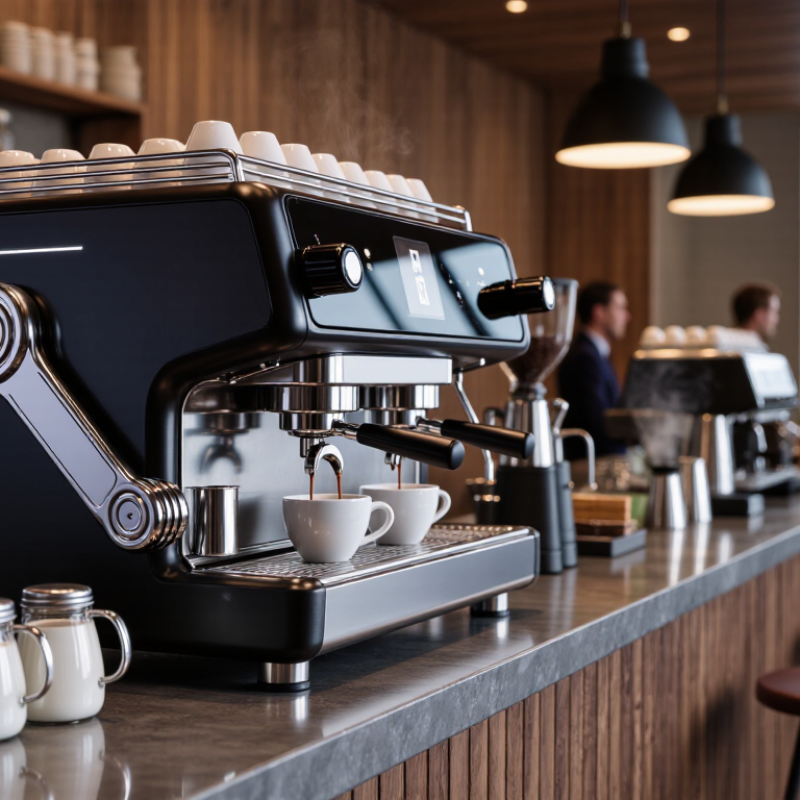
Coffee robots range from automated espresso stations to robotic arms that grind, tamp, brew, and hand off cups. Their value is repeatability. A programmed machine can keep dose, water volume, and extraction time consistent during a busy morning rush. It can also take over repetitive motions when staff are stretched. But automation is not magic. A poorly adjusted grinder still makes poor coffee.
The International Coffee Organization’s Coffee Report and Outlook, published in May 2024, estimated global consumption at 177 million 60-kilogram bags in 2023/24, up 2.2% year over year. This large, varied market gives automated equipment room to serve offices, hotels, transport hubs, and compact kiosks. The International Federation of Robotics reported about 205,000 professional service robots sold worldwide in 2023. That figure covers many industries, not coffee machines alone. It signals broader adoption, not a coffee-robot sales count.
For buyers, the key question is fit, not spectacle. A café with a narrow counter needs a different setup from a hotel serving hundreds of guests at breakfast. Check cleaning access, grinder adjustment, milk handling, cup-size options, and local maintenance support. Staff still need to monitor taste and resolve jams. The robot may save motion, but it cannot remove the need for good workflow design.
Key Criteria for Evaluating Coffee Robot Manufacturers
When comparing coffee robot manufacturers, look beyond a polished demonstration. Ask how the machine handles a busy hour, not just one carefully prepared latte. Request repeatability data for drink temperature, portion size, and preparation time. If possible, observe a trial using your menu and ingredients. Small differences matter.
Inspect the workflow closely. Can staff refill beans and milk without awkward steps? Are cleaning points easy to reach, and can routine maintenance be completed without specialized tools? Ask for service response times, spare-parts availability, training materials, and references from operators with similar volumes. Review technical documentation and confirm that relevant safety and food-contact requirements match your destination market. A long feature list is not proof of reliability. Even a thorough checklist can miss a clumsy daily routine.
Tips: Run a real-world pilot. Time cleaning, restocking, and recovery after a fault. Check how the robot connects with payment and ordering systems. Ask which performance figures come from independent testing and which are manufacturer estimates. A showroom demo can impress; it cannot answer everything. Look closely.
Top Coffee Robot Manufacturers for Global Buyers
Key Criteria for Evaluating Coffee Robot Manufacturers
Suggested evaluation weighting for a buyer scorecard. The percentages are planning weights, not measured market results; adjust them to match your operating needs. Assess beverage consistency, uptime, service and spare-parts support, system integration, throughput, and hygiene requirements.
Leading Coffee Robot Manufacturers and Their Areas of Expertise
Coffee robot manufacturers tend to specialize in different parts of the service workflow. Some focus on robotic arms that grind, tamp, and brew with repeatable movements. Others develop compact kiosks for offices, hotels, and transport hubs, where floor space and staff time are limited. Their expertise is often visible in practical details: cup alignment, milk-temperature control, and how easily operators can refill beans during a rush.
Integration is another key area. Manufacturers with strong engineering teams connect payment terminals, order displays, grinders, and cleaning routines into one system. Buyers should ask for performance data from real installations, not just a polished demonstration. Can the machine handle back-to-back orders? How long does daily cleaning take? Small delays matter when a queue forms. No setup is perfect.
Some manufacturers prioritize customization, adapting recipes, cup sizes, or cabinet layouts for local menus. Others emphasize serviceability, using accessible parts and remote diagnostics to reduce downtime. A useful supplier explains maintenance intervals clearly and trains staff on common faults, such as a blocked milk line or an empty bean hopper. Yet specifications can look better on paper than in a busy café. Request a site trial, check spare-part availability, and speak with operators who use the system through a full working week.
| Manufacturer Specialization | Core Area of Expertise | Common Automation Features | Typical Deployment | Key Buyer Considerations |
|---|---|---|---|---|
| Robotic-arm coffee systems | Automating barista-style drink preparation with an industrial or collaborative robotic arm. | Programmable movement, ingredient handling, espresso-machine operation, and repeatable task sequences. | Flagship cafés, hospitality venues, and demonstration installations. | Assess drink range, cycle time, cleaning procedures, safety measures, and the space needed for the robot cell. |
| Automated espresso-machine systems | Integrating espresso extraction and milk preparation into a compact, self-service workflow. | Automated grinding, dosing, brewing, milk dispensing, and recipe controls, depending on system configuration. | Offices, convenience locations, hotels, and unattended beverage stations. | Check beverage consistency, daily cleaning requirements, ingredient capacity, and availability of local maintenance. |
| Unattended coffee kiosks | Combining automated beverage equipment with a kiosk interface and payment workflow. | Touchscreen ordering, cashless payment integration, recipe selection, and remote status monitoring where supported. | Transit hubs, campuses, retail sites, and other locations with steady foot traffic. | Confirm payment-system compatibility, connectivity needs, refill frequency, and procedures for faults or refunds. |
| Modular beverage-automation integrators | Connecting coffee equipment, dispensers, sensors, and control software into a configured system. | Equipment integration, configurable workflows, monitoring, and links to site-specific ordering or payment systems. | Multi-site operators and projects with particular space, menu, or service requirements. | Review system boundaries, third-party equipment dependencies, integration responsibilities, and upgrade options. |
| High-throughput automated coffee systems | Serving repeated orders efficiently in locations where demand can be concentrated into busy periods. | Standardized recipes, automated dispensing, order sequencing, and workflows designed to reduce manual steps. | Large workplaces, food-service operations, and high-traffic public venues. | Compare demonstrated peak-hour capacity, queue handling, replenishment needs, and performance with the intended menu. |
| Specialty-coffee automation providers | Automating selected preparation steps while offering controls for recipe variables such as dose or extraction settings. | Programmable recipes and, depending on the equipment, automated grinding, extraction, or milk preparation. | Specialty cafés and venues seeking more repeatable preparation across operators or shifts. | Determine which steps remain manual and whether the system supports the desired coffee, grinder, and recipe workflow. |
| Comparison guide: These rows describe established categories of coffee-automation suppliers and system capabilities, not named companies or a ranked list. Features vary by model and configuration; buyers should confirm specifications, certifications, service coverage, and operating costs with each supplier. | ||||
Comparing Product Features, Service, and International Support
For global buyers, a coffee robot is only as dependable as its service network. Compare drink consistency, cleaning time, ingredient capacity, and recovery after a fault—not just menu size. The International Federation of Robotics reported nearly 205,000 professional service robots sold in 2023, up 30% year over year (World Robotics 2024). That growth signals wider adoption, but it does not prove every coffee system is ready for a busy café. Ask manufacturers for recorded uptime, spare-parts lead times, and references from sites with similar daily orders. A polished demo can still hide slow refills or awkward cleaning.
International support deserves equal weight. Confirm which languages the remote help desk covers, what hours it operates, and whether technicians can reach your region. Check voltage, water-treatment requirements, payment-system compatibility, and local availability of consumables before signing. Request manuals and troubleshooting videos in writing. A two-hour response target sounds useful, but only if parts can arrive promptly. Buyers should also clarify software-update policies and what happens when internet access drops.
Tips: Run a live acceptance test with your own cups, beans, and menu. Time setup, milk replenishment, cleaning, and one simulated fault. Keep the results; small details matter. Then compare the supplier’s answers with the contract, because verbal promises can be forgotten.
Choosing the Right Manufacturer for Your Business Needs
Top Coffee Robot Manufacturers for Global Buyers
Choosing the Right Manufacturer for Your Business Needs
A coffee robot should fit your service model, not just look impressive in a showroom. Estimate drinks per hour, peak queue length, counter space, and the number of recipes staff actually need. A compact unit may suit a hotel lobby, while a busy transport hub may need faster ingredient refills and higher output. Measure the installation area, including room for cleaning and maintenance access.
Ask manufacturers for a live demonstration using realistic orders. Watch how the machine handles milk changes, cup placement errors, and back-to-back drinks. Test it live. Request written details on installation, staff training, spare-part availability, and typical response times for technical support. Check that electrical specifications and food-contact materials suit your destination market, and verify relevant documents independently. A polished video is useful, but it cannot show every awkward pause or cleaning step.
Compare the full operating cost, including consumables, service visits, software fees, and expected downtime. Ask for references from businesses with a similar menu and daily volume. If possible, speak with an operator after several months of use, not just during launch week. No machine is maintenance-free. I would also leave room in the budget for small workflow changes; cup sizes or counter height can cause problems that a sales demo never mentions.
Related Posts
-
How to Choose a Robot Barista for Your Business?
-
7 Best Coffee Robot Machines for Businesses in 2026
-
Top 10 Robotic Barista Coffee Machines for Businesses
-
Top 10 Robot Arm Coffee Machine Manufacturers Worldwide
-
What Is a Coffee Robot Machine and How Does It Work?
-
Unlocking Global Market Potential with Robot Coffee Vending Machines across Diverse Industries